Worldwide Insured Shipping
Hand-Restored in our Atelier
Professional Custom Crating

Worldwide Insured Shipping
Hand-Restored in our Atelier
Professional Custom Crating
A good antique desk is one of the most useful pieces of furniture you can own. It holds its value, it improves with age, and it makes the act of sitting down to work feel like something worth doing. This collection covers antique and vintage desks across the major European styles and periods, from 18th century French writing tables to mid-century modern office desks.
The variety of antique desks available reflects the many different ways people have approached the problem of a dedicated writing and reading surface over the past three centuries. A simple single drawer side table used as a writing surface is at one end of the spectrum. A large partner’s desk in mahogany with pedestals of large drawers on either side, a leather top writing surface, and a top cabinet above is at the other. Between those two points lies a considerable range of forms, materials, and periods, and the selection of antique desks in this collection covers that range seriously.
What separates a genuinely well-made antique desk from a reproduction is visible in the details. The desk surface, whether it is a leather writing surface with an inset border or a plain solid wood top, should show age-appropriate wear that is consistent with the overall patina of the piece. Drawer pulls and hardware should be original where possible, with the fixing holes behind them undisturbed. The drawer construction, dovetailed joints with slight hand-cut irregularities, confirms age in a way that no finish or hardware can fake.
A desk with drawers in a period style is one of the most searched categories in antique furniture, and for good reason. The combination of a proper writing surface and organized drawer storage in a single well-made piece of solid wood furniture is something the modern office desk market has never convincingly replicated.
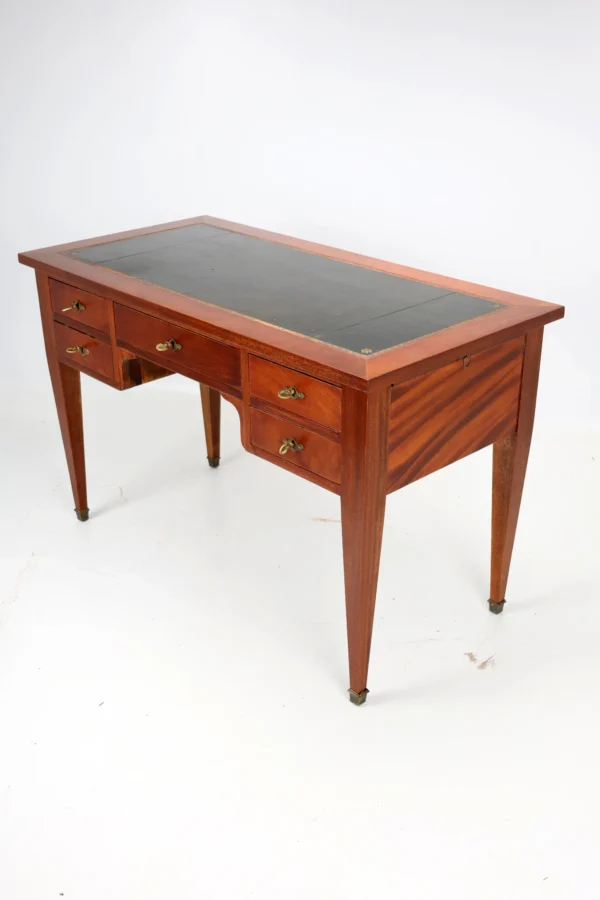
The writing desk as a distinct furniture form developed in the 17th century and reached its most refined expression in the 18th. A French Louis XVI style writing desk in mahogany or walnut, with tapered legs, a single center drawer, and a leather writing surface with gilt tooling, is a piece of antique furniture that has influenced desk design ever since. The proportions are generous enough to be practical and restrained enough to suit almost any interior.
The bonheur de jour is a smaller French writing desk form worth knowing. Developed in the mid-18th century, it features a small top cabinet above the writing surface, fitted with drawers and compartments for correspondence and writing materials. A 19th century louis xvi style bonheur de jour in walnut or rosewood with brass gallery and original fittings is a petite and genuinely useful piece of antique writing furniture that suits a bedroom or a smaller study particularly well.
18th century louis writing tables from the French tradition, whether in the louis xv style with cabriole legs and a shaped apron or in the more restrained louis xvi manner with straight tapered legs and neoclassical inlay, represent some of the finest antique writing tables available. The craftsmanship in the best examples reflects the French guild system at its most exacting, and pieces that retain their original leather writing surface, original hardware, and unaltered drawer construction are increasingly rare.
Antique writing tables from the English tradition follow a different path. A Sheraton period writing table in satinwood or mahogany with crossbanded inlay, a single drawer, and tapered legs on brass castors is a lighter and more delicate form than its French counterpart. These antique writing tables were made for drawing rooms as much as studies, and their refinement reflects that dual purpose.
Mahogany is the dominant material in antique desk production from the mid-18th century onward, and for practical reasons. It is stable, resistant to warping, finishes beautifully, and develops a depth of color with age that makes a well-maintained mahogany desk one of the more visually satisfying pieces of furniture in any room.
A mahogany secretary desk with a drop-front writing surface, fitted interior, and bookcase above is the most complete expression of the form. The antique Victorian pedestal desk in mahogany, with three drawers on each pedestal, a center drawer in the frieze, and a leather top writing surface, is the other defining mahogany desk form. Built for libraries and studies in 19th century English houses, these are substantial pieces of solid wood furniture that require a room of appropriate scale but reward that scale completely.
A mahogany secretary in the French directoire manner, with its clean architectural lines and minimal bronze mounts, occupies a middle ground between the English pedestal desk and the French writing table. These are practical and elegant pieces that work in a home or office setting without requiring a period interior around them.
The mahogany desk was also the material of choice for the roll top desk, which appeared in the second half of the 19th century and became one of the most recognizable antique desk forms. The tambour shutter that closes over the fitted interior, the multiple small drawers and pigeonholes inside, and the pedestal base with four drawers below make the roll top one of the most storage-efficient antique desks available. A good original example with a functioning tambour mechanism and intact interior fittings is a serious find.
Walnut preceded mahogany as the dominant furniture wood in Europe, and the antique writing tables produced in walnut during the 17th and early 18th centuries have a character that mahogany pieces do not quite replicate. The grain is more complex, the color more varied, and a well-figured solid walnut writing table with its original surface develops a warmth over time that is genuinely difficult to describe without seeing it.
French walnut writing tables from the 17th and early 18th centuries are typically in solid walnut rather than veneered, with turned wood legs, a shaped apron, and one or three drawers with original iron or brass hardware. These rustic antique pieces were made for practical use rather than display, and the honest wear they carry reflects that. A french walnut writing table with its original surface and drawer pulls intact is an increasingly rare piece of antique furniture.
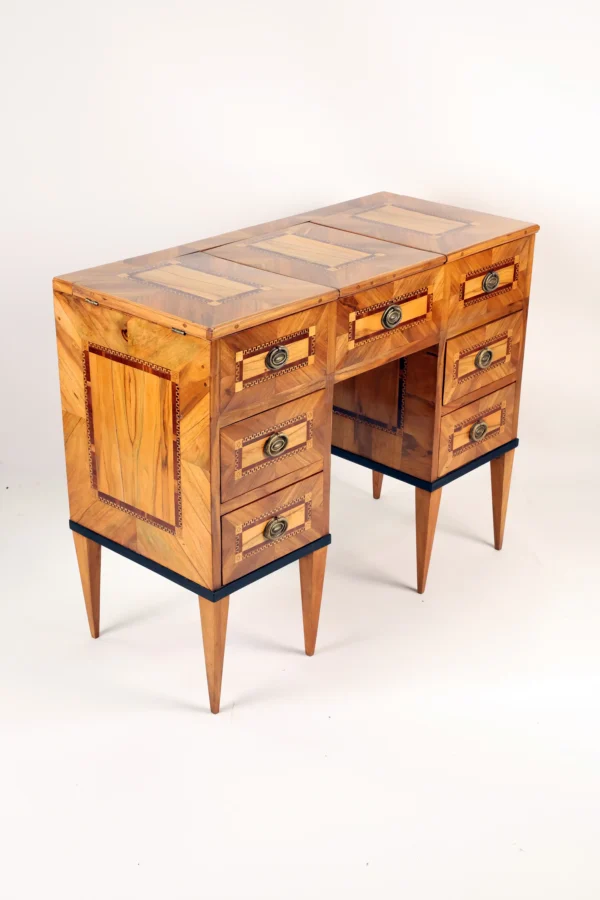
Later walnut writing tables from the 19th century, particularly French mid-century modern examples and those in the french rustic or french directoire tradition, use walnut veneer over a solid wood carcass, with inlay details and brass hardware that reflect the higher finish standards of later production. A 19th century french walnut writing desk with a white marble top section or a leather inset writing surface and four drawers in the frieze is a practical and handsome piece of antique furniture that suits a study, a bedroom, or a home office equally well.
Antiqueria Breitling has been sourcing and restoring European antique desks and writing tables since the 1990s, and the walnut pieces in this collection reflect decades of selective buying. Every piece has been examined carefully, and restoration work carried out in the in-house atelier addresses the writing surface, the drawer mechanism, and the patina of the exterior without compromising the age and character of the piece.
Mid-century desks from the 1940s through the 1960s occupy an interesting position in the antique and vintage desk market. The best Scandinavian and French mid-century modern examples are now old enough to qualify as genuine antiques, and their clean lines and quality of construction hold up well against both earlier period pieces and contemporary alternatives.
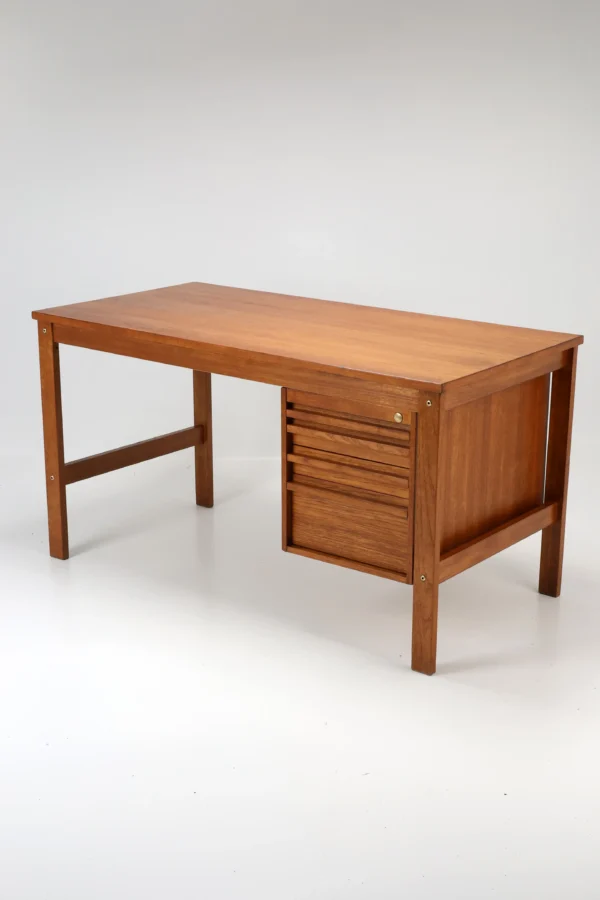
A french mid-century modern writing desk in rosewood or walnut with a single drawer, tapered legs, and a plain top surface is a piece that works in a contemporary home office without any period framing. The natural wood surfaces of Scandinavian mid-century desks, in teak or rosewood with simple brass drawer pulls, have aged particularly well and suit modern interiors in a way that more ornate earlier pieces do not always manage.
Executive desks from the mid-century period, with their larger top surfaces, center drawer, and pedestal storage, are practical choices for a working home office. A mid-century mahogany executive desk with its original leather writing surface and functioning locks on the pedestal drawers is a piece that will outlast any modern office desk without question.
The antique desk for home office use asks for a specific combination of qualities: enough surface for a laptop and working materials, sufficient drawer storage to keep the surface clear, and a form compact enough to fit a room that serves multiple purposes. Several antique desk forms meet these requirements precisely.
A drop-front secretary desk with its fitted interior closed away behind the fall front is the most space-efficient option. When open, it provides a proper desk surface and organized interior storage. When closed, it reads as a cabinet rather than a desk, which matters in a room that is not dedicated to work. A wood secretary desk in walnut or mahogany with a bookcase above and three drawers below is a complete home office solution in a single piece of antique furniture.
A smaller writing table with a single drawer or a standing desk adapted from a period side table or console are practical alternatives for tighter spaces. An antique rustic oak desk with turned legs and a center drawer, or a library table in mahogany with a leather top and large drawers on either side, both work as laptop desks without looking as if they were repurposed for the function.
The full collection of antique and vintage desks here covers the range described above, from 18th century French writing tables and English Sheraton period pieces to Victorian pedestal desks, Biedermeier secretaries, and mid-century modern writing tables. Each desk has been assessed individually, and the condition of the writing surface, the drawer mechanism, and the hardware is noted honestly in the individual listings.
Desks for sale in this collection change regularly as new pieces are sourced and restored. If you are looking for a specific antique desk that is not currently listed, write to us at contact@antiqueria-breitling.com. The warehouse holds pieces not yet photographed or catalogued, and a request for a particular style, period, wood, or size is often easier to fulfill than buyers expect.