Worldwide Insured Shipping
Hand-Restored in our Atelier
Professional Custom Crating

Worldwide Insured Shipping
Hand-Restored in our Atelier
Professional Custom Crating
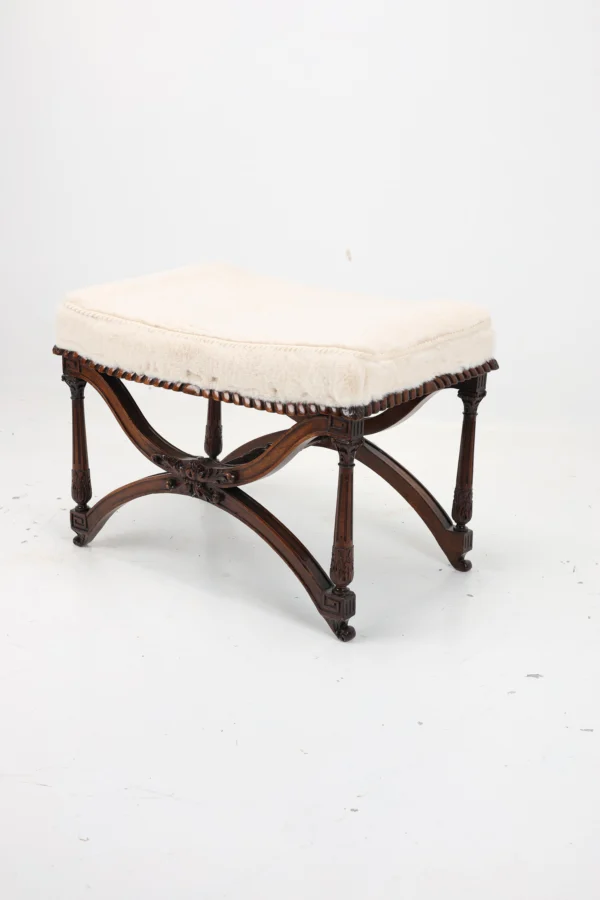
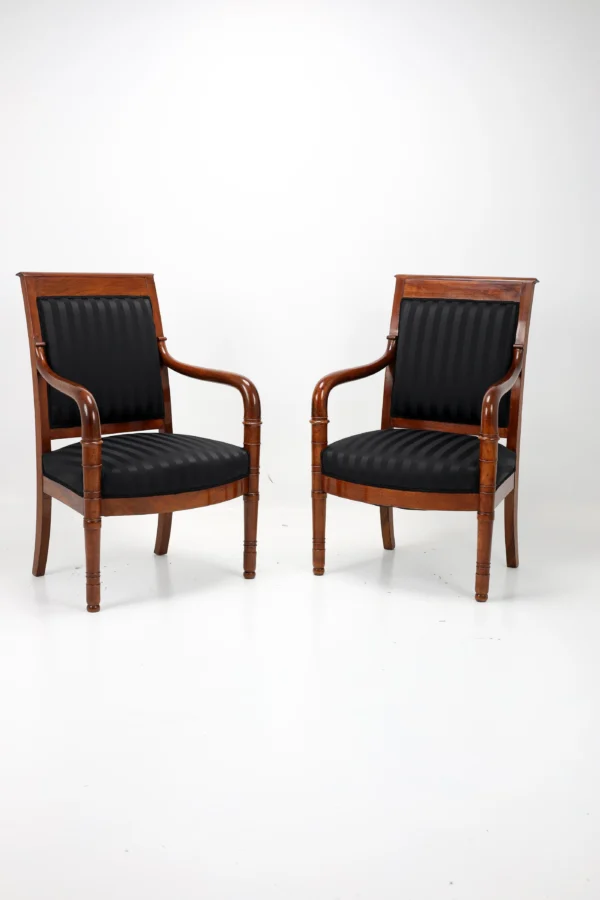
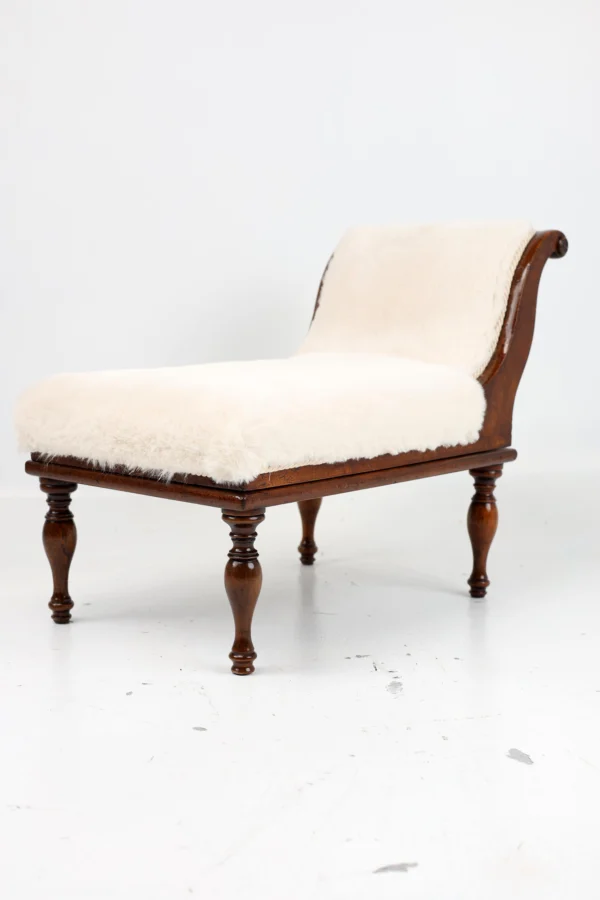
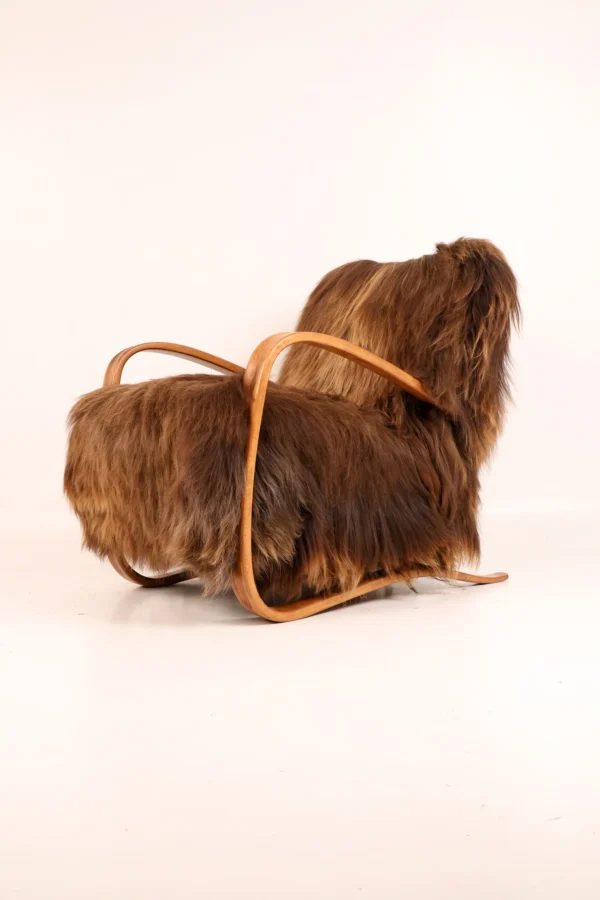

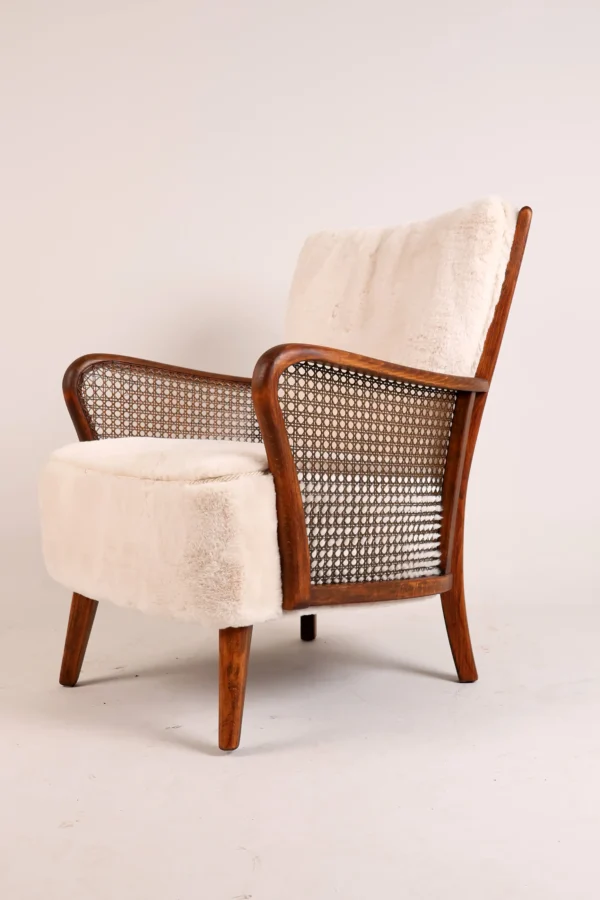
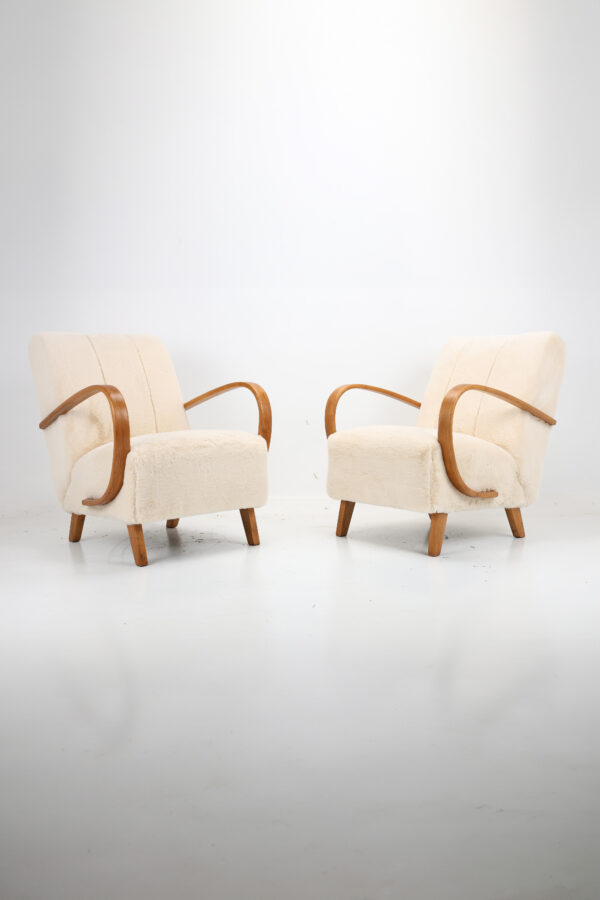
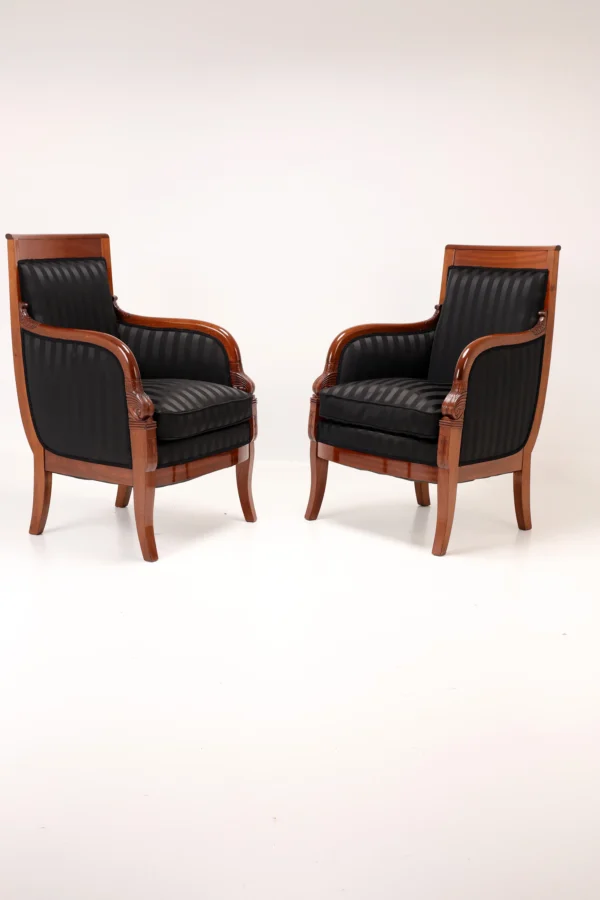
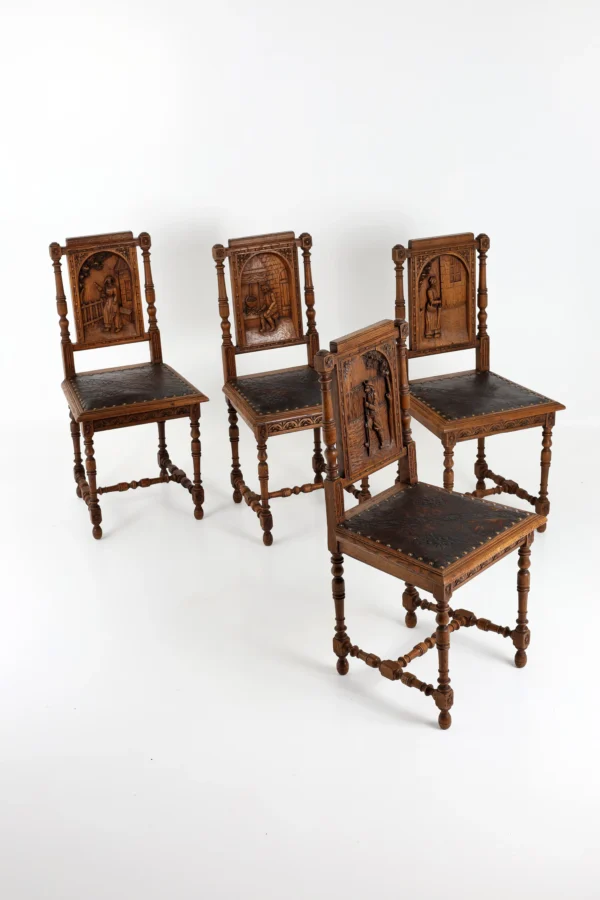
A chair is the piece of furniture you interact with most directly. You sit in it, lean against it, rest your arms on it, and over the course of a day you notice whether it was made well or not. Antique chairs for sale in this collection have all passed that test already, often for a century or more, which is a more reliable indicator of quality than any specification a new chair could offer.
The range of antique chairs here covers dining chairs, armchairs, side chairs, lounge chairs, desk chairs, and occasional seating across several centuries and several distinct furniture traditions. Materials include walnut, mahogany, oak, and painted wood. Upholstery varies from original period fabric to professionally reupholstered seats in materials appropriate to the chair’s age and character. Every piece has been examined and where necessary restored before listing.
Antique dining chairs are among the most practical antique furnishings you can buy. A set of antique dining chairs around a table creates a room that no amount of new furniture can replicate, and individual chairs can be mixed with an existing set or used independently as accent seating in a living room or hallway.
Finding a complete matched set of antique dining chairs is genuinely difficult. Chairs get separated, damaged, and replaced over the centuries, and a set of six or eight in consistent condition with matching patina is worth recognizing when it appears. Pairs and groups of four are more common and often more affordable, and a carefully chosen pair of dining room chairs can anchor a smaller table without any sense of compromise.
Chippendale chairs represent one of the most recognized forms in English furniture. Named after Thomas Chippendale whose 1754 design publication set the template, these chairs are characterized by their carved splat backrest, cabriole or straight legs, and the confident craftsmanship of their construction. The back splat, the central vertical element between the seat and the top rail, is typically carved with Gothic, Chinese, or ribbon motifs depending on which Chippendale variant the maker followed.
Genuine Chippendale chairs made of wood in the mid to late 18th century are substantial pieces. The seat is wide enough to be comfortable, the joinery at the legs and seat rail is precise, and the carving on the backrest and carved wood details repays close examination. Reproduction pieces exist in large numbers, which makes knowing how to identify antique chairs in this style particularly useful. Look at the back of the splat, the underside of the seat rail, and the wear pattern on the wood legs for evidence consistent with age.
Windsor chairs occupy a different tradition from the formal cabinet-made chair. Built by craftsmen who worked in wood rather than cabinetmakers’ workshops, Windsor chairs use a solid wood seat into which the spindle back, arm supports, and legs are socketed directly. The result is a chair of exceptional structural integrity that has remained in continuous production for nearly three centuries.
Antique Windsor chairs from the 18th and early 19th centuries are typically made in a combination of woods, elm for the seat, ash for the bent back bow and arm rail, yew or fruitwood for the spindles. The variation in wood types is part of the character of genuine antiques, and a Windsor chair with original surface and unaltered spindle count is increasingly hard to source. These chairs work in almost any interior, from a farmhouse kitchen to a contemporary apartment, because the design has changed so little that it reads as simply correct rather than period-specific.
An antique armchair is a different proposition from a dining chair. Where a dining chair asks for structural soundness and reasonable comfort over a meal, an armchair is a piece you might spend hours in, and the quality of the frame, the seat cushion, and the upholstery all matter accordingly.
Chairs upholstered in their original fabric are increasingly rare and when the fabric is genuinely period and in reasonable condition it adds considerably to the interest of the piece. More commonly, antique armchairs have been reupholstered at some point, sometimes well and sometimes not. The frames in this collection that have been reupholstered have been done so in materials appropriate to the age and style of the chair, using methods that do not compromise the wood frame beneath.
The wingback chair is one of the most enduring forms in English furniture. The high back with its flanking wings was originally designed to retain heat and shield the sitter from drafts, which tells you something about 18th century domestic comfort. What it produces visually is a chair with strong presence, a defined silhouette that works equally well beside a fireplace, in a bedroom corner, or as a statement piece in a living room.
Georgian and early 19th century wingback chairs typically have mahogany or walnut show-wood legs and arm rail, with the back and arms upholstered over a webbed frame. The curve of the arm and the angle of the back vary between makers, and a well-proportioned example with its original or sympathetically replaced upholstery is a genuinely comfortable piece of antique seating.
Beyond the wingback, the lounge chair category in antique furniture covers a wide range of forms. French vintage fauteuils with their open arms, upholstered seat and back, and carved wood frame are among the most elegant occasional armchairs available. Louis XV style examples feature the characteristic curve of the Rococo, with cabriole legs, a shaped apron, and a backrest that follows the line of the sitter’s back. Louis XVI style chairs pull those forms back toward straight lines and neoclassical motifs, with fluted legs and geometric carved detail replacing the organic curves of the earlier style.
An 18th century Louis armchair in walnut with original or period-appropriate upholstery is a rare antique chair worth acquiring when one appears in honest condition. These are pieces that were made for comfort as much as display, and they remain genuinely comfortable today.
The neoclassical tradition in chair design spans the late 18th and early 19th centuries and encompasses several distinct national styles that share a common vocabulary of classical ornament. Greek and Roman motifs, scrolled arms, sabre legs, tablet top rails, and restrained carved detail appear across English Regency chairs, French Empire seating, and German Biedermeier examples from the same period.
A Regency side chair in mahogany with a tablet top rail and turned front legs is a refined and practical piece of antique seating. These chairs were made in sets for dining rooms and drawing rooms, and the quality of their joinery and the precision of their turned legs reflects the high standards of early 19th century English workshop production.
Georgian chairs from the earlier part of the 18th century are typically heavier in their proportions, with solid splat backs, drop-in seat cushions, and cabriole legs that reflect the influence of Queen Anne furniture design. A Queen Anne side chair with its characteristic vase-shaped splat and pad feet is one of the foundational forms of English furniture and remains one of the more recognizable chair styles available.
Antique desk chairs and office chairs occupy a practical category that is often overlooked in favor of more decorative pieces. A genuine antique desk chair from the late 19th or early 20th century, built on a swivel base with a leather seat and a solid wood frame, is both more comfortable and more interesting than most modern office chairs, and it holds its value rather than depreciating.
Turn of the 20th century desk chairs in oak or mahogany with spindle backs and wooden armrests are the most commonly found form. Later examples from the early 20th century sometimes incorporate brown faux leather upholstery or original leather that has aged well, with brass tack detail along the seat rail. These are functional pieces of antique furnishing that work in a home office without looking like a concession to practicality.
French art deco chairs from the 1920s and 1930s represent some of the most sophisticated seating design of the early 20th century. The forms are clean, the materials are often luxurious, and the craftsmanship reflects a tradition of French furniture making that was still operating at a very high level. A French art deco armchair with a wooden frame in walnut or ebonized wood, upholstered in period fabric or sympathetically replaced material, is a piece that works in both a traditional and a contemporary interior.
The characteristic features of French art deco seating include geometric carved detail, contrasting veneer on the show-wood frame, and an overall sense of refinement that distinguishes these chairs from both the heavier Victorian furniture that preceded them and the more austere modernist pieces that followed.
Mid century modern chairs are now old enough to qualify as genuine antiques in many cases, and the best examples of mid-century Scandinavian and European design hold their value and their visual relevance in a way that more fashionable pieces often do not. A mid-century modern chair in teak or oak with its original upholstery intact is a piece of vintage seating that reads as contemporary without trying to be.
Mid century dining chairs in particular are a practical choice for a modern dining table. The proportions tend to suit lower contemporary tables, the materials are honest, and a set of four or six in consistent condition is an achievable find.
Knowing how to identify antique chairs confidently takes time, but a few practical points help considerably. A genuine antique is at least 100 years old, which means anything made before the mid-1920s qualifies. The condition of the chair tells you a great deal about whether it is consistent with age. Look for wear at the points of regular contact: the front of the seat rail, the tops of the back legs where hands grip, the armrest surfaces, and the feet.
Hand-cut joints in the back splat and seat rail show slight irregularities that machine-made joinery does not. Turned elements on genuine antiques have minor variations in profile that reflect the craftsman’s hand. The wood itself should show a patina that goes into the surface rather than sitting on top of it.
If you want to evaluate your piece or identify the maker, markings on the underside of the seat rail or a paper label inside the frame are the most common places to look. Many chairs were never marked, however, and identification often comes down to comparing the chair styles and construction details against documented examples from specific periods and workshops.
A range of antique chairs is available across all categories listed here, and the selection of antique chairs changes regularly as new pieces are sourced and restored. If you are looking for something specific that is not currently listed, write to us at contact@antiqueria-breitling.com and we will check what is currently held in the warehouse.


