Worldwide Insured Shipping
Hand-Restored in our Atelier
Professional Custom Crating

Worldwide Insured Shipping
Hand-Restored in our Atelier
Professional Custom Crating
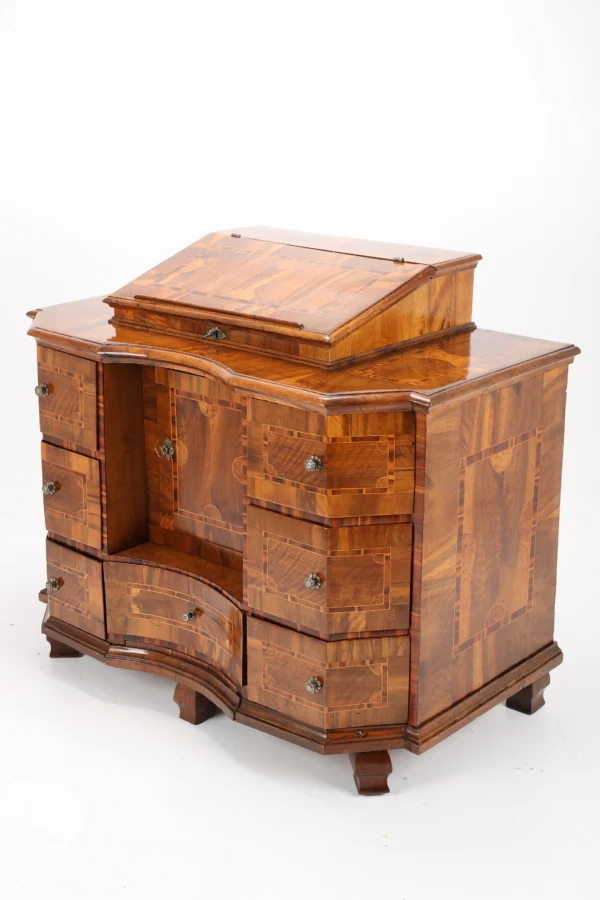
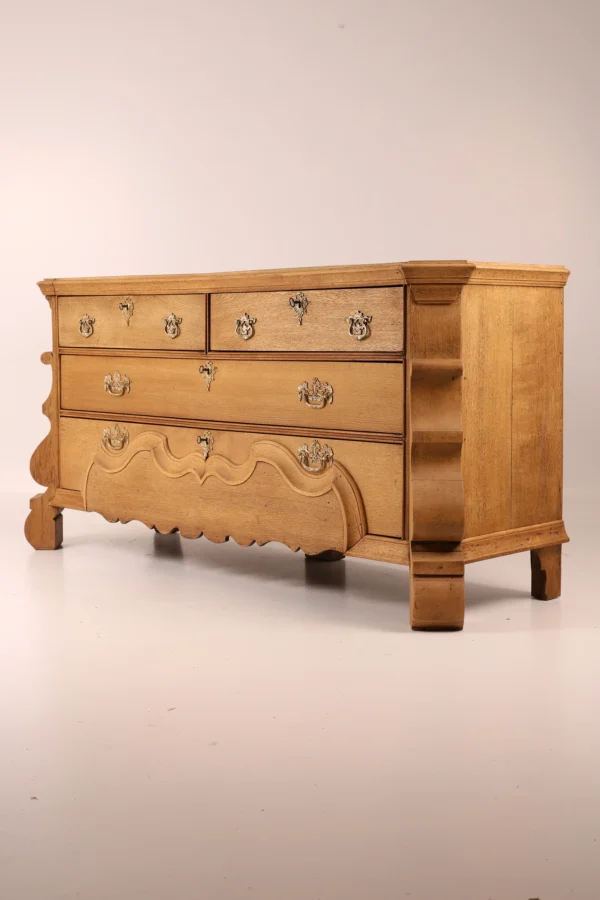

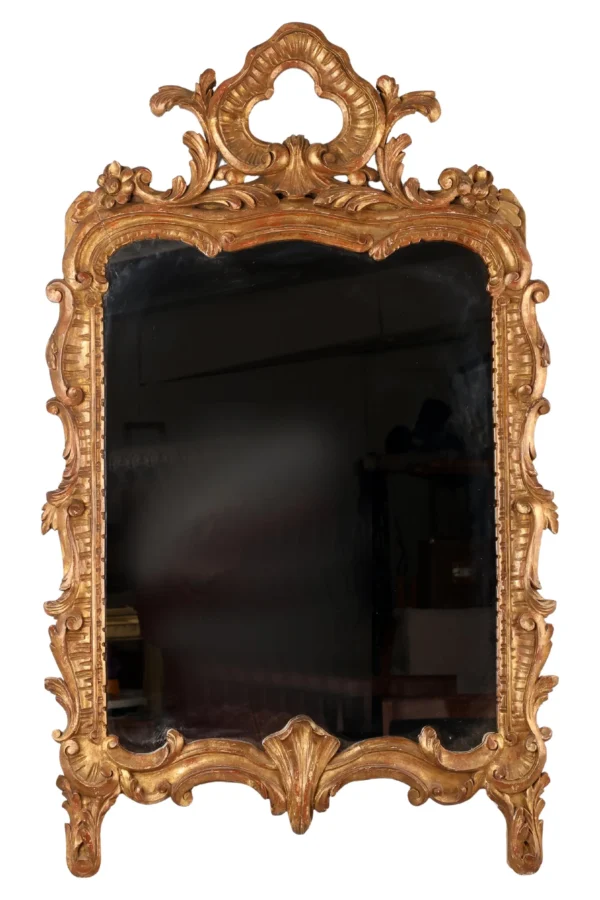

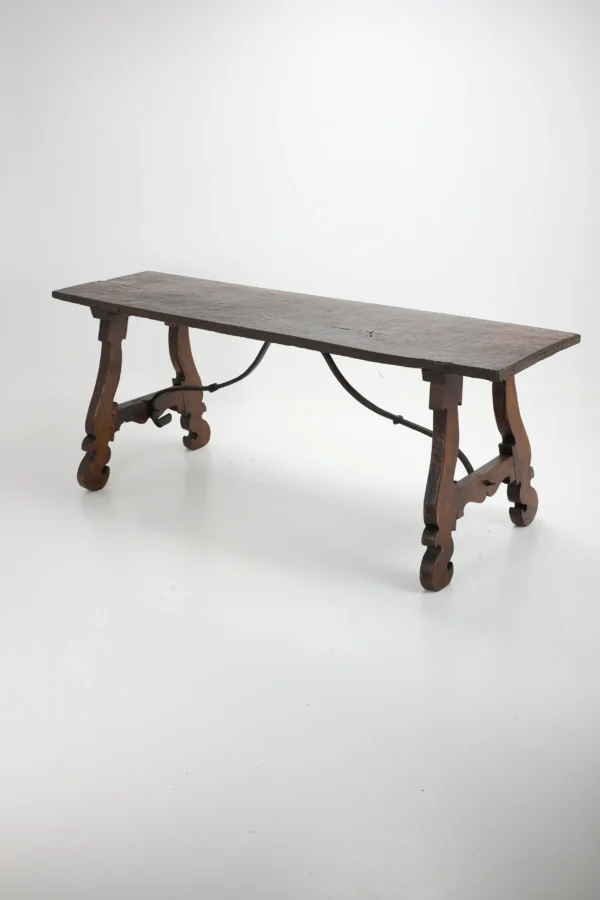
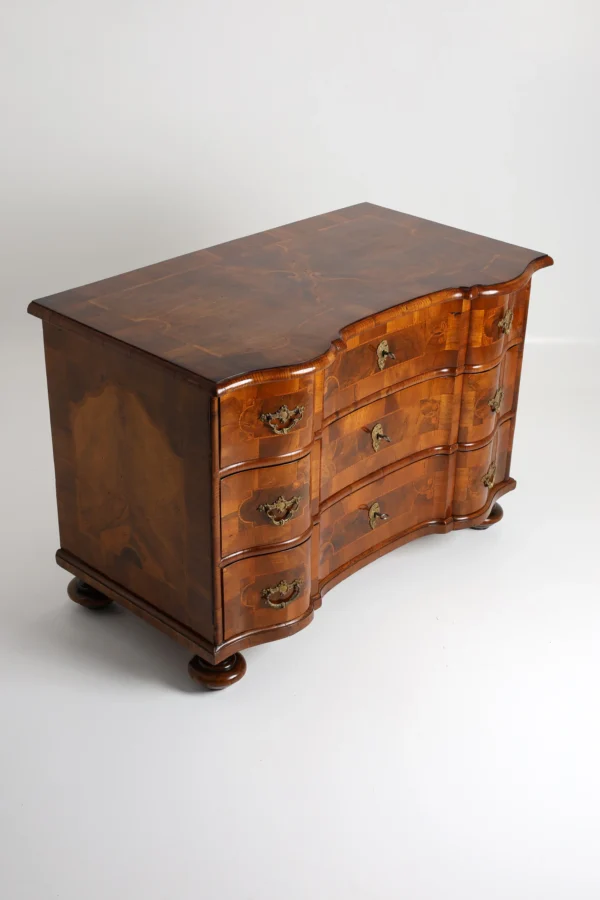

In this collection covers the full range of the European Baroque tradition, from French Boulle marquetry commodes and Italian carved walnut armchairs to Dutch floral marquetry cabinets and German bombé chests of drawers. Each piece has been assessed individually for the quality of the original carving, the integrity of the surface finish, and the authenticity of the hardware and gilt bronze mounts.
The Baroque period covers roughly the 17th century and the first half of the 18th century, and the furniture produced during those decades reflects two primary forces: the Catholic Counter-Reformation, which deployed overwhelming material grandeur to inspire awe and devotion, and the rise of absolute monarchies across Europe, which used furniture as political propaganda. The result was a style furniture tradition of extraordinary ambition, where a chest of drawers was not merely a storage piece but an architectural statement, and a baroque armchair was not merely a seat but a declaration of social rank.
The characteristics of baroque furniture are immediately recognizable. Heavy imposing proportions. Bold symmetry. Deep hand-carved ornament in walnut, ebony, and gilded wood: acanthus leaves, scrolls, putti, lion paw feet, and the dramatic motifs drawn from classical antiquity. Rich materials including tortoiseshell, ivory, brass, and fire-gilded bronze ormolu mounts that catch light in ways that no modern gilding replicates.
The surfaces of baroque style furniture are theatrical by design. Dark polished ebony or walnut veneer provides the backdrop against which gold leaf gilding, intricate carvings, and inlay work perform. This is the chiaroscuro principle applied to furniture, the dramatic contrast between deep shadow and brilliant highlight that gives Baroque pieces their characteristic visual energy. In candlelight, which is how these interiors were originally experienced, a baroque commode or console table with its fire-gilded mounts and carved ornament comes alive in a way that flat contemporary surfaces never approach.
Upholstery in the Baroque tradition was equally theatrical: Genoa velvets, Venetian silks, and richly patterned fabrics with large floral patterns covered the seats and backs of baroque armchairs and sofas. The curved legs and scrolled supports of Baroque seating carry the organic energy of the style into the structural elements of the piece.
French baroque furniture represents the most codified and politically deliberate expression of the style. Under Louis XIV, furniture became a formal instrument of statecraft. The Gobelins Manufactory, established in 1662 under Jean-Baptiste Colbert, unified the decorative arts under royal direction, ensuring that every piece produced for the court communicated the glory and permanence of the French monarchy.
The defining figure of French baroque furniture design is André-Charles Boulle, appointed Premier ébéniste du Roi and given the extraordinary privilege of working within the Louvre itself. Boulle marquetry, the technique of cutting brass and tortoiseshell simultaneously to create interlocking veneers, is the signature surface treatment of the French Baroque tradition. The première partie version, brass pattern on a tortoiseshell ground, and the contre-partie reverse, were applied to monumental armoires, commodes, and writing desks with a scale and precision that remains unmatched in the history of decorative woodwork.
The ormolu mounts on genuine French baroque furniture were produced by fire gilding, painting a gold and mercury amalgam onto cast bronze and firing it in a kiln until the mercury vaporized. The process was extraordinarily toxic, causing chronic poisoning known as Gilder’s Palsy in the craftsmen who carried it out. The warm, deep luminosity of genuine fire-gilded bronze, its mercury bloom visible in the deepest recesses of the chasing, is one of the most reliable authentication indicators for any serious buyer of French baroque furnishings.
Louis XIV style furniture, with its strict symmetry and heavy architectural presence, gave way by the early 18th century to the early movements toward the Louis XV style and the beginning of the Rococo era. The transition is visible in pieces from the 1710s and 1720s where the architectural severity of the Baroque begins to soften into the organic curves and asymmetry of the Rococo style that followed.
Italian baroque furniture is the most theatrical expression of the style and the tradition from which all others descended. The Baroque originated in Italy, and Italian baroque furniture reflects that origin in the scale of its ambition and the quality of its carving.
Rome produced furniture of monumental architectural proportions for the papal court, with massive carved consoles, gilded mirrors, and cabinet pieces that functioned as architecture in miniature. Venetian baroque furniture is more lyrical, best exemplified by the extraordinary work of Andrea Brustolon, known in his own time as the Michelangelo of wood. His commission for the Venier family, now in the Ca’ Rezzonico museum in Venice, features console tables and vase stands where the structural elements, the legs, the supports, the aprons, dissolve entirely into carved figural groups of mythological figures, chained warriors, and naturalistic foliage. These are pieces of baroque furniture at the absolute boundary between functional object and pure sculpture.
Italian baroque furniture also developed pietra dura, the inlay of semi-precious hardstones including lapis lazuli, agate, and malachite into cabinet doors and table tops. The resulting surfaces have a jeweled permanence that no wood marquetry achieves, and genuine pietra dura pieces from the Florentine tradition are among the most collectible of all Baroque furnishings.
The elegance of baroque furniture in the Italian tradition reflects a culture deeply committed to the idea that beautiful objects should be made as well as they can possibly be made, regardless of the time and skill required. That commitment is visible in every carved detail of a genuine Italian baroque armchair or cabinet, in the crispness of the ornate carvings and the quality of the gilded surfaces, and it is what distinguishes period Italian baroque furniture from the revival production of later centuries.
Dutch baroque furniture reflects the merchant class aesthetic of the Golden Age Republic rather than the court tradition of France and Italy. Jan van Mekeren and his Amsterdam workshop created floral marquetry cabinet pieces of extraordinary realism, paintings in wood using dyed exotic veneers to create bouquets that mirror the contemporary Dutch still life tradition. Dutch baroque style furniture is distinguished by its restraint relative to French and Italian examples, its preference for architectural panel moldings over figural carving, and its ingenious hidden lock mechanisms concealed behind sliding pilasters and false panels.
The Auricular style, developed initially in Dutch silversmithing and transferred to furniture carving, produced the most bizarre decorative vocabulary in the entire Baroque tradition: organic, fleshy, cartilaginous forms that resemble human anatomy rather than classical ornament. These strange undulating surfaces on chair backs and cabinet frames are entirely distinctive and entirely Dutch.
German baroque furniture, particularly from the South German workshops of Augsburg and Munich, produced bombé chests of drawers of considerable ambition. The swelling convex fronts and sides of these pieces required cabinetmakers to bend thick walnut veneer over complex curves without cracking, a demonstration of technical craft that remains impressive in surviving examples. The baroque chest of drawers section covers these bombé forms alongside French and Dutch examples, each assessed for the quality of the original veneer surface and the integrity of the carved details.
Spanish baroque furniture, with its austere exterior and jewel-like interior, reflects the Habsburg court tradition and the influence of Moorish craft on Iberian decorative arts. The bargueño writing desk presents a face of solid walnut and wrought iron hardware to the world and then opens to reveal an interior of gilded bone inlay, lacquer panels, and richly decorated small drawers. The contrast between exterior restraint and interior richness is the defining character of the Spanish Baroque tradition.
Baroque furniture in a contemporary interior does one thing that modern furniture cannot: it creates an immediate and undeniable focal point. Interior designers working in the Neo-Baroque minimalism tradition place a single piece of baroque furniture, a carved giltwood mirror, a Boulle marquetry commode, a baroque armchair in velvet upholstery, against a plain contemporary wall and let the complexity of the piece do all the visual work in the room.
The grandeur of baroque design suits rooms with architectural scale and height, but some of the most effective contemporary uses of baroque furniture involve deliberate contrast: a carved walnut console in a minimalist white hallway, a gilded baroque chair beside a contemporary sofa, a French baroque chest of drawers beneath a large abstract painting. These juxtapositions work because baroque furniture was designed to demand attention, and in a room that does not compete with it, that quality is fully expressed.
Interior designers and serious collectors looking for pieces from the French and Italian baroque furniture traditions will find the collection here covers both with the same care and assessment criteria. Antiqueria Breitling has been sourcing European baroque furniture since the 1980s, and the depth of the collection reflects four decades of selective buying across French, Dutch, Italian, and German traditions.
If you are looking for a specific piece of baroque furniture, a particular regional tradition, form, or material not currently listed, write to us at contact@antiqueria-breitling.com. The warehouse holds pieces not yet photographed or catalogued, and requests are often easier to fulfill than buyers expect. Worldwide shipping available on all pieces.


