Worldwide Insured Shipping
Hand-Restored in our Atelier
Professional Custom Crating

Worldwide Insured Shipping
Hand-Restored in our Atelier
Professional Custom Crating

An antique side table is one of those purchases that solves a practical problem and adds something to a room at the same time. It holds a lamp, a drink, a book, and it does so while looking like it belongs exactly where it has been placed. The antique and vintage side tables in this collection range from small accent tables made for Georgian drawing rooms to more substantial occasional tables that can serve multiple functions depending on where they are placed.
What separates a genuinely old side table from an antique style reproduction is not always obvious in photographs. The weight of the wood, the color of the underside, the way the drawer front fits its opening, the patina on the antique brass hardware, these details are visible in person and they matter. Every table listed here has been assessed with that in mind.
The 18th century produced some of the finest small furniture ever made, and the side table was one of the forms that benefited most from that period’s commitment to proportion and craft. English Georgian examples in solid oak or mahogany are typically built on tapered legs or turned legs, sometimes with a single drawer in the frieze and simple brass hardware on the drawer front. The table top is usually modest in size, the construction underneath it is not.
A tea table from this period is a particular form worth knowing. Made to hold a tea service, it often features a raised edge, sometimes described as a top surrounded by a pierced gallery, to prevent cups from sliding. Good original examples in mahogany or walnut are increasingly hard to find in honest condition.
The tilt-top table is another distinctly 18th century solution. The circular top tips to vertical on a pivot, allowing the table to be stored against a wall when not in use. Raised on graceful cabriole legs with pad feet, a tilt-top table in original condition with its surface intact is a practical and elegant antique side table that suits almost any interior.
A table from the 19th century reflects the considerable range of styles that period produced. Early examples carry the restraint of Regency design, with reeded or fluted legs, figured mahogany surfaces, and brass details that are precise without being decorative for its own sake. Later Victorian pieces are heavier and more ornate, with turned legs, carved aprons, and a confidence in their own weight.
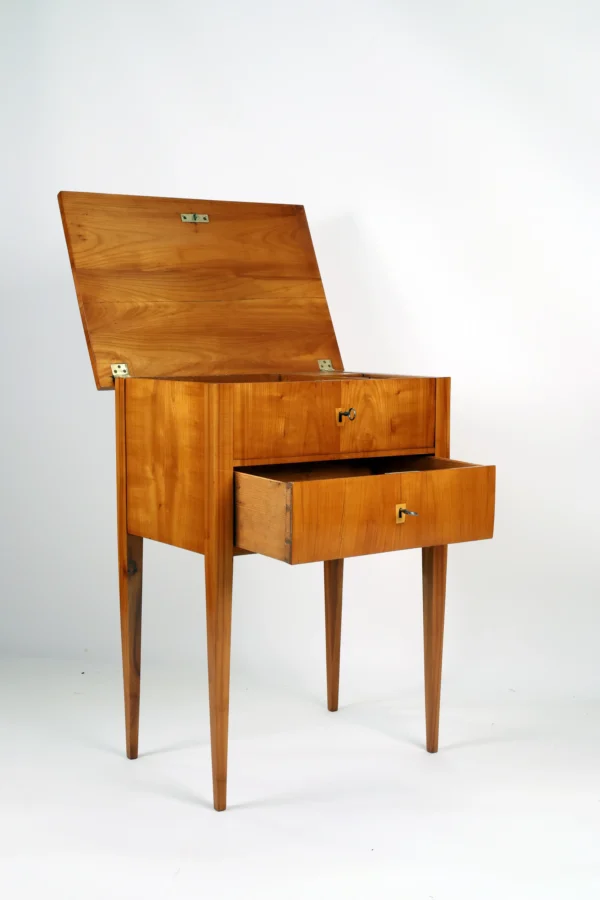
The work table and writing table are two 19th century forms that function comfortably as side tables in a modern interior. A work table, originally fitted with a fabric bag beneath the drawer for sewing materials, typically offers a small drawer with brass hardware and a compact footprint. A writing table or writing desk with a leather-inset top and a drawer with brass handles serves equally well beside a bed or chair.
Biedermeier side tables from the German and Austrian tradition deserve particular mention. Built in cherry, ash, or maple with clean lines and minimal ornament, a Biedermeier occasional table has a modernity to it that makes it one of the more versatile antique side tables available. The pedestal table form, a circular top on a single column with a tripod base, appears frequently in this tradition and works well as both a lamp table and a small accent table.
Art deco vintage pieces bring a different energy to the side table category. The forms are geometric, the materials are often mixed, and the hardware tends toward chrome or antique brass rather than the drop handles of earlier periods. A walnut side table from the 1920s or 1930s with inlaid banding and angular legs reads as both clearly antique and entirely contemporary in the right setting.
Nesting tables in walnut or oak from this period are a practical solution for smaller rooms. A set of antique nesting tables offers the flexibility of multiple surfaces that disappear when not needed, and good original sets with matching patina across all three are worth acquiring when they appear.
An oak side table from the 17th or 18th century is built to a standard of solidity that later furniture rarely matches. The wood itself is dense and slow-growing, the joints are pegged or wedged, and the surfaces develop a honey-brown depth with age that no finish can replicate from new. A rustic side table in oak with a single drawer and turned legs suits a country house interior or a more informal modern room that can carry the weight of genuinely old furniture.
An antique oak occasional table with a round top and simple stretcher base is a smaller and more adaptable form. These appear regularly in English country furniture and tend to be underpriced relative to their quality and age.
Walnut was the dominant furniture wood in Europe before mahogany arrived, and the best antique walnut side tables show why it was so prized. The grain is complex and variable, the color ranges from pale grey-brown to deep chocolate depending on age and light, and a well-figured walnut table top has a visual interest that plain mahogany cannot match.
A walnut side table with cabriole legs and a pad or claw-and-ball foot is a classic English or Dutch form from the early 18th century. The drawer front in these pieces is typically crossbanded in a contrasting veneer, and the brass hardware, when original, has a warmth that reproduction fittings never quite achieve. A walnut table with curved legs and a small single drawer is one of the more refined small furniture forms of the period.
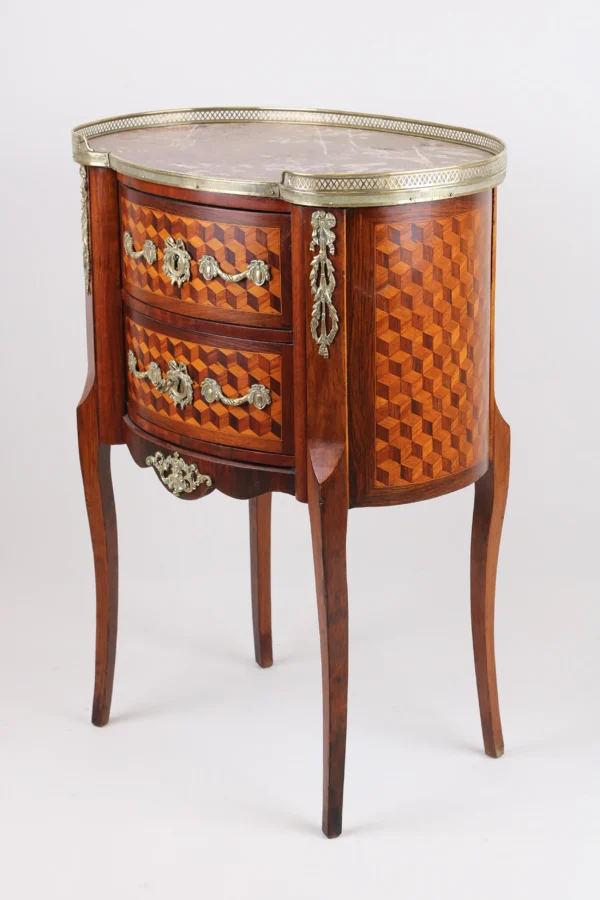
A marble top side table occupies a specific position in the market. The combination of a stone surface and a wooden or metal base is one that European furniture makers used throughout the 18th and 19th centuries, particularly in France and Italy, and the results have aged extremely well.
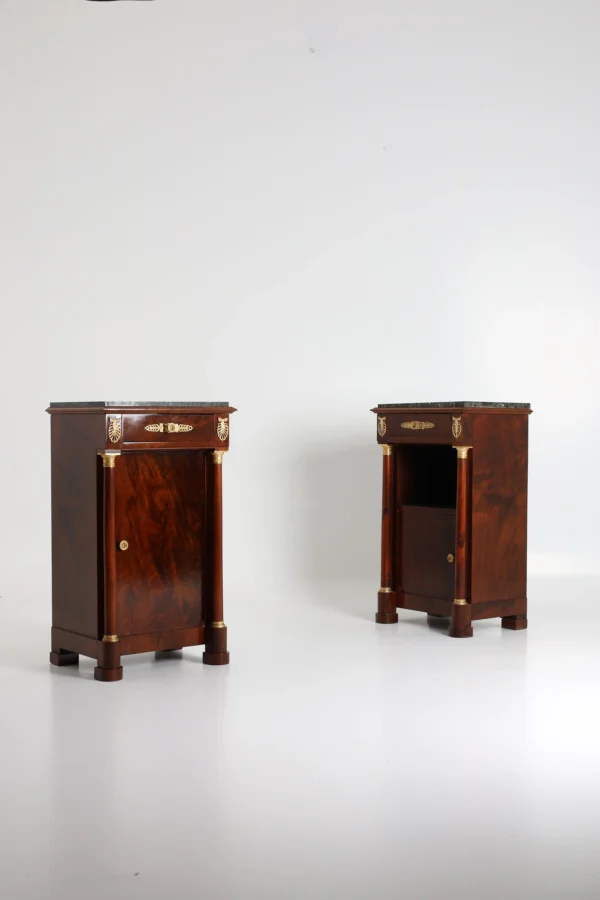
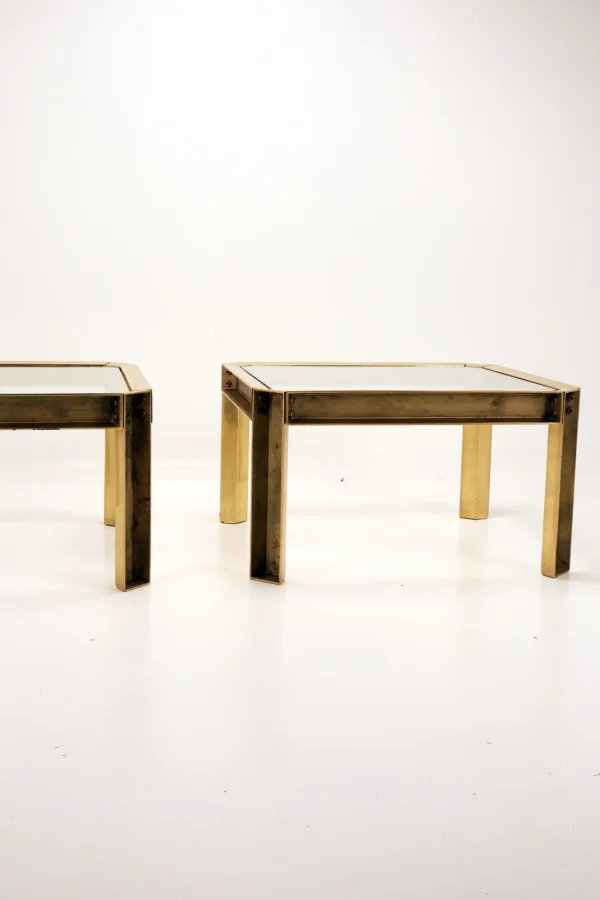
White marble is the most common, appearing on French tables, console tables, and bedside tables across a wide range of periods and styles. Black marble appears less frequently and tends to create a more dramatic effect, particularly on a brass side table or antique copper base where the contrast between the dark stone and the warm metal is direct and striking.
A marble top surrounded by a carved or gilded wooden frame on tapered fluted legs is a distinctly French table form, associated with Louis XVI and Directoire styles. These are precise, elegant pieces of furniture that hold their value and their visual presence in any room.
Antique brass and antique copper tables are a smaller category but a genuinely interesting one. Some are entirely metal in construction, with cast or wrought frames and stone or glass top surfaces. Others use metal purely for the decorative elements, handles, mounts, gallery rails, while the structure remains wood.
A brass side table in the Moorish or Anglo-Indian manner, with a tray top in engraved brass and a folding wooden base, is a table that has traveled and its character reflects that. These pieces were made in significant numbers for the export market in the late 19th and early 20th centuries and many have survived in good condition. A tiger bamboo side table from the same era takes a similar approach with organic materials and Eastern influence.
A side table or nightstand beside a bed asks for a particular combination of qualities: enough surface for a lamp and a few objects, a drawer for things that need to be within reach, and a height that works with the bed frame. Antique bedside tables in mahogany or painted wood with a single drawer and tapered legs fit this description precisely and look considerably better doing it than most modern alternatives.
A sofa table is a long, narrow form originally designed to stand behind a sofa, and a good antique example in mahogany with drop leaves at each end and a drawer in the frieze is both useful and handsome. It serves equally well as an entryway console or a hall table in a narrow space.
A lamp table is typically smaller than a standard occasional table, with a circular or octagonal top just large enough for a lamp base, and slender legs that give it a light presence in a room. These are easy pieces to place and easy to live with.
The cocktail table and martini table are 20th century forms that blur the line between a small side table and a vintage coffee table. A martini table, with its small circular top on a single stem and a weighted base, is one of the more elegant solutions to the problem of a drink beside a chair. Art deco examples in chrome and glass top combinations are the most collected, though earlier wooden versions with turned stems have a quieter appeal.
A vintage coffee table in oak or walnut from the early 20th century, with a solid wood lower shelf and a plain tabletop, is a piece that works in a modern sitting room without requiring any particular period commitment from the rest of the furnishings.


