Worldwide Insured Shipping
Hand-Restored in our Atelier
Professional Custom Crating

Worldwide Insured Shipping
Hand-Restored in our Atelier
Professional Custom Crating


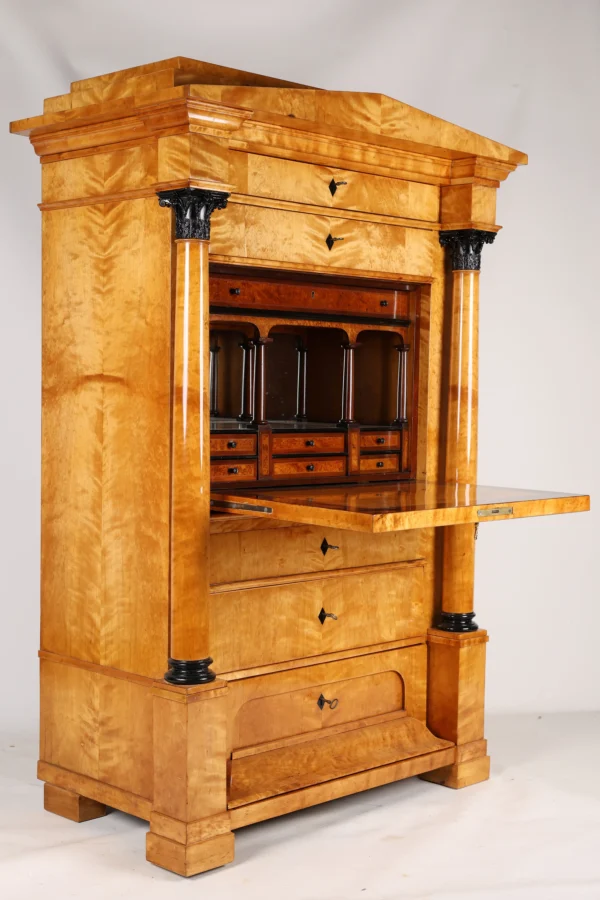
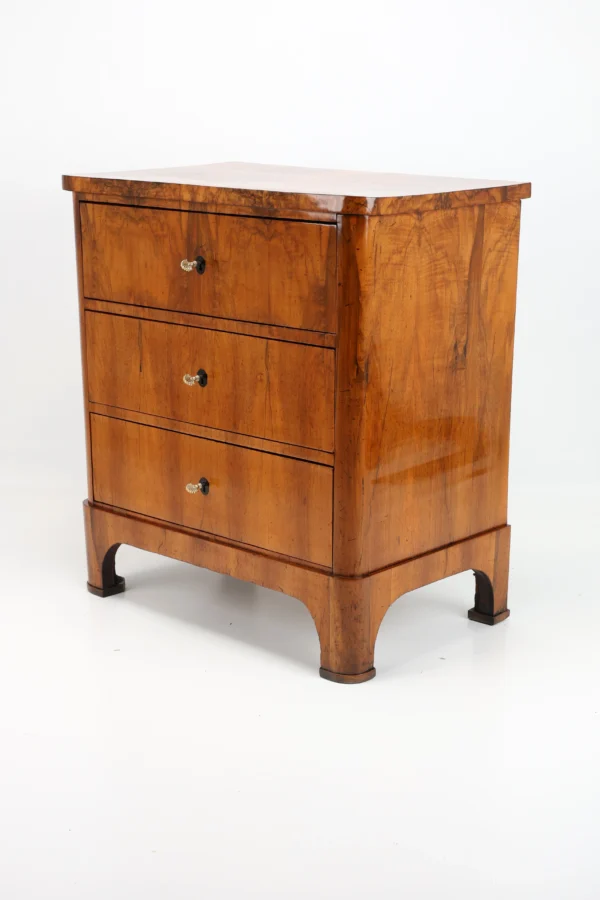


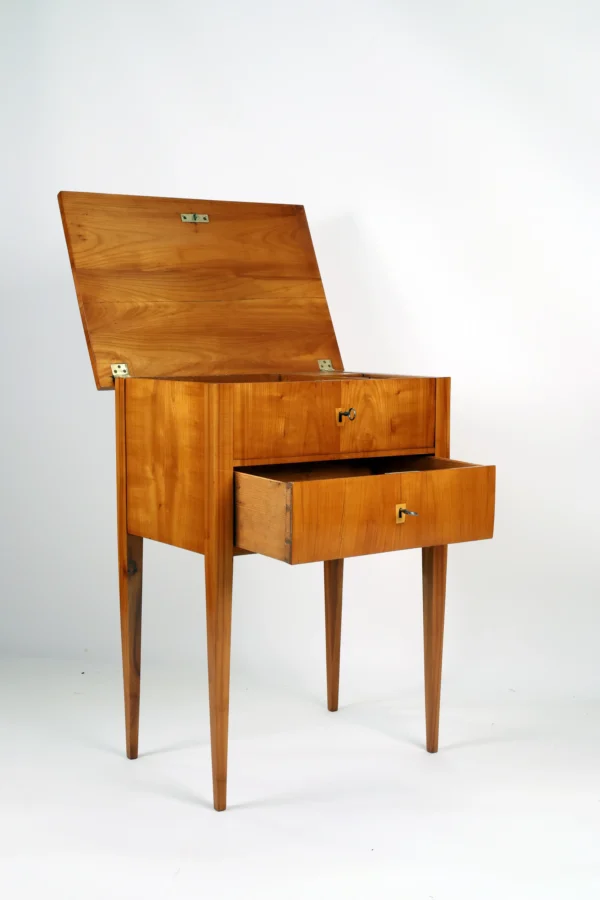

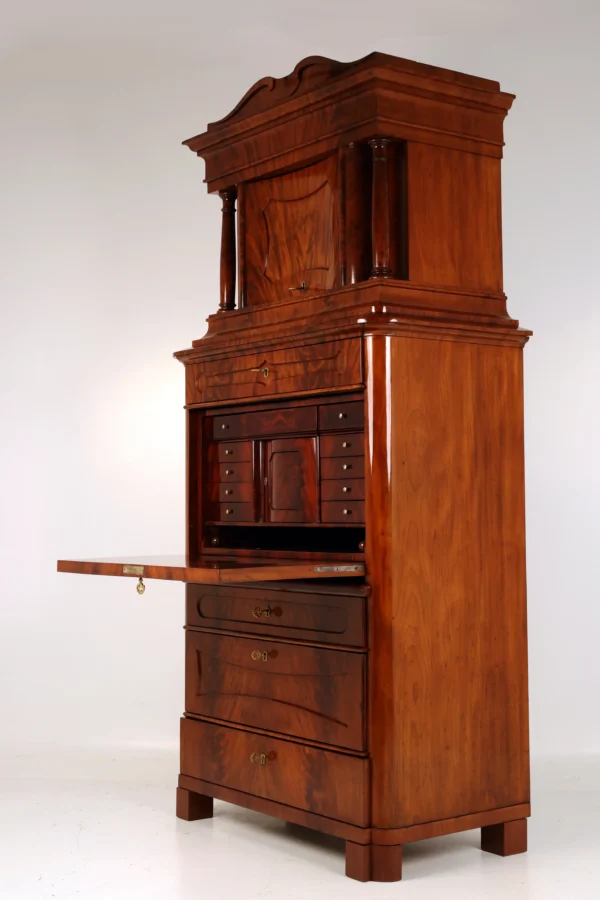

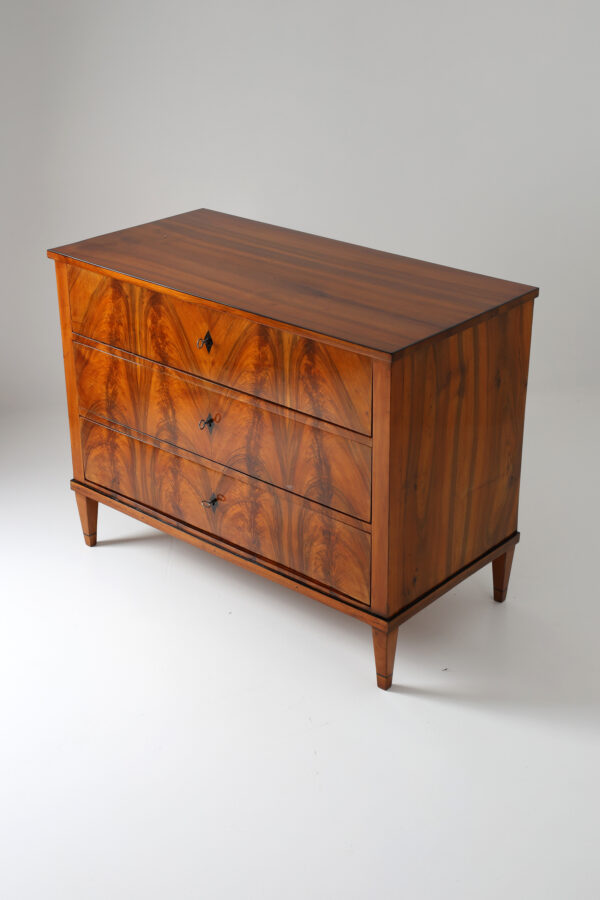
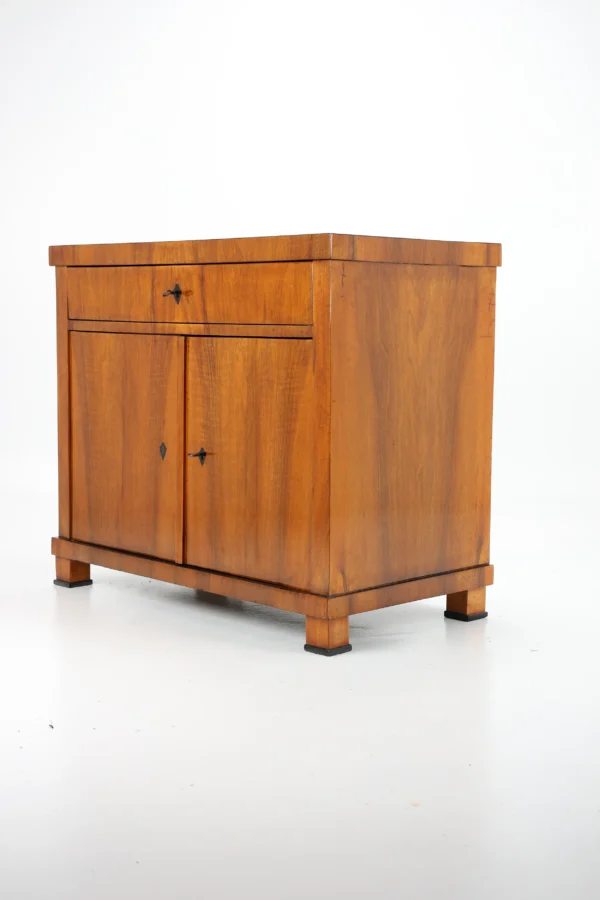
Biedermeier furniture does something that few other antique styles manage as naturally: it looks entirely at home in a contemporary interior without any period framing required. The clean lines, figured walnut veneers, and honest construction of the best antique pieces are as relevant today as they were two centuries ago.
Biedermeier furniture for sale in this collection covers the full range of the tradition, from early 19th century Viennese secretaire desks and chests of drawers to German Biedermeier sofas, wardrobes, side tables, and dining chairs. Each piece has been sourced selectively, assessed individually, and restored only where genuinely necessary, using traditional techniques including French polish, shellac finishing, and marquetry repair carried out in the in-house atelier.
Many Biedermeier pieces that appear on the market today have been refinished multiple times, stripped of their original patina, and separated from the interior fittings or hardware that make an authentic piece worth owning. This collection distinguishes clearly between original 19th century Biedermeier examples and later reproductions or heavily restored pieces. That distinction matters for valuation, for authenticity, and for the long-term satisfaction of owning something genuinely old.
The figured walnut veneer used by German and Austrian cabinetmakers of the 1820s and 1840s has a warmth and depth that later production rarely approaches. Fruitwood, maple, birch, and cherry appear alongside walnut, particularly in Austrian examples where lighter woods were preferred for their refinement and warmth. Ebonized details in black-stained fruitwood provide geometric contrast without metal ornament. Original patina intact and unstripped is the single most important condition indicator for any serious Biedermeier purchase.
The Biedermeier period ran from 1815 to 1848, from the Congress of Vienna to the European revolutions that ended the conservative political order Metternich had constructed. That political context shaped the style directly. Under strict censorship and political surveillance, the bourgeoisie of the German states and Austria retreated from public life into the domestic interior, which became the primary site of social, intellectual, and cultural activity. The home was where everything that mattered happened, and the furniture made for it had to reflect that seriousness.
The term Biedermeier was not used by the people who bought this furniture. It arrived posthumously as a satirical insult. Ludwig Eichrodt and his collaborator published verses in the Munich satirical magazine Fliegende Blätter in the 1850s under the persona of Papa Biedermeier, a fictional character combining bieder, meaning plain or honest, with the common surname Meier. The character mocked the apolitical, comfort-focused middle class citizen. The furniture that carried that mocking name outlasted the joke by two centuries and is now recognized as the first major European furniture movement created specifically by and for the bourgeoisie rather than the aristocracy or the court.
The contrast with the French empire style that preceded it is the sharpest in the history of European furniture design. Empire furniture projected imperial power through dark mahogany, heavy ormolu mounts, classical column supports, and the symbolic vocabulary of Napoleonic propaganda. The Biedermeier response stripped every one of those choices away. Light native fruitwoods replaced dark imported mahogany. Ebonized wood accents replaced bronze mounts. Bookmatched veneer grain replaced applied carving and gilding. The French empire style was designed to intimidate. Biedermeier furniture was designed to be lived with.
The Romantic era provided the cultural backdrop. As the audience for the arts expanded and more families invested in decorating their homes, the Biedermeier interior became a carefully considered environment. The piano, the writing desk, the sewing table, the upholstered sofa grouped around a central table, all of these were positioned in the center of the room rather than against the walls, creating what the period called the Wohninsel, the living island, where family life and private activities could unfold in comfort and intimacy.
The design philosophy of Biedermeier furniture is neoclassical in its underlying geometry but entirely domestic in its application. Cabinetmakers across Germany and Austria, particularly in Vienna, perfected the Blindholz construction system: a stable softwood carcass covered with thick hand-sawn veneer of three to five millimeters in walnut, cherry, birch, or fruitwood. The bookmatched veneer technique, opening consecutive sheets from the same log like pages of a book to create mirror-image grain patterns, made the natural grain of the wood the primary decorative element of every piece.
This was not a simplification. It was a deliberate design choice that anticipated the principles of modernism by a century. The Bauhaus movement that arrived in the early 20th century built on the same logic: form follows function, truth to materials, ornament removed in favor of structural honesty. Biedermeier furniture had already done all of this in the 1820s, in cherry and walnut, with shellac finishes and ebonized column details and the kind of hand-cut dovetail joinery that has kept these pieces structurally sound for two centuries.
The silhouette of a typical Biedermeier piece is immediately recognizable: clean architectural lines, plinth base or simple tapered feet, flat or gently curved surfaces that rely entirely on the veneer for visual interest, and a scale suited to urban apartment living rather than palatial state rooms. The utilitarian intelligence of the design is always present without ever feeling austere.
Vienna was the undisputed center of Biedermeier production, and the Josef Ulrich Danhauser workshop established a standard that shaped the tradition across Central Europe. Viennese Biedermeier is the most refined and experimental expression of the style: organic curves, delicate bookmatched cherry and walnut veneer, graceful proportions, and an inventiveness in form that produced everything from lyre-backed armchairs to globe tables with hidden interior compartments.
The Viennese sofa with its continuous gondola curve, the secretary desk with its theatrical mirrored interior, the chest of drawers with its uninterrupted bookmatched walnut surface, these are pieces that look contemporary in a way that is not a concession to modern taste but a reflection of design intelligence that was ahead of its time when it was first produced.
Austrian Biedermeier from outside Vienna shares the Viennese preference for fruitwoods and warmth of proportion while showing its own regional character in maple veneer, satinwood accents, and the particular quality of light that Austrian workshops understood how to build into a piece of furniture.
German Biedermeier furniture develops the tradition in distinct regional directions. Berlin production, shaped by Karl Friedrich Schinkel’s architectural neoclassicism, is more disciplined and more architectural than its Viennese counterpart. Harder edges, stronger proportions, and birch or darker walnut veneer give Berlin pieces a presence that suits a room needing structure alongside contemporary furnishings. Munich and the surrounding South German workshops produced Biedermeier furniture in cherry and walnut with strict neoclassical proportions, a focus on bookmatched veneer quality, and a warmth of material that bridges the gap between Viennese organicism and Berlin discipline.
North German Biedermeier from Hamburg shows the influence of maritime trade with England. Mahogany appears more frequently than in the southern workshops, giving northern pieces a slightly heavier and more formal character reflecting the English Regency aesthetic absorbed through commercial contact. The sensibility remains Biedermeier, the construction remains honest, but the material palette is darker and the proportions more substantial.
The mid-19th century production from all German regions shows the Biedermeier style beginning its transition toward the heavier, more ornamented historicist styles that followed the 1848 revolutions. These later pieces carry the Biedermeier vocabulary into a slightly different register and are well-made objects in their own right, distinguished from the purer early production primarily by proportional weight and the occasional introduction of decorative carving that earlier pieces would have avoided.
The Biedermeier chest of drawers is the most characteristic case furniture form of the period. Bookmatched walnut or cherry veneer running uninterrupted across the drawer fronts, ebonized column details, plinth base, and a shellac finish that has developed over two centuries into something no modern coating replicates. These are practical storage pieces of genuine quality that work in a contemporary bedroom or living room without imposing a period narrative on the surrounding space.
The Biedermeier secretary desk is the most personal piece the tradition produced. A fall-front writing surface reveals a theatrical interior of contrasting veneers, mirrored niches, small drawers, and in the finest examples hidden compartments accessible only through a memorized sequence of mechanical triggers. The exterior presents complete calm. The interior is an entirely different register.
The Biedermeier side table covers the full range of domestic occasional forms that the Wohninsel concept required: sewing tables with fitted interiors for needlework, circular pedestal tables for lamp or occasional use, game tables with fold-out tops. These are the pieces that furnished the center of the Biedermeier room rather than its perimeter, and their domestic intelligence makes them among the most versatile antique pieces available for contemporary use.
The Biedermeier wardrobe translated the same design principles into the largest furniture form of the domestic interior. Bookmatched veneer on the doors, ebonized column details flanking the panels, and an interior of fixed shelves, linen press sections, and occasionally hidden compartments that reflected the era’s need for secure domestic storage under a regime of political surveillance.
Beyond these core forms, the collection includes Biedermeier sofas and couches with their characteristic gondola curves and original upholstery replaced in period-appropriate fabrics, dining chairs and armchairs in walnut and fruitwood, display cabinets and vitrines, mirrors in cherry and birch frames, and dining tables in circular pedestal form that reflect the Biedermeier preference for egalitarian round table arrangements over hierarchical rectangular ones.
The compatibility of Biedermeier furniture with modern interiors is one of the most consistent observations made by interior designers who work with this period. The clean geometry, light wood tones, and domestic scale of these pieces make them natural companions for contemporary Scandinavian furniture, minimalist interiors, and apartments where a piece of warm historical character is needed without period-room commitment.
In 19th-century Germany and Austria, the Biedermeier movement was driven by urbanization and industrialization, by the growing demands of a middle class that needed furniture suited to smaller rooms and daily domestic use. Those conditions are not entirely different from the contemporary urban apartment, and the furniture designed for them transfers with surprising ease.
The pieces in this collection have been selected and where necessary restored with that compatibility in mind. If you are looking for a specific Biedermeier form, wood, or regional origin not currently listed, write to us at contact@antiqueria-breitling.com. The warehouse holds pieces not yet photographed or catalogued, and requests are often easier to fulfill than buyers expect.


