Worldwide Insured Shipping
Hand-Restored in our Atelier
Professional Custom Crating

Worldwide Insured Shipping
Hand-Restored in our Atelier
Professional Custom Crating
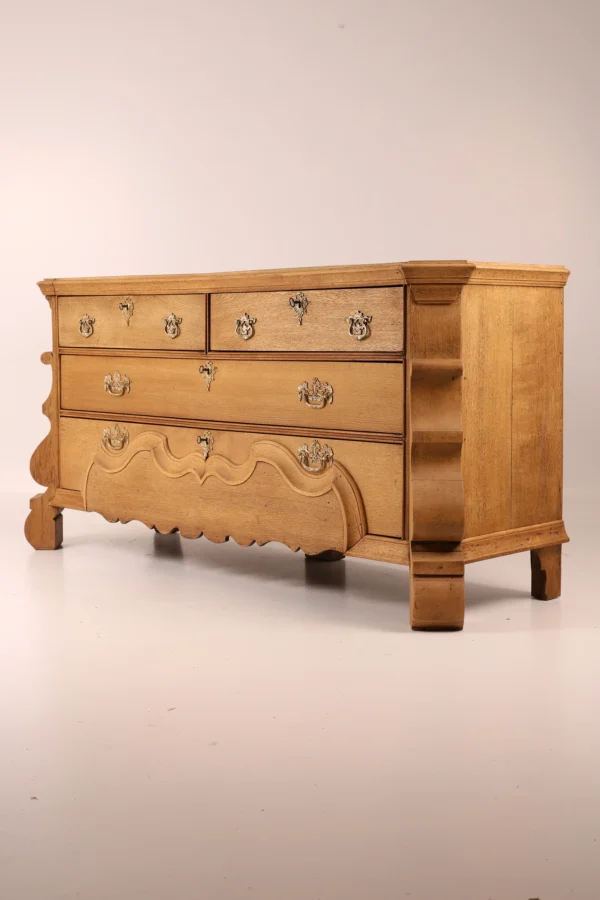
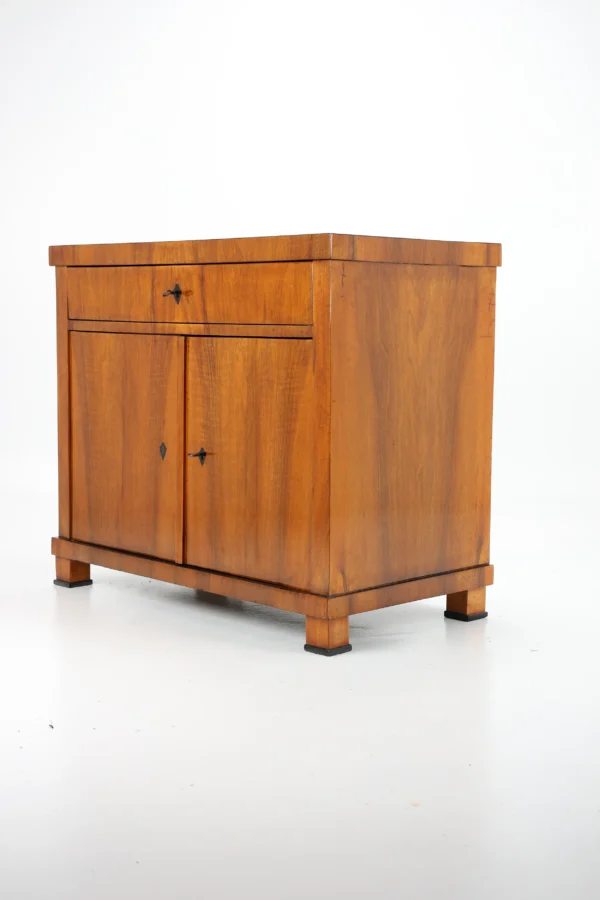
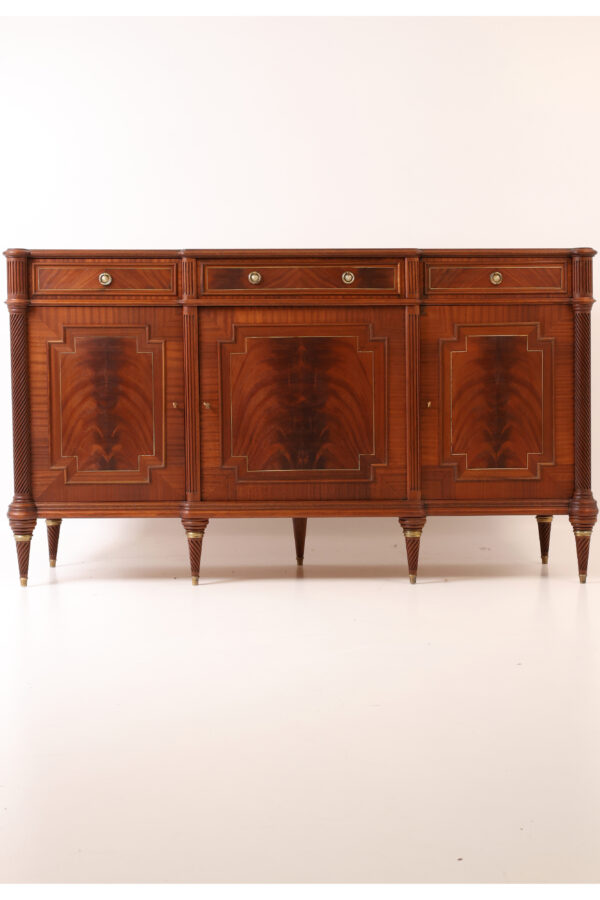
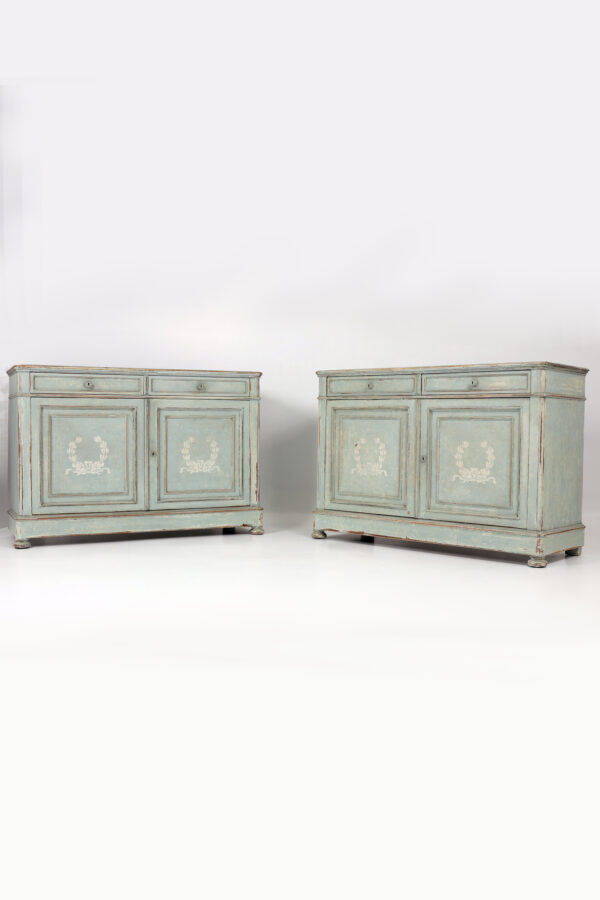
This collection covers antique buffets and sideboards from the 18th century through the mid-20th, with particular strength in French and Belgian pieces.
The antique buffet exists in several distinct forms depending on its origin and period. The French buffet à deux corps, a two-body piece with a lower cabinet section and a smaller upper cabinet set back above it, is one of the most architecturally conceived storage pieces in the European furniture tradition. Made in oak or walnut from the 16th century onward, these pieces were built for dining rooms and reception rooms that expected furniture to make a statement. The lower section typically features two or four cabinet doors with carved panels, and the upper section adds open shelving or further cabinet storage behind paneled doors or glazed fronts.
The single-body buffet, lower and wider, is the more common form and the more practical one for most modern interiors. A 19th century French buffet in solid oak or walnut with two drawers across the top, paneled doors below, and the original locks and keys intact is a piece of antique furniture that provides convenient storage and display surface without requiring a large room to contain it.
When assessing any antique buffet for sale, the patina of the wood is the first thing to examine. A genuine old patina develops from the inside out, with color and depth that refinishing cannot replicate. The patina and character of a walnut or oak buffet that has been maintained rather than over-restored is one of the primary indicators of an honest piece. Check the cabinet door construction, the drawer linings, and the back panel for evidence consistent with the claimed age.
The sideboard or buffet occupies the same functional territory in most interiors, and the distinction between the two terms is partly one of form and partly one of origin. The English sideboard, developed in the late 18th century, typically stands on legs with a central drawer and flanking cabinet sections. The French buffet sits directly on the floor or on bun feet, with a more solid and architectural presence.
A french enfilade is a related form, longer and lower than a standard buffet, with multiple cabinet doors running across the full width and no upper section. An enfilade in walnut or french oak with three or four cabinet doors, two drawers across the top, and the original brass ring pulls is a piece of classic French furniture that suits a dining room, a hallway, or a large living room equally well. The credenza follows similar principles in the Italian tradition, and 18th century Italian credenzas in walnut with carved detail and paneled doors are among the more distinctive buffet sideboards in this collection.
A sideboard in the English tradition in mahogany with tapered legs, a central drawer, and side doors flanking the central section is a practical and refined piece of antique furniture. Regency examples in bookmatched mahogany veneer with brass ring pulls and original patina represent the high point of English sideboard production, and the craftsmanship in the best examples is precise and consistent.
Antique buffets from the 18th century are primarily French and Italian in this collection, reflecting the strength of the continental buffet tradition in that period. An 18th century French Louis XV buffet in provincial oak or walnut, with carved floral detail on the cabinet doors, a plank top, and bun feet, is a grand French piece of furniture that carries the Rococo spirit in a domestic and unpretentious form. Country French and french country buffets from the same period were made in regional workshops that interpreted Parisian styles at some distance, producing pieces with a directness and warmth that court furniture does not always have.
An 18th century French Louis XV buffet in solid oak with hand-carved detail and original ironwork hardware is increasingly difficult to source in honest unrestored condition. The natural grain of the oak in these pieces develops a warmth with age that no painted finish or applied stain approaches, and a buffet with its original surface and patina of the wood intact is considerably more interesting than one that has been stripped and refinished.
An 18th century Italian baroque buffet in walnut with carved panels, side doors, and a marble top is a different and more monumental form. These pieces were made for palazzo interiors and they carry that scale with them. The carved detail on Italian baroque buffets is often of exceptional quality, and the walnut used in the finest examples was selected for figure and color in a way that reflects the importance placed on the material.
The 19th century produced antique buffets in greater variety than any period before it, and the French tradition dominates this category. A 19th century French Louis Philippe buffet in walnut or mahogany, with paneled doors, two drawers across the top, and the characteristic solidity of the Louis Philippe period, is a practical and handsome piece of antique furniture that works in a dining room or kitchen as naturally as it did in its original setting.
The louis philippe period, running from the 1830s to the 1840s, produced some of the most consistently well-made buffets in the French tradition. A 19th century french louis philippe buffet in solid walnut with fluted pilasters, paneled doors, and original locks and keys is a piece that reflects the period’s emphasis on quality materials and honest construction. The walnut used in louis philippe period pieces is typically well-figured, and the natural grain highlights the architectural lines of the piece without requiring further ornament.
A 19th century French mahogany buffet in the french empire style, with a marble top, tapered legs, and brass ring pulls on the drawers, is a more formal piece that suits a dining room of corresponding character. French mahogany buffets from the early 19th century are typically veneered in bookmatched mahogany veneer over a solid carcass, and the precision of the veneer work in the best examples reflects the high standards of Parisian workshop production.
Belgian buffets from the 19th century are less frequently discussed but worth seeking out. A 19th century Belgian buffet in oak with carved detail, four cabinet doors, and a plank top has a robustness and scale that reflects the Flemish furniture tradition, and the craftsmanship is consistently high. These pieces are often available at more accessible prices than comparable French examples, and the quality of construction is comparable.
A gray painted or hand-painted buffet from the late 19th or early 20th century occupies a different category. Scandinavian and Central European painted buffets with their original paint surface intact, showing the wear and patina of a century of use, are honest pieces of antique furniture that suit a rustic or informal interior. A hand-painted buffet with original painted finish and carved detail is a mid-20th century or earlier piece that carries its history directly on its surface.
If you are looking for a specific antique buffet or sideboard that is not currently listed, write to us at contact@antiqueria-breitling.com. The warehouse holds pieces not yet photographed or catalogued, and requests for a particular style, wood, or period are often easier to fulfill than buyers expect.


