Worldwide Insured Shipping
Hand-Restored in our Atelier
Professional Custom Crating

Worldwide Insured Shipping
Hand-Restored in our Atelier
Professional Custom Crating


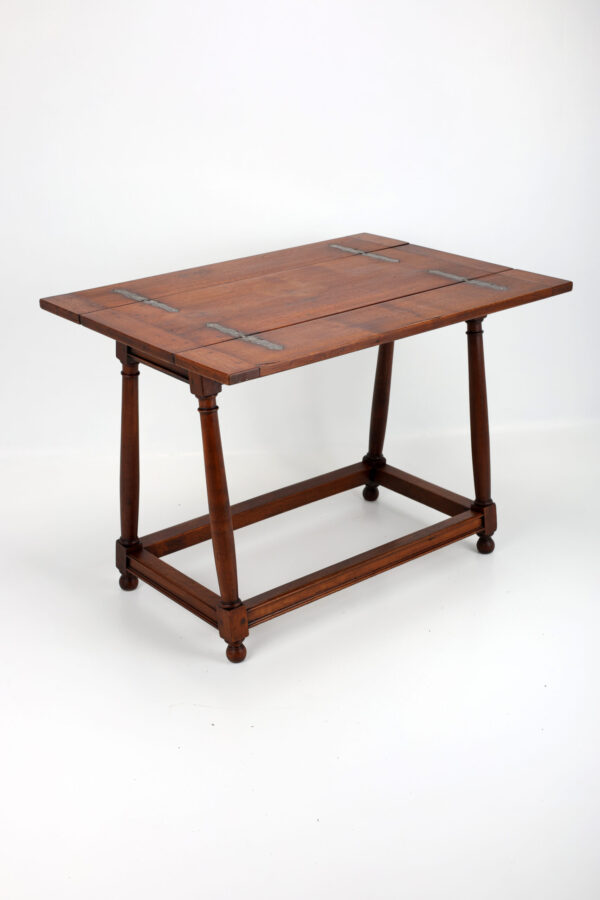
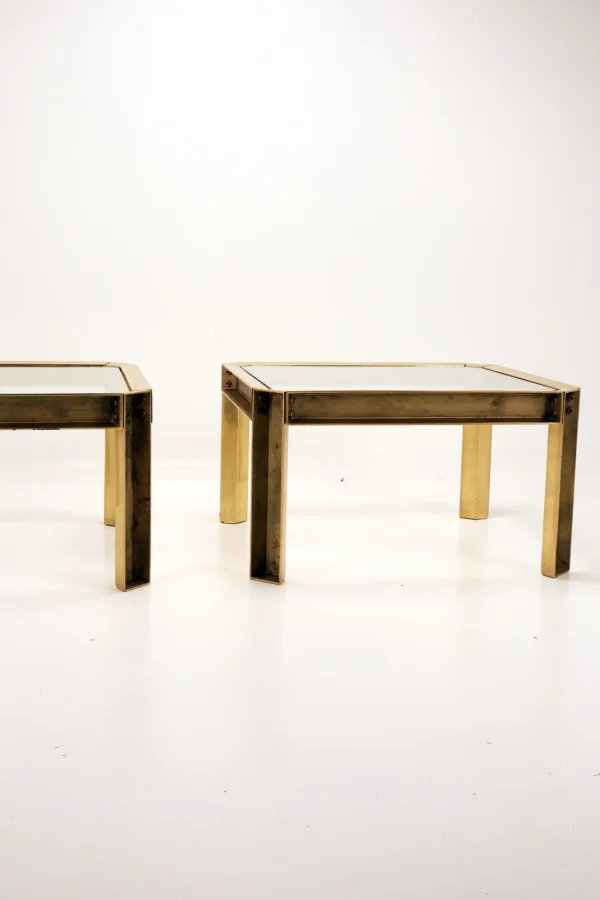
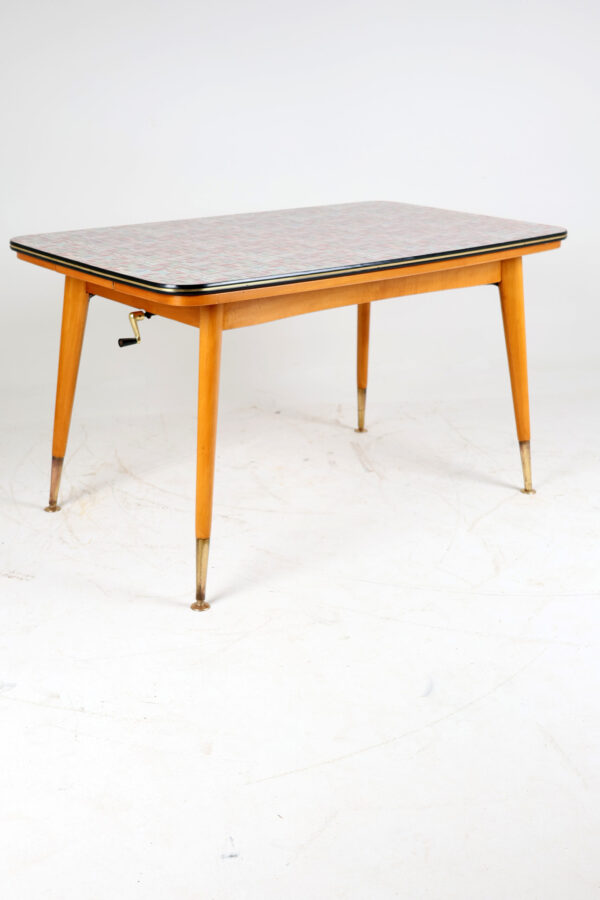
An antique table is one of the more personal purchases you can make for a home. Unlike a chest of drawers, which sits against a wall and does its job quietly, a table occupies the center of a room and everything else arranges itself around it. Getting the right one, the right scale, the right material, the right period, makes a room. Getting the wrong one is hard to ignore.
The antique tables in this collection span several centuries and several distinct furniture traditions. You will find large oak dining tables built for farmhouses and manor houses alike, smaller occasional tables made for drawing rooms and libraries, and everything between. Each piece has been selected and, where necessary, restored before listing.
The dining table is the most demanding piece of furniture a room can ask for. It needs to be large enough to be useful, well-proportioned enough to look right, and solid enough to last another century without complaint. Antique dining tables meet all three conditions more reliably than most modern alternatives.
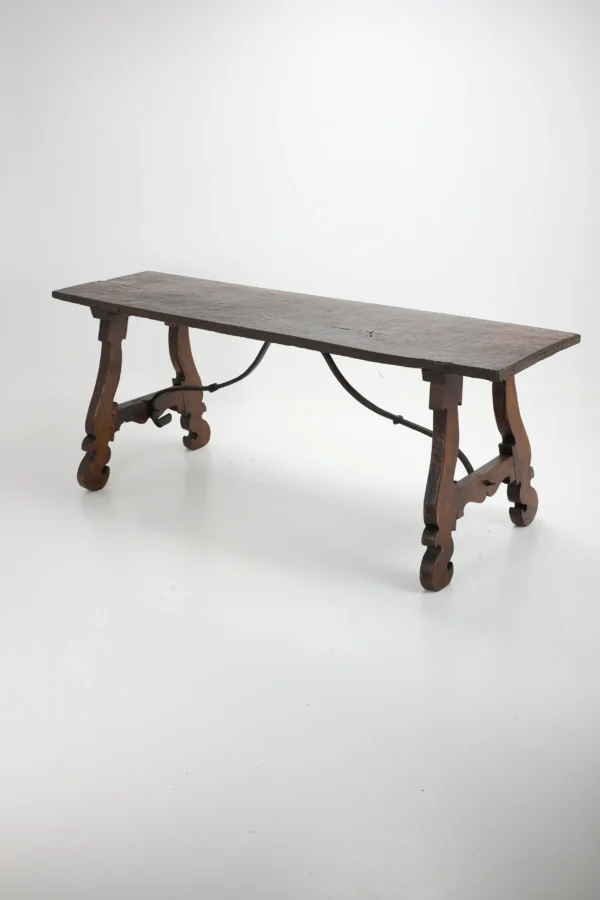
Oak dining tables from the 17th and 18th centuries are the foundation of this category. Built from thick-sawn solid oak with pegged mortise-and-tenon joints, these tables were made without any expectation that they would ever be replaced. Many have plank tops with the kind of surface character, knots, grain variation, color depth, that only comes from genuine age. A rustic oak farmhouse table with turned legs or a trestle dining table with a stretcher base is a piece of antique English furniture that works in a contemporary kitchen as naturally as it did in its original setting.
Mahogany dining tables represent a different tradition. A Regency mahogany dining table on a pedestal base, with its figured mahogany top and reeded column, was built for formal entertaining and it carries that sense of occasion with it. Early 19th century examples often feature a tilt-top mechanism or additional leaves, making them adaptable to different numbers of guests. The craftsmanship in these pieces is precise, and the figured mahogany surfaces develop further richness with age and proper maintenance.
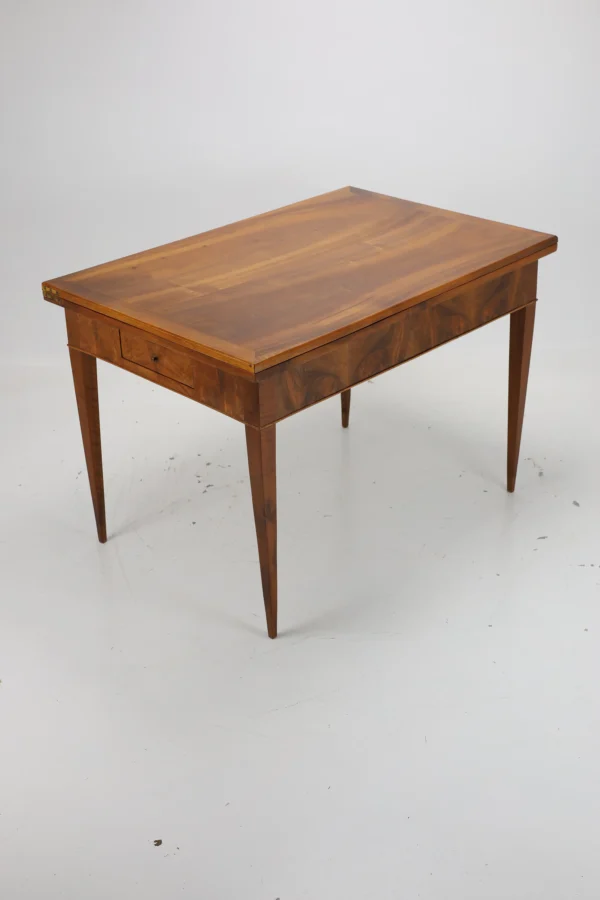
For those with less floor space, a round dining table or a drop leaf table solves the problem neatly. Drop leaf designs fold down to a fraction of their extended width, which made them practical choices in Georgian townhouses and makes them equally useful today. A walnut dining table with a drop leaf and a single drawer in the apron is a particularly well-considered form.
Not every antique table anchors a room. Some of the most useful and most beautiful pieces are the smaller ones, the side table pulled up beside a chair, the end table that holds a lamp, the occasional table that appears when it is needed and disappears when it is not.
English Chippendale and Georgian occasional tables in solid mahogany or solid oak are well represented in this collection. Many feature tapered legs or turned legs, sometimes with carved leg details that reward close inspection. A tripod table with a tilt-top was a standard piece of 18th century drawing room furnishing, and good original examples with intact tabletop surfaces are worth acquiring when they appear.
The Pembroke table, a close relative of the drop leaf, has two small hinged leaves and often a table with drawer in the apron. It is a practical and elegant form that suits a hallway, a bedroom, or a corner of a sitting room. Regency examples in mahogany or rosewood are particularly refined.
Petite side tables and accent tables made in the French country or French Louis XVI manner tend to feature lighter construction, tapered legs with delicate carving, and surfaces that were designed as much for decor as for function. A demilune console table in painted or gilded wood is one of the more elegant solutions to a narrow space.
A console table or hall table is often the first piece of antique furniture a visitor sees, and that position asks something particular of it. The best ones have presence without bulk, a quality that narrow antique console and entryway tables in the classical tradition handle well.
Antique French console tables from the 18th century are among the most architecturally conceived pieces of furniture ever made. Built to stand against a wall and often topped with marble, they were designed as part of a room’s interior scheme rather than as independent objects. A marble-top console with carved legs and a gilded or painted finish is a sculptural piece of furniture as much as a functional one.
English hall tables are typically more restrained. A sofa table in Regency mahogany with bobbin-turned legs, or a simple oak hall table with a single drawer, does its job without demanding attention. These are pieces that settle into a space rather than dominate it.
The antique coffee table is something of a later adaptation. The low table positioned in front of a sofa became standard in European interiors during the early 20th century, which means genuine antique examples in this form are either converted pieces, a blanket chest or a low occasional table repurposed, or early 20th century originals.
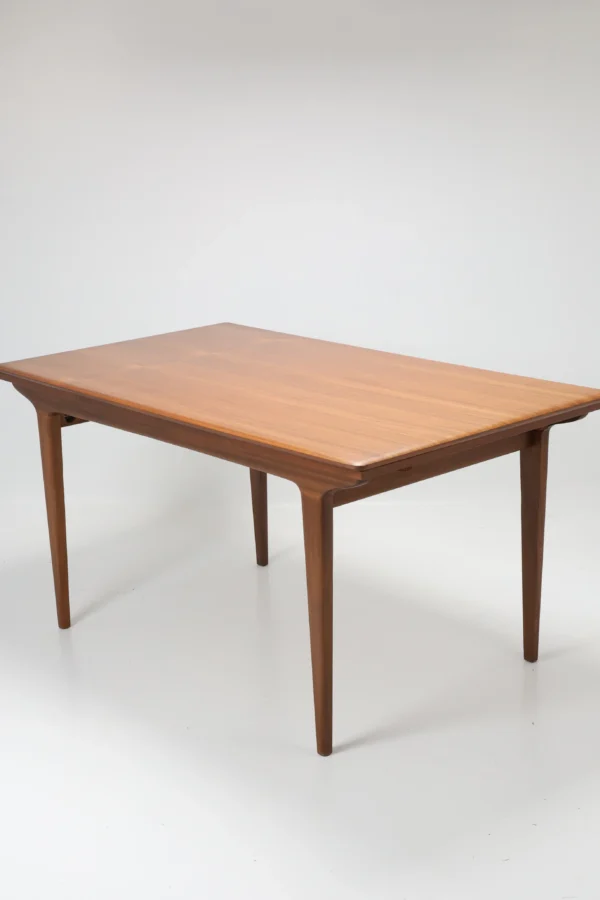
Art Deco cocktail tables in walnut or lacquered wood with geometric inlay are among the more striking options available. Mid-century modern pieces in teak or oak offer clean lines and solid construction that hold up well against contemporary furniture. An octagonal occasional table in oak or mahogany, originally made as a center table, converts naturally to coffee table use in a lower-ceilinged modern room.
Cast iron base tables with wooden tops occupy a different register, more rustic antique than drawing room, with an industrial character that suits a certain kind of interior very well. Rustic brown finishes with distressed surfaces on these pieces are genuine rather than applied, which makes a considerable difference.
Antique French furniture has a relationship with the table that goes beyond the purely functional. A French farm table in oak or chestnut, with thick legs, a stretcher at the base, and a top worn smooth by generations of use, is a piece that carries its history visibly and comfortably. These are not delicate pieces. They were made for working kitchens and they look entirely at home in one.
At the other end of the French tradition, a Louis XVI occasional table with tapered fluted legs, an urn motif on the frieze, and a marble top represents the elegance of 18th century Parisian cabinetmaking at its most refined. The motif vocabulary of this period, urns, swags, laurel, geometric banding, was applied with considerable skill and the results have aged without dating.
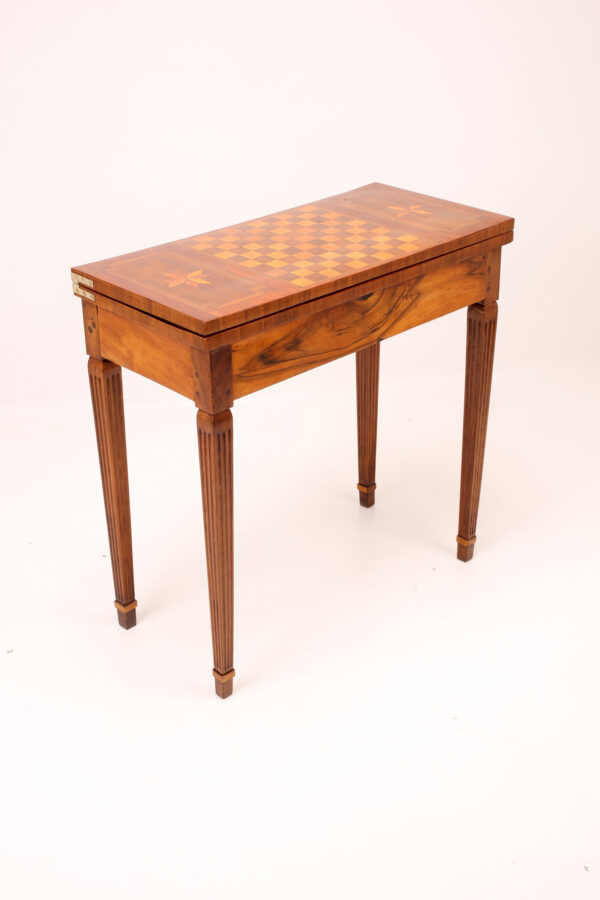
German and Dutch tables from the same period are less frequently discussed but equally well-made. A library table in figured mahogany with a leather top and a table with 2 drawers in the frieze is a practical and handsome piece of furniture that suits a study or home office as well today as it did two centuries ago. A game table in walnut with a reversible top that opens to a baize-lined interior is a rarer find, but they do appear.
The top is the most important element. Look at the underside as much as the surface. Old wood has a particular color and texture underneath that does not come from refinishing. Look for the marks left by hand tools, slight irregularities in thickness, old saw marks, evidence of how the wood was worked. A tabletop that has been heavily sanded or refinished has lost something that cannot be put back.
Check the legs for repairs and replacements. Original turned legs or carved legs with their original finish are preferable to replacements, which are usually detectable if you look at the fixing points and compare the aging of the wood at the joints. The apron, the structural frame beneath the top, should be tight and solid. Any movement in the joints is addressable but worth noting before purchase.
For quality antique tables the hand-crafted or hand-carved details are worth examining closely. A hand carved motif cut by a craftsman has slight variation in depth and line that machine-made ornament does not. That variation is part of what you are buying.


&url=https://antiqueria-breitling.com/product/exquisite-biedermeier-walnut-dining-table-circa-1820/&media=https://antiqueria-breitling.com/wp-content/uploads/2026/04/18-2-683x1024.webp)


