Worldwide Insured Shipping
Hand-Restored in our Atelier
Professional Custom Crating

Worldwide Insured Shipping
Hand-Restored in our Atelier
Professional Custom Crating
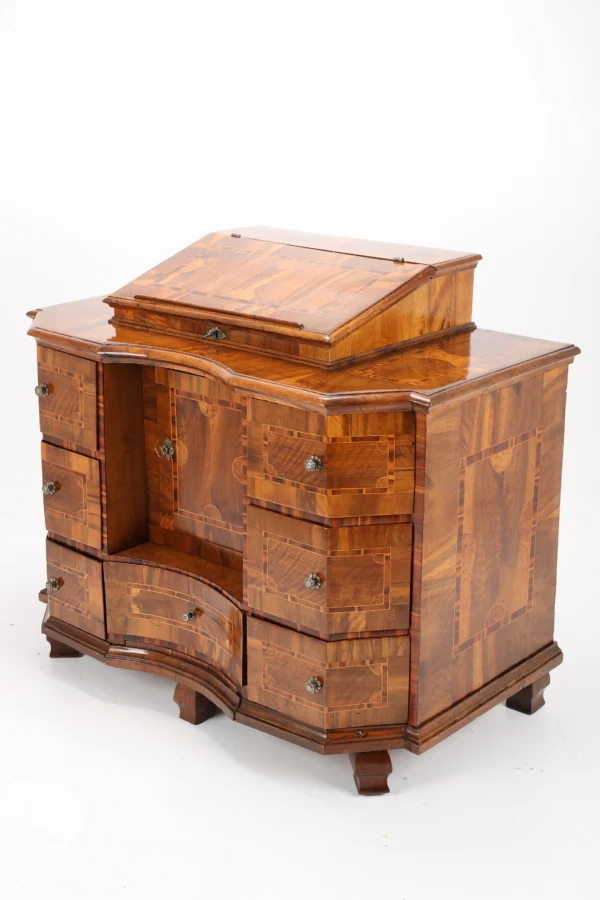
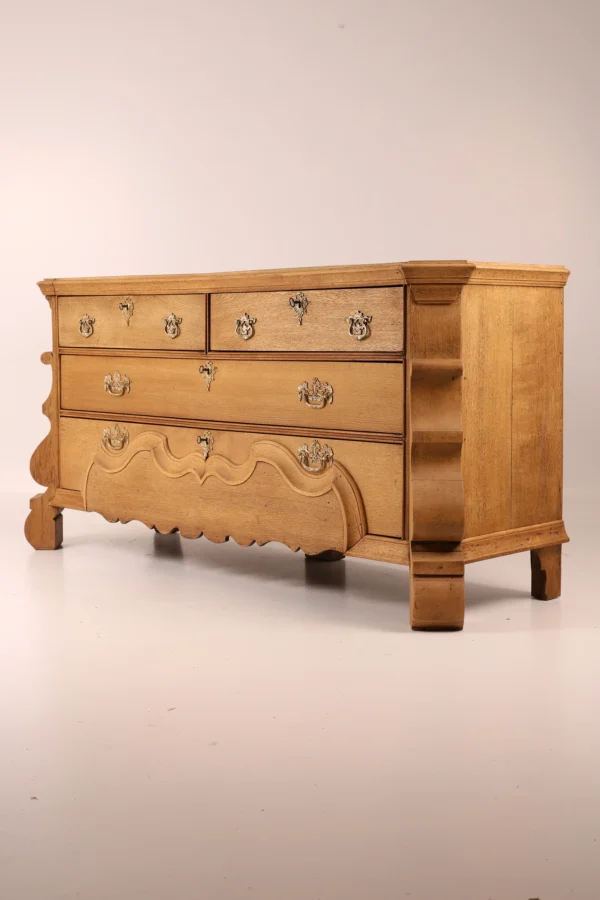

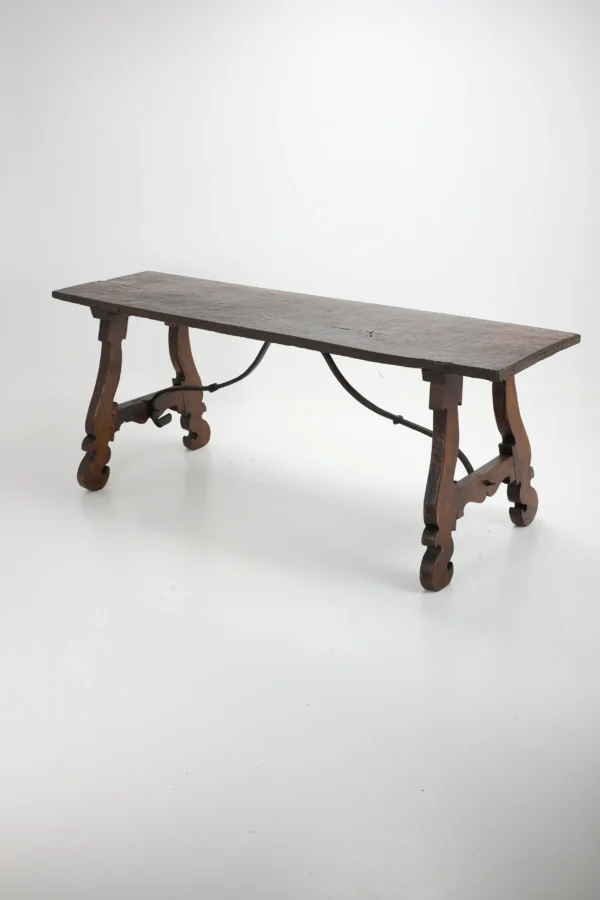
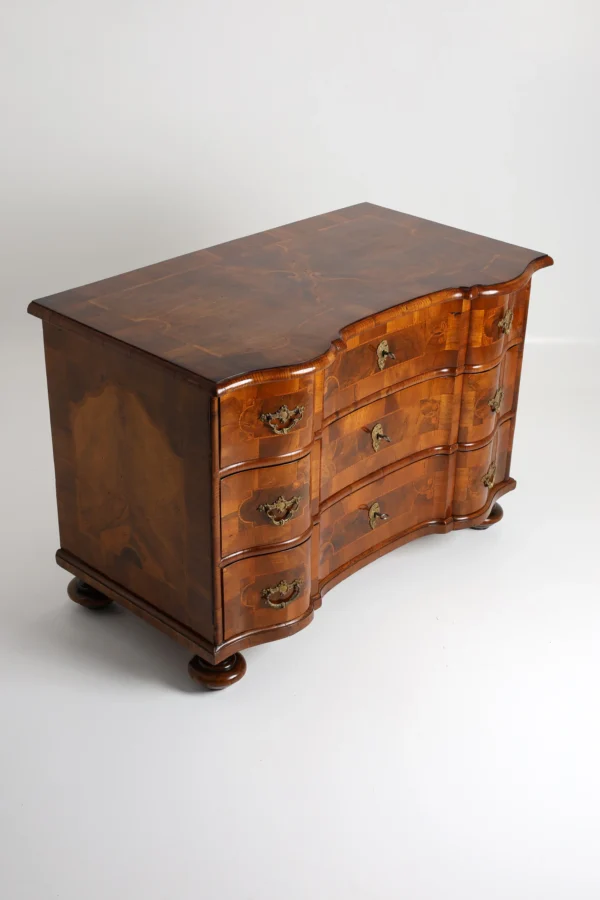
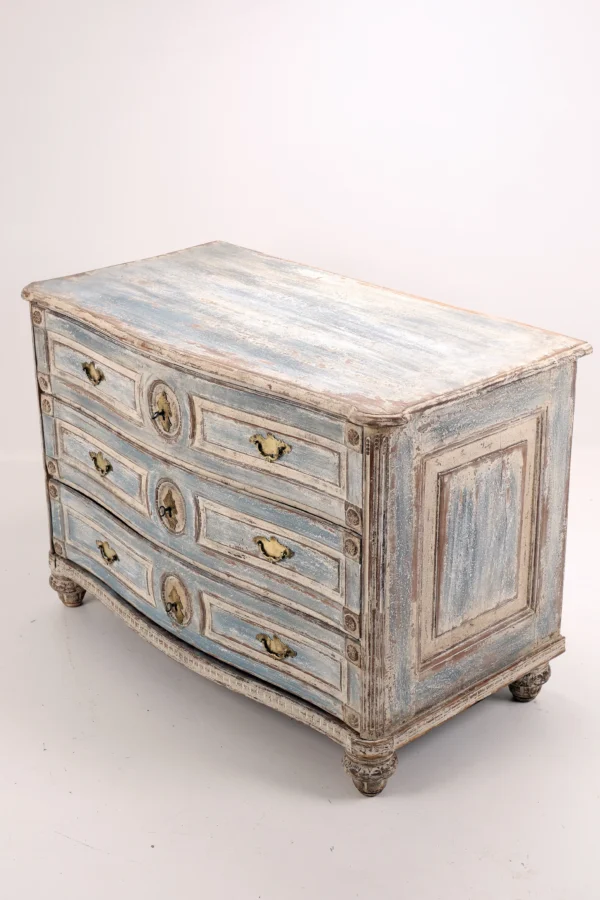

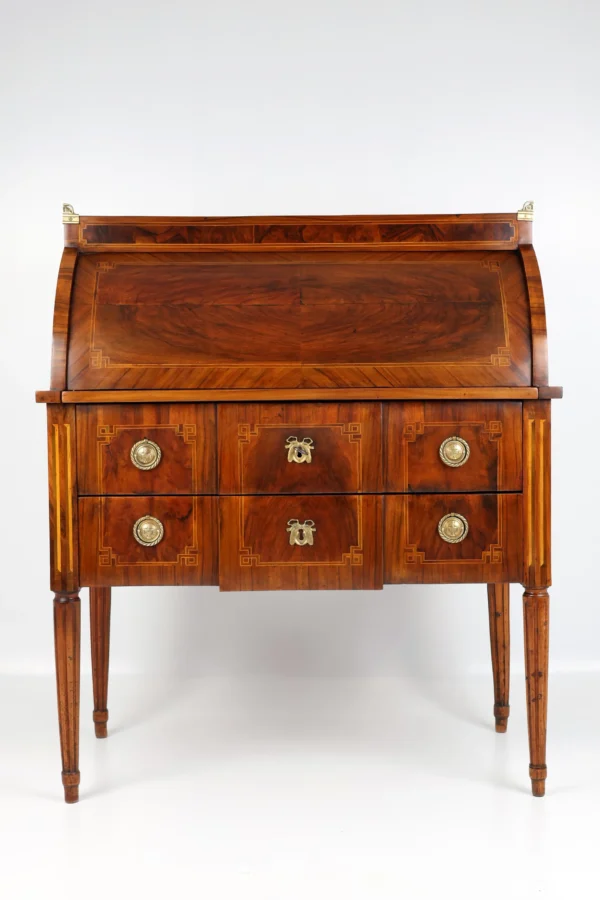
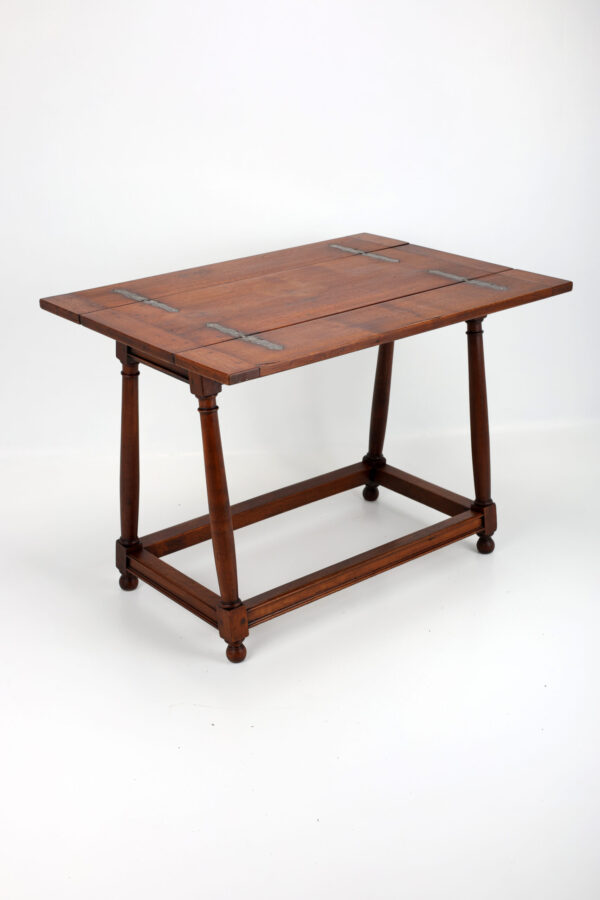

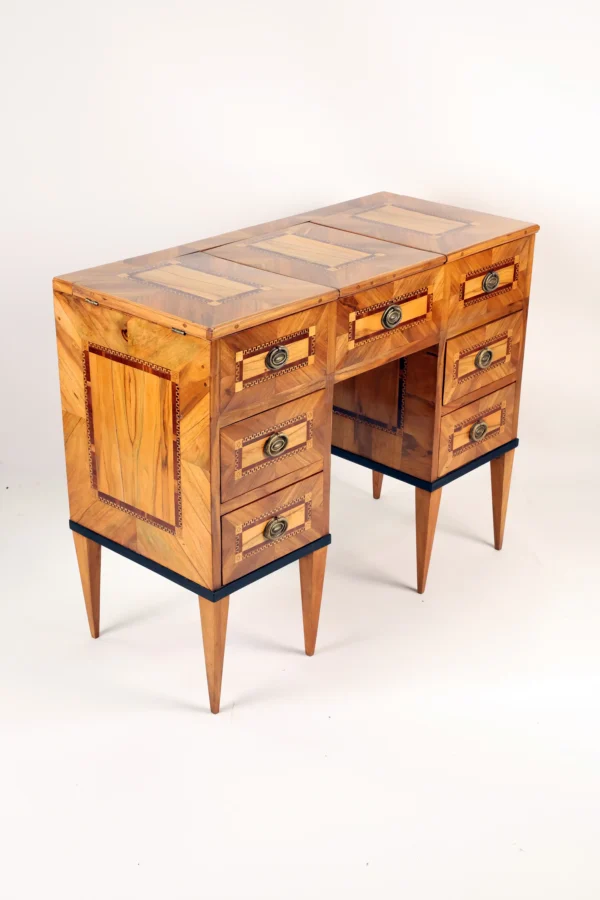
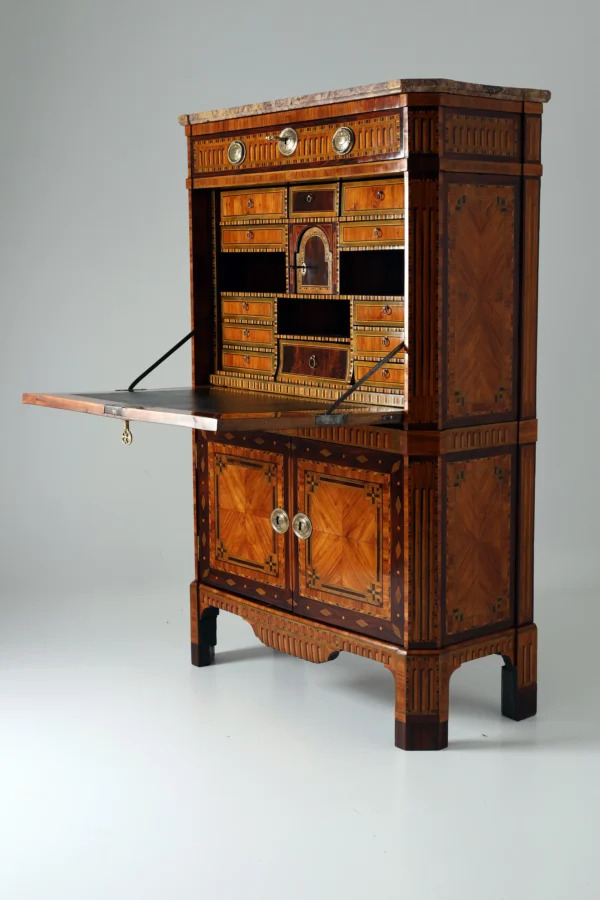
Few periods in the decorative arts produced work of such sustained quality as the 18th century. From the opening decades of Georgian England to the Directoire years that followed the Revolution of 1789, furniture makers across Europe were pushing the limits of what wood, bronze, and hand tools could achieve. The pieces that survive the ones worth owning carry that ambition in every carved surface and dovetailed drawer.
This is antique furniture with a genuine past. Not reproduction, not revival. Original period work, made when the craft was the point.
France set the tone for most of the 18th century, and its influence is impossible to separate from the furniture of the period. The Louis XV style with its flowing lines, cabriole leg, and love of ornament gave way in the 1760s and 1770s to something cooler and more geometric. The Louis XVI period brought straighter forms, fluted columns, and a new interest in classical motifs: the garland, the ribbon, the laurel wreath rendered in carved walnut or gilded bronze.
These weren’t decorative trends in the modern sense. They were entire vocabularies ways of thinking about proportion, surface, and the relationship between function and art. A French Louis console table from the 1770s reads differently from one made a generation earlier, and knowing how to read those differences is part of what makes collecting rewarding.
The Directoire style, which emerged in the years after the Revolution, stripped things back further. Straighter, leaner, occasionally austere but still deeply accomplished. A Directoire piece from circa 1795 can be a remarkable thing: disciplined in line, but with the quality of material and construction that the best French workshops never abandoned, even in turbulent times.
Italian Neoclassical furniture of the same era deserves mention too. Italian neoclassical makers brought their own sensibility to the forms coming out of Paris often more painterly, more willing to mix porcelain insets, painted surfaces, and elaborate marquetry into a single piece. The results can be exceptional.
Walnut was the wood of choice across much of Europe for the first half of the 18th century, and fine walnut furniture from this period has a warmth and depth that is genuinely hard to replicate. French walnut, in particular, tends to have a tight, even grain that takes carving well you see it in chair frames, in the legs of console tables, in the case work of a period walnut side cabinet or chest.
Mahogany arrived in force from the mid-century onwards, transforming English and later Continental furniture. Chippendale mahogany work with its dense, reddish-brown figure and its capacity for sharp, clean carving remains among the most recognizable of any period. A good Chippendale mahogany chest or desk still stops people in their tracks. So does a well-preserved piece in cherry, a wood the French used extensively and that ages to a beautiful, almost amber tone.
Oak was older, more rural in association, but the 18th century farm table in solid oak heavy, honest, built for a long life is one of those pieces that fits almost anywhere and outlasts everything around it.
Beyond the wood itself, the quality of 18th century furniture lies in the detail. The fit of a drawer. The precision of a bronze mount, cast and chased by hand. A marble top that was cut, shaped, and fitted to a specific console or side table. These are not incidental features they are where the craftsmanship lives, and they are what separates a good antique from an ordinary one.
The range here covers a broad span of periods and origins. A marble top console table in the Louis XVI manner, with tapered legs and restrained bronze mounts. A Directoire desk in mahogany, circa 1800, with clean lines and original brass hardware. A French farm table in oak, solid and unpretentious, with the surface wear of two centuries of use. A rare pair of side tables in cherry, with carved aprons and slender legs that have somehow survived intact.
Whether you’re looking for something architectural a console to sit against a wall and anchor a room or something more intimate, like a small writing desk or a corner table, this category covers the full range of 18th century table forms.
A set of period side chairs, or even a single armchair, can change a room. The 18th century produced some of the most accomplished seat furniture ever made from the generous proportions of a Louis XV armchair with its carved walnut frame, to the tighter, more upright line of a Georgian chair in mahogany with a pierced splat back.
A matched set is increasingly hard to find. A pair, more possible. A single chair, original, with its period frame intact and honest wear where you’d expect it these are worth looking for. We offer individual pieces as well as sets where they come to us that way, and each one is assessed and where needed restored in our own workshop before it goes on sale.
If you want to know more about a specific piece, its age, its origin, or its condition, the information is in each listing. And if you’re looking for something specific, get in touch we often have pieces not yet listed.


