Worldwide Insured Shipping
Hand-Restored in our Atelier
Professional Custom Crating

Worldwide Insured Shipping
Hand-Restored in our Atelier
Professional Custom Crating
Antique cabinets are among the most useful and most beautiful pieces of furniture you can buy. They were built to store, to display, and to last, and the best of them have done all three for well over a century. This collection of antique cabinets spans the full range of European cabinetry from the 17th century through to the early 1900s, covering everything from large double door armoires in solid oak to delicate glass front vitrines in mahogany and rosewood. Every piece is original, period-made antique furniture, assessed and where needed restored in our own workshop before it goes on sale.
The variety of styles across this category reflects the full breadth of European cabinet making across three centuries. A Renaissance cabinet, crafted from fine walnut or oak with hand carved panels and architectural ornament, is a very different object from an Art Deco display cabinet in ebonized wood and brass. Both are antique cabinets in the truest sense, but they speak entirely different visual languages. Understanding those differences is part of what makes buying antique cabinetry so rewarding.
The 19th century alone produced an enormous range of cabinet types and styles. Antique English cabinets from the Victorian era, typically in mahogany or oak, were built for practicality as much as elegance, with adjustable shelves, fitted drawers, and the kind of solid, considered construction that a craftsman took genuine pride in. French cabinets of the same period lean more decorative, with inlay, gilt mounts, marble tops, and carved ornament that reflects the Louis XVI style revival popular in France through much of the century. Flemish and Italian cabinets bring their own distinct character, often more sculptural, more willing to use contrasting materials and intricate surface treatment.
Oak is the backbone of northern European cabinet making. Quarter sawn oak, used extensively in English and Flemish cabinetry from the late 19th century onwards, has a distinctive ray figure that gives it a character quite unlike plain sawn timber. An oak cabinet from the 1890s, crafted from solid quarter sawn oak with carved panels and its original brass fittings, is an heirloom object in the most literal sense. It was built to outlast its maker, and it has.
Pine cabinets tend toward the simpler and more domestic end of the spectrum, but good antique pine cabinetry has real warmth and an honest quality that suits both period and contemporary interiors. Swedish and other Scandinavian pine cupboards and wall cabinets, often painted in their original finish, are particularly appealing. A painted single door cabinet in pine circa 1800, with its original surface intact, is a very different proposition from a reproduction, and the difference is immediately visible.
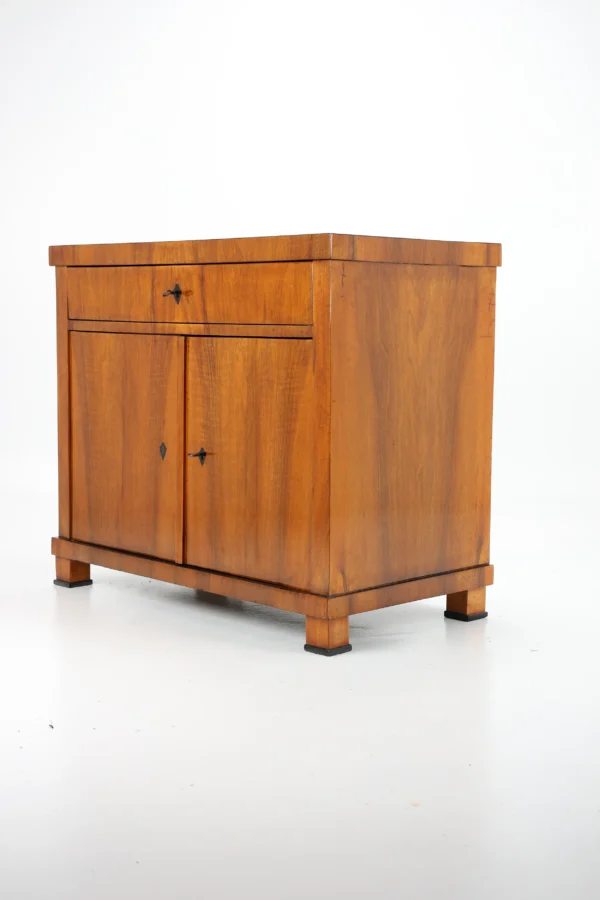
Walnut sits between oak and mahogany in the hierarchy of cabinet woods. French and Italian walnut cabinets from the 18th and 19th century are often beautifully figured, with a grain that rewards careful looking. A carved walnut credenza from the late 19th century, with its panelled doors and shaped shelves, is a storage cabinet that functions as a piece of decorative art in its own right.
Mahogany became the dominant wood for fine English and European cabinetry from the mid-18th century onwards, and its presence in this category is substantial. Century English cabinet making in mahogany reached its peak in the Regency and early Victorian periods, producing bookcases, display cabinets, and storage pieces of exceptional quality. The mahogany used in these pieces is dense, well-figured, and has aged to a colour that no new timber can replicate.
A mahogany bookcase from the 1890s, with glazed doors, adjustable shelves, and carved cornice detail, is one of the most versatile pieces of antique furniture you can own. It works in a library, a sitting room, a hallway, or a study. A two door mahogany cabinet with original beveled glass panels and fitted interior brings the same quality to a smaller footprint.
Rosewood was used for the finest Victorian cabinet work, often in combination with brass inlay and marquetry decoration. A rosewood display cabinet from the 1860s or 1870s, with its deep reddish-brown colour and its intricate surface ornament, is a stylish and distinctive piece that holds its own in almost any setting.
H3: Carved, Inlaid and Ebonized Cabinets
Some antique cabinets are defined primarily by their surface treatment rather than their wood or their form. Hand carved cabinets, whether in the Renaissance tradition of deep relief carving or the floral and foliate carving typical of Victorian and Aesthetic Movement pieces, represent cabinetry at its most decorative. A carved oak cabinet with figural panels and architectural detailing is as much sculpture as furniture.
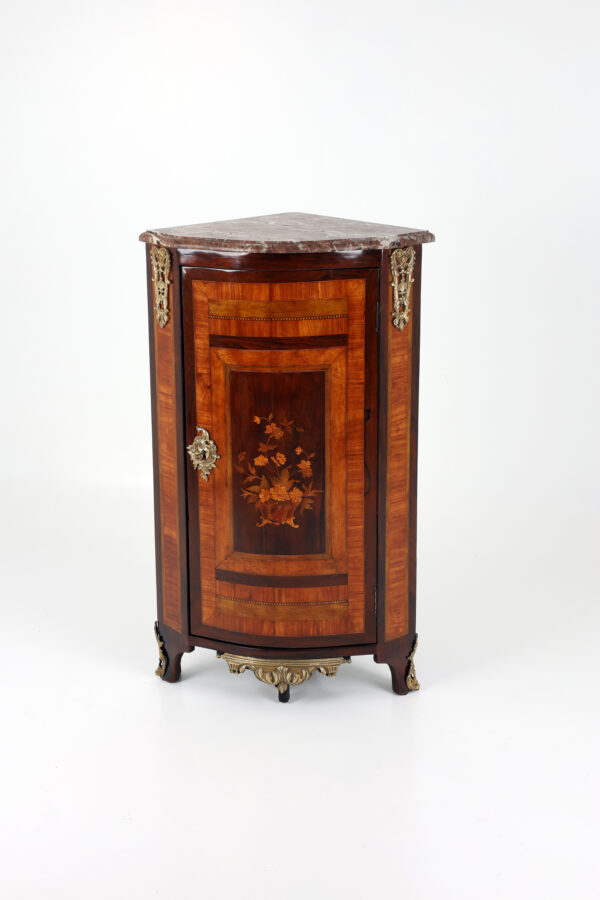
Inlay and marquetry were used extensively in French, Italian, and Dutch cabinetry throughout the 18th and 19th centuries. A French Louis XVI style commode or display case with geometric parquetry inlay and gilt bronze mounts is a refined object, precise in its proportions and meticulous in its detail. Dutch and Flemish cabinets often combine marquetry with carved ornament, producing pieces of considerable visual complexity.
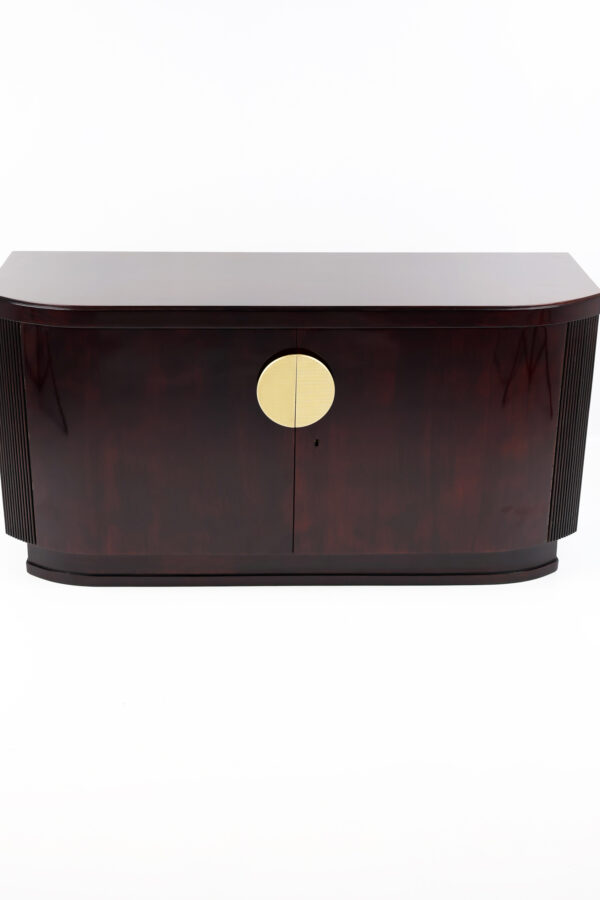
Ebonized cabinets, popular in the Aesthetic Movement of the 1870s and 1880s and continuing into the Art Deco period, use blackened wood as a base for gilt incised decoration, painted panels, or contrasting wood inlay. An ebonized display cabinet with gilt detailing and glazed doors has an elegance and a graphic quality that makes it one of the more distinctive antique cabinet types available.
A display cabinet is a specific thing. It is designed to show objects as much as to store them, and the best antique examples do this with considerable sophistication. A vitrine in mahogany or rosewood, with glass front and sides and a fitted interior, was made for exactly this purpose: to display a collection of porcelain, silver, or decorative objects while protecting them from dust and damage. Good antique vitrines from the late 19th century, circa 1890, often feature beveled glass panels, brass mounts, and interiors lined in silk or velvet.
Bookcases represent a related but distinct category. An antique English bookcase, whether a large library breakfront in mahogany or a smaller glazed cabinet bookcase in oak, was built to hold books and to display them. The adjustable shelves, the glazed doors, the fitted lower cupboard section: these are functional features that also happen to produce some of the most handsome cabinet furniture of the 19th century. A double door mahogany bookcase from the 1890s or early 1900s, in good original condition with its brass fittings intact, is a piece that serves a practical purpose while adding real character to a room.
Corner cabinet forms, wall cabinet pieces, and smaller display case options are also represented in this category, covering a variety of styles and sizes for interiors where floor space is limited but the desire for original antique cabinetry is not.
Not every antique cabinet needs to display its contents. The storage cabinet, the cupboard, the armoire: these are the workhorses of the antique furniture world, built for functionality and made well enough to have survived a century or more of daily use.
An antique armoire in oak or pine, with its original interior fittings, a hanging rail, a cubby shelf, and a drawer at the base, is one of the most practical pieces of antique furniture available. The best examples, whether French provincial in oak or Swedish painted pine, have a directness and an honesty that is easy to live with. An apothecary cabinet, with its rows of small drawers and its original labelling, brings the same functional logic to a very different scale. These are archive pieces in the truest sense: built to organise and preserve, and still perfectly equipped to do so.
A colonial or file cabinet in teak or mahogany, a sideboards with fitted drawers and cupboards, a late 19th century credenza in walnut with a marble top: the range of storage furniture in this category is broad, and the collection features pieces at every scale from the large double door cupboard down to the wall-mounted single door cabinet. Browse the full selection above, or contact us] if you are looking for a specific size, style, or period and need help finding the right piece.