Worldwide Insured Shipping
Hand-Restored in our Atelier
Professional Custom Crating

Worldwide Insured Shipping
Hand-Restored in our Atelier
Professional Custom Crating
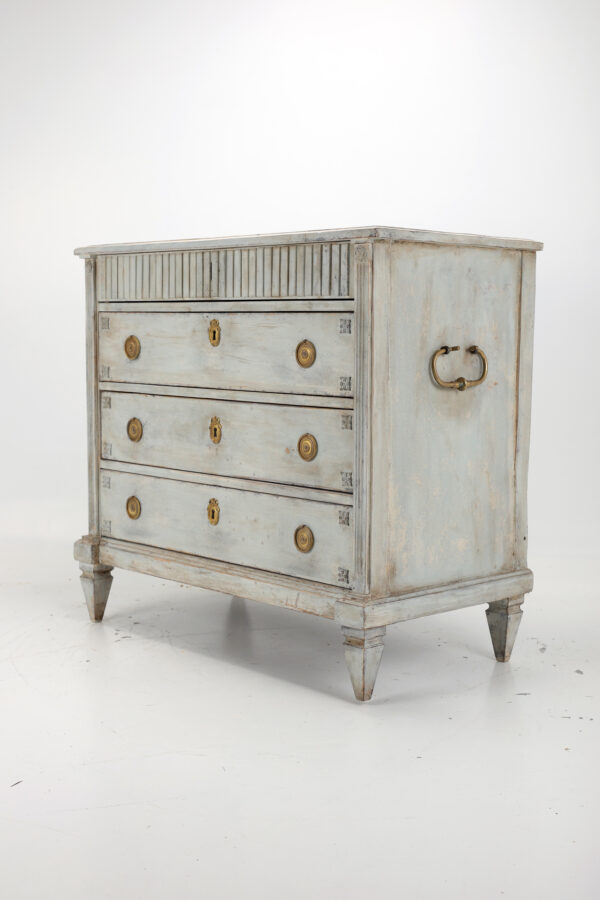
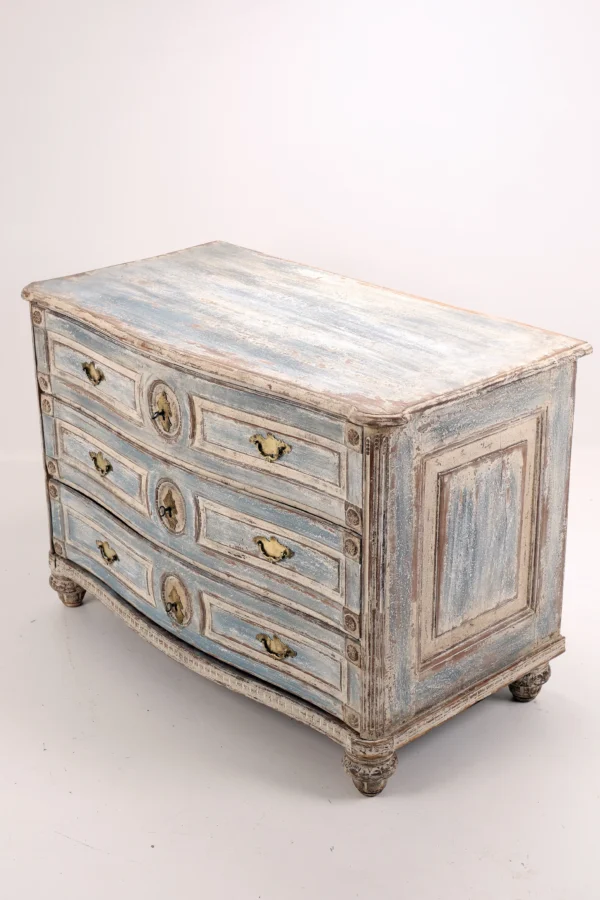
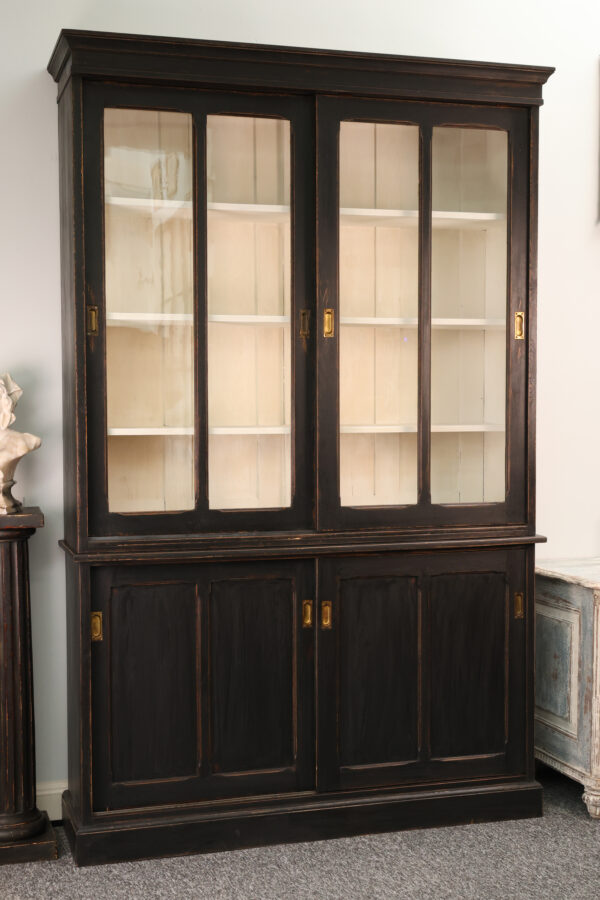
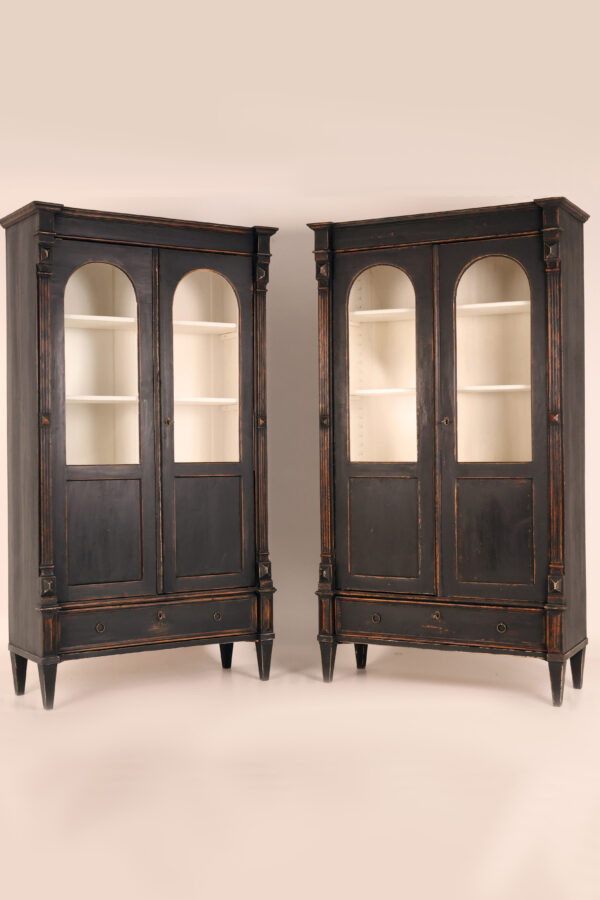
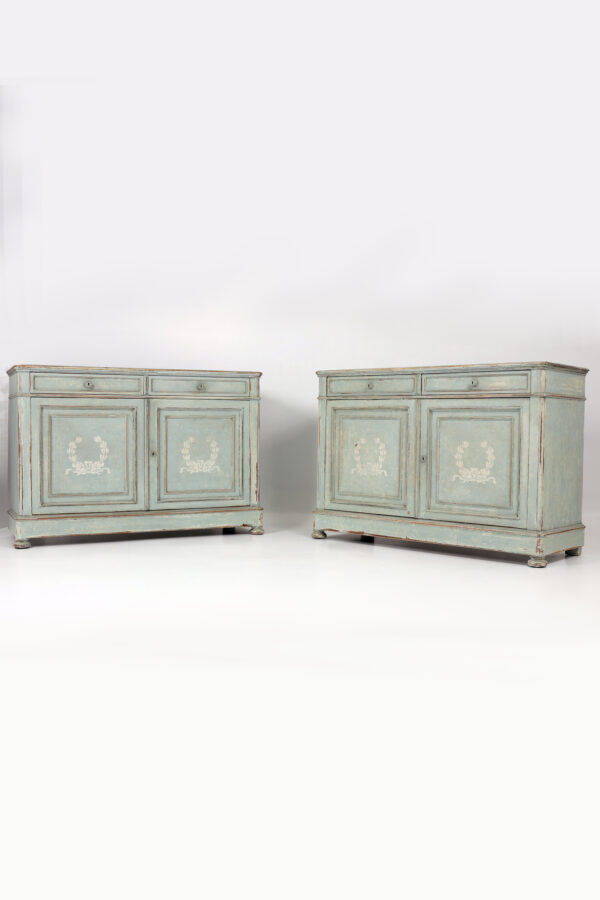
in this collection covers the full range of the Swedish neoclassical tradition, from painted commodes and console tables to side tables and cabinet pieces, each selected for the quality of its original surface and the honesty of its condition.
Gustavian style takes its name from King Gustav III of Sweden, who came to the throne in 1771 and returned from France deeply influenced by the Louis XVI style he had encountered at Versailles. What he brought back with him was not a direct copy of French taste but something more interesting: a Swedish interpretation of French neoclassical elegance, filtered through local materials, local craft traditions, and the particular quality of Scandinavian light.
The result is one of the most distinctive furniture styles in European history. Gustavian furniture shares the straight lines, fluted legs, and classical motifs of Louis XVI style, but translates them into a palette of soft greys, pale blues, and off-whites that reflect the long winters and cool daylight of northern interiors. Where French furniture of the same period used gilded bronze, fine marquetry, and rich mahogany, Swedish Gustavian pieces relied on painted pine, carved wood details, and a restrained elegance that feels modern in a way that the heavier French originals do not always manage.
The style flourished in the late 18th century and continued into the early 19th century, when it gradually absorbed Empire influences while retaining its characteristic lightness. The finest pieces date from roughly 1780 to 1810, when Swedish court cabinetmakers and provincial workshops alike were producing furniture of considerable quality and coherence.
The connection between Gustavian and French Louis XVI style is direct and well documented. Gustav III was a passionate Francophile who modeled his court culture on Versailles, and the furniture his craftsmen produced reflects that influence at every level of the design vocabulary. Tapered fluted legs, carved laurel and ribbon details, symmetrical compositions, and the architectural discipline of neoclassical ornament all arrive in Swedish furniture via the French court tradition.
The Swedish Gustavian interpretation of these elements is consistently lighter in scale and softer in color than the French source material. A Louis XVI commode in Paris would typically be veneered in mahogany or satinwood with gilt bronze mounts. Its Swedish equivalent is painted in pale grey or white, with carved and gilded details that are present but restrained, and proportions that suit a smaller and more domestic room. The elegance is the same. The register is entirely different.
This lightness is not a simplification of the French style. It is an adaptation to Swedish conditions, and it produces furniture that has aged exceptionally well both physically and aesthetically.
The core of the Gustavian tradition is 18th century Swedish furniture produced during and immediately after the reign of King Gustav III. Court cabinetmakers in Stockholm worked closely with French models, sometimes working directly from pattern books or designs brought back from Paris, and the quality of the finest Stockholm production compares favorably with French work of the same period.
Provincial Swedish furniture from the same decades is less refined in its execution but often more characterful. Workshops outside Stockholm interpreted the Gustavian style with the materials and skills available locally, producing painted pine pieces of considerable charm that reflect regional traditions as much as court fashion. A late 18th century painted cabinet from a Swedish country workshop, with its original paint surface intact and the slight irregularities of hand carving visible on the details, is a different kind of piece from a Stockholm court commode but no less interesting.
The defining material of 18th century Swedish Gustavian furniture is painted pine. Solid pine was the dominant structural wood in Sweden, and the painted surface, applied over a primed and prepared ground, was the primary decorative element. The color choices, soft grey, pale blue, dusty white, were not arbitrary. They reflected the neoclassical preference for cool, architectural tones and the particular way these colors perform in northern light. An original painted surface on an 18th century Swedish piece, even one that has faded and worn over two centuries, has a quality and depth that no reproduction finish approaches.
The early 19th century saw Gustavian style absorb Empire influences from the Continent while retaining its essential character. Darker tones appeared alongside the traditional pale palette, and some pieces incorporated mahogany veneers or Empire-inspired carved details, but the Swedish Gustavian sensibility, its lightness, its domestic scale, and its preference for painted surfaces, persisted through this transitional period.
Karl Johan style, which developed in Sweden from around 1810 onward, is sometimes treated as a separate tradition but is better understood as the continuation of the Gustavian manner under new political circumstances. Pieces from this period sit naturally alongside earlier Gustavian furniture and share its compatibility with contemporary interiors.
The antique Swedish furniture produced in this early 19th century period often shows a refinement of proportion that reflects two generations of accumulated craft knowledge. Console tables with their slender legs and marble tops, side tables with neoclassical carved details, and painted commodes with original hardware are among the most practical and most beautiful forms from this period.
The painted surface is the defining characteristic of Gustavian furniture and the first thing to assess when examining any piece. An original painted surface, built up in layers over a primed ground and finished with a protective wax or varnish, develops a patina over time that is immediately distinguishable from later repainting or reproduction finishes. The paint sits differently on the wood, the colors have mellowed and softened in ways that are impossible to replicate artificially, and the wear pattern, which occurs at the corners and edges where hands have touched the piece over generations, is entirely organic.
Antique pine beneath the painted surface has its own quality. Slow-grown Scandinavian pine, dense and resinous from the cold northern climate, is a more stable and more durable material than faster-grown southern softwoods, and pieces built from it two centuries ago are structurally sound in ways that impress on close examination.
A painted cabinet in Gustavian style with its original paint, original hardware, and sound pine construction is one of the more complete antique objects available. The decoration, the material, and the construction all tell the same story, and that coherence is part of what makes these pieces so satisfying to own.
The range of Gustavian furniture forms covers most of what a domestic interior requires, and several of these forms are particularly well suited to contemporary use.
Console tables in the Gustavian manner are among the most practical pieces in the collection. Slender, wall-mounted or freestanding, with tapered fluted legs and a marble or painted top, a Gustavian console table works in a hallway, a bedroom, or a living room without imposing on the space around it. The neoclassical style vocabulary of these pieces, restrained and architectural, makes them compatible with a wide range of interiors.
Side tables follow similar principles at a smaller scale. A Swedish Gustavian side table in painted pine with its original surface and a simple carved detail on the apron is a piece that sits naturally beside a contemporary sofa or chair without looking like a museum object. The elegance of the proportions is sufficient decoration.
Commodes in the Gustavian tradition reflect the French Louis XVI style most directly, with their rectangular case, graduated drawers, fluted corner pilasters, and marble tops. The painted surfaces of Swedish Gustavian commodes, typically in grey or off-white, contrast quietly with the marble above and the carved details below. These are not statement pieces in the aggressive sense. They are pieces that improve a room without demanding attention.
The antique Swedish furniture in this collection includes examples across all these forms, assessed individually for the condition of the painted surface, the integrity of the original hardware, and the quality of the underlying construction.
Gustavian furniture has never really gone out of fashion, and the reasons are not difficult to identify. The pale painted surfaces, the clean neoclassical lines, and the domestic scale of these pieces make them compatible with contemporary interiors in ways that heavier period furniture often is not.
The Scandinavian design tradition that became internationally recognized in the 20th century shares a common ancestor with Gustavian style in its preference for light materials, restrained decoration, and functional form. Placing a Gustavian side table or console in a room furnished in a contemporary Scandinavian manner looks entirely coherent because the two traditions draw from the same well.
The pieces in this collection have been selected and where necessary restored with that compatibility in mind. The restoration work carried out in the atelier addresses the painted surface, the hardware, and the structural soundness of each piece without over-treating it. A Gustavian commode that has been lightly conserved and waxed looks as it should. One that has been stripped and repainted looks like something else entirely.
For related pieces in the neoclassical tradition, the Louis XVI furniture collection covers French examples that share the Gustavian vocabulary, and the 18th century antique furniture section includes complementary pieces from the same period across several European traditions.
If you are looking for a specific Gustavian piece that is not currently listed, write to us at contact@antiqueria-breitling.com. The warehouse holds pieces not yet photographed or catalogued, and a request for a particular form, color, or period is often easier to fulfill than buyers expect.


