Worldwide Insured Shipping
Hand-Restored in our Atelier
Professional Custom Crating

Worldwide Insured Shipping
Hand-Restored in our Atelier
Professional Custom Crating


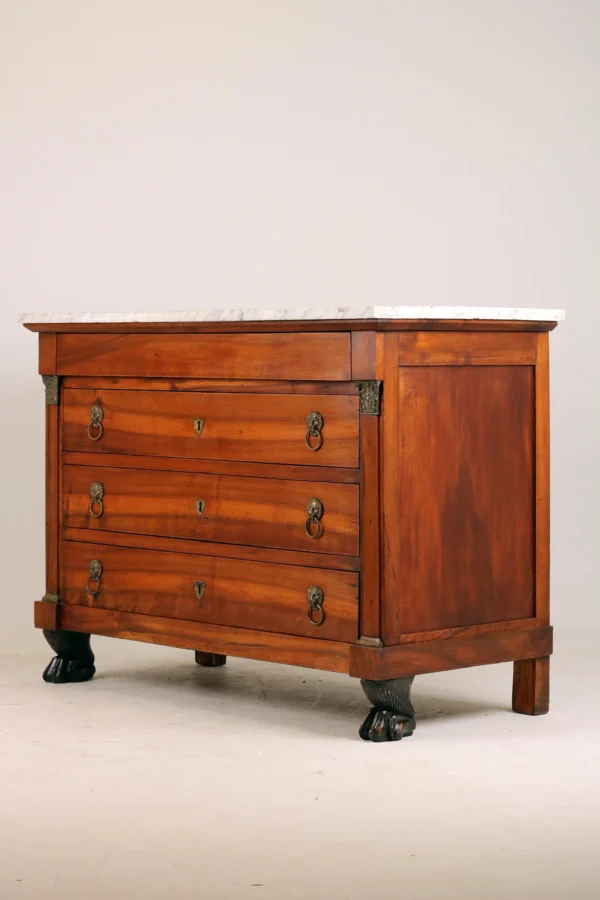


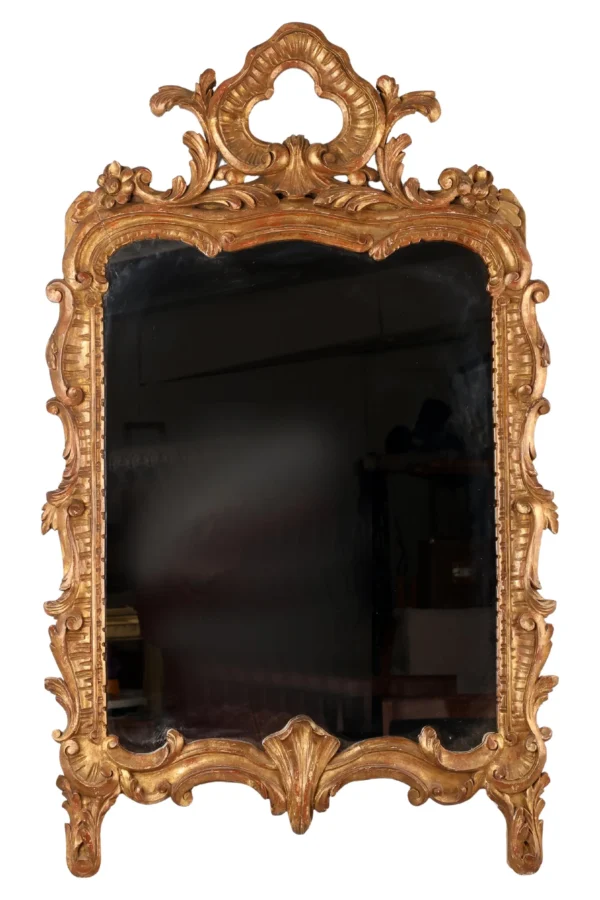


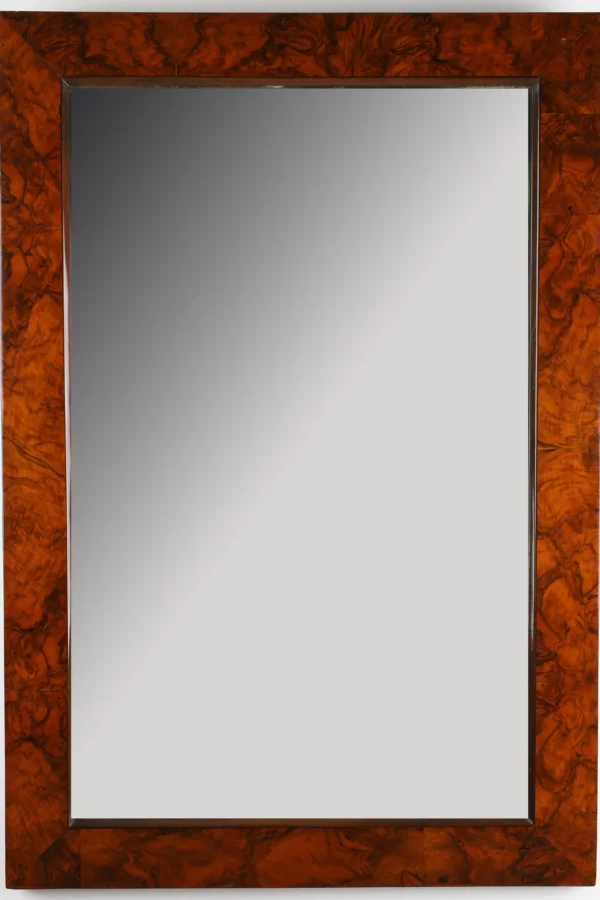
The 19th century was not a quiet period for furniture. It was a century of upheaval political, industrial, aesthetic and the antique furniture it produced reflects every bit of that complexity. Styles rose and fell and rose again. French cabinetmaker workshops in Paris set trends that rippled out across Europe. British craftsmen refined older traditions while absorbing new ones. Scandinavian makers developed their own quiet language. And by the end of the century, the Art Nouveau movement was already pulling furniture away from historical reference entirely toward something new.
What unites 19th century furniture, across all its variety, is a standard of material and construction that is genuinely hard to fault. The mahogany is dense and well-figured. The walnut is carefully chosen. The brass mounts, the gilt details, the carved ornament all of it was made to last, and most of it has.
France remained the dominant force in European furniture design through much of the 19th century, and its output was vast and varied. The early decades continued where the Louis XVI style had left off classical in inspiration, refined in execution, with a preference for mahogany, brass inlay, and restrained gilded mounts. Empire pieces from the Napoleonic era carry that quality in abundance: monumental in scale, confident in detail, often featuring the gilded motifs torches, laurel wreaths, winged figures that were the visual language of the period.
As the century progressed, France produced work in almost every revival style imaginable. Louis revival furniture pieces that looked back to the courts of the 17th and 18th centuries was enormously popular, and the best examples were made with real skill. A French circa 1860 display cabinet in ebonized wood with gilt bronze mounts and inset porcelain plaques is a very different object from an Empire console table, but both speak the same underlying language of ambition and craft.
By the late 19th century, French workshops were also among the first to engage seriously with Art Nouveau, bringing floral forms and organic line into furniture that had previously been governed by geometry and symmetry. A single piece from this transitional moment can be a remarkable thing to own.
Biedermeier furniture occupies a particular place in the story of 19th century antique furniture quieter than the French Empire style that influenced it, more domestic in feeling, but often extraordinarily refined in its use of wood and its understanding of proportion. It emerged in the German-speaking world in the years after 1815, shaped by a middle class that wanted comfort and quality without the grandeur of court furniture.
The wood is usually the first thing you notice. Walnut, cherry, maple, ash often with highly figured veneers laid across simple, geometric forms. There is very little carved ornament. Embellishment, where it appears, tends to be in the grain of the wood itself, or in small ebonized details that provide contrast. The effect is one of calm, considered elegance functional in the best sense of the word.
A good Biedermeier piece, circa 1820 to 1840, holds its own in almost any interior. A secretary desk with its original interior fittings. A sofa table in figured walnut. A set of side chairs with the typical curved back and upholstery in a period fabric or leather. These pieces were made for living with, and they still are.
English furniture of the 19th century covers an enormous range, from the tail end of the George III period at the century’s opening to the full expression of Victorian taste by its middle decades. British makers were skilled, well-supplied with fine mahogany from the Caribbean and beyond, and working within a tradition of craftsmanship that had been building since the 18th century.
Early 19th century English furniture Regency work in particular has a boldness and clarity that sits comfortably with modern interiors. Large mahogany tables with brass inlay and sabre legs. Library bookcases with brass grille doors and adjustable shelves. Leather-topped writing tables with banks of drawers on either side. These are functional pieces built at a scale that suited large British rooms, and they carry their age well.
Antique Victorian furniture is a broad category, and quality varies considerably. The best English Victorian antique work say, a mahogany breakfront cabinet circa 1860, or a carved walnut display case from the 1870s was made to an extremely high standard. Rich wood, precise joinery, brass handles and escutcheons that were cast rather than stamped.
What distinguishes authentic Victorian furniture from later reproduction is usually found in the details. The patina on the wood surface. The hand-cut dovetails in the drawer construction. The wear patterns on feet and handles that only accumulate over a genuine period of use. A piece of antique Victorian furniture that has been well cared for, and sensitively restored where needed, is a genuinely different object from something made to look old.
Gustavian furniture named for the Swedish king Gustav III, whose reign brought French neoclassical taste north is among the most distinctive of any 19th century style. Painted, typically in grey, off-white, or soft blue tones, with carved and gilded details, it has a lightness that sets it apart from the heavier furniture coming out of France or Britain at the same time.
The Gustavian style remained popular in Scandinavia well into the 19th century, and pieces from this period a painted corner chair, a gilt console table, a large painted dresser with its original surface have an understated quality that works surprisingly well in contemporary spaces. The paint is part of the art. An original painted surface, even one that shows its age, is far preferable to one that has been stripped or repainted, and it is one of the first things to look for when assessing a Gustavian piece.
Northern Europe more broadly Sweden, Denmark, Germany, Austria produced 19th century furniture of real quality, much of it influenced by French and British models but with a regional character that makes it distinctive. It is an area where a careful buyer can still find exceptional work without the premium attached to Parisian pieces.
The antique furniture for sale here spans the full breadth of the 19th century, from Biedermeier and early Empire work through to late Victorian and the first stirrings of Art Nouveau. French, British, American, Gustavian, and Italian pieces appear as they come to us which is to say, based on what is genuinely good rather than what fits a predetermined pattern.
Every piece in this category has been examined, and where restoration was needed, it has been carried out in our own workshop by craftsmen who understand period furniture. The goal is always to preserve what is original the surface, the hardware, the structure while making each piece sound for another century of use.


