Worldwide Insured Shipping
Hand-Restored in our Atelier
Professional Custom Crating

Worldwide Insured Shipping
Hand-Restored in our Atelier
Professional Custom Crating
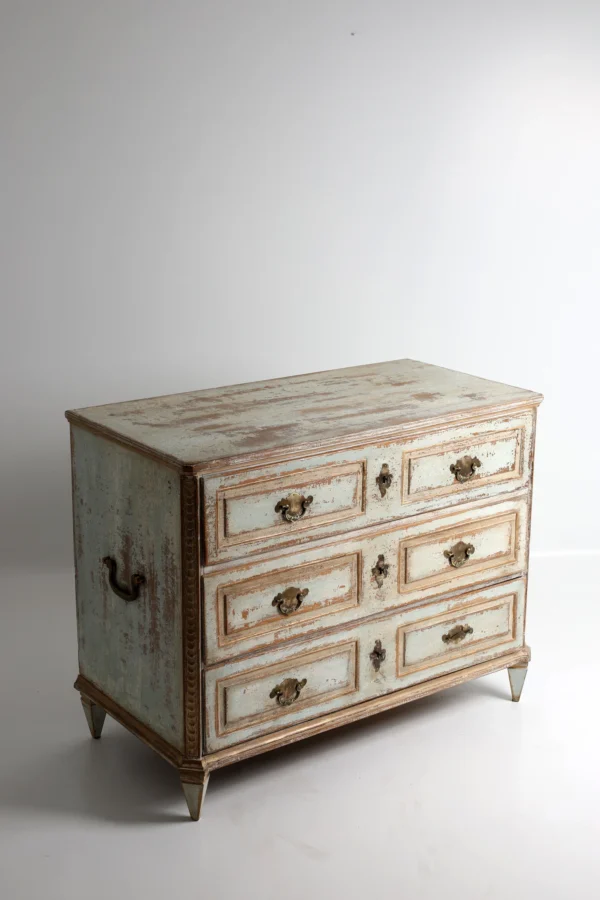
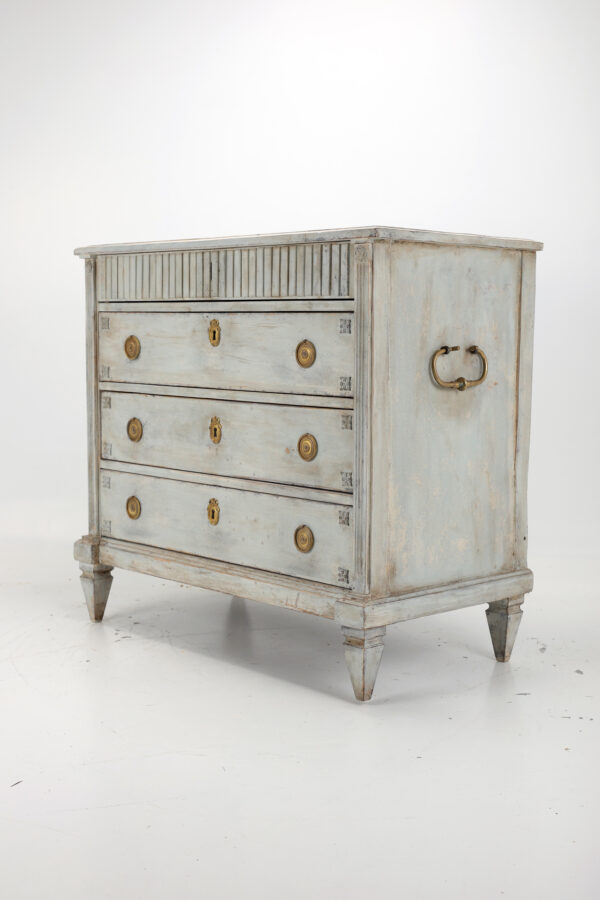
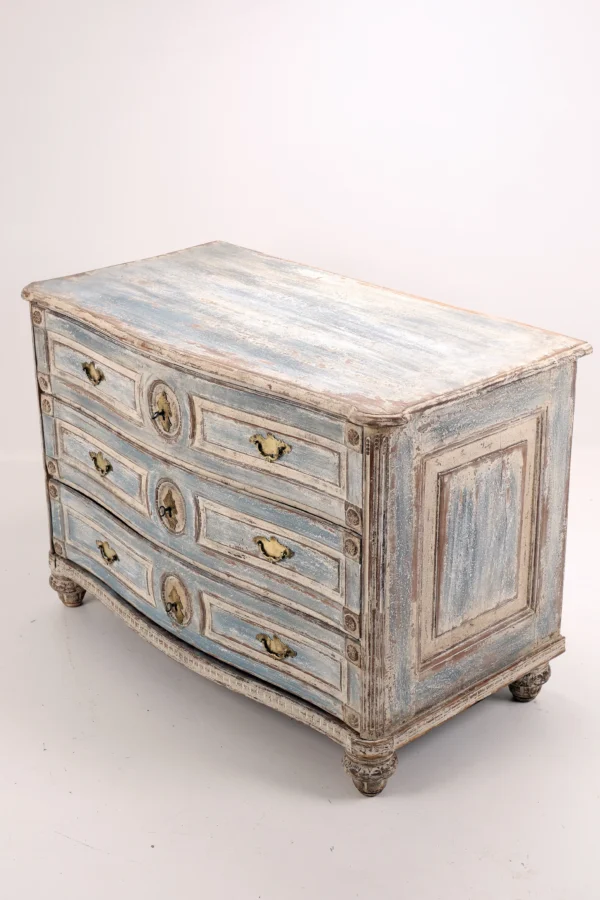

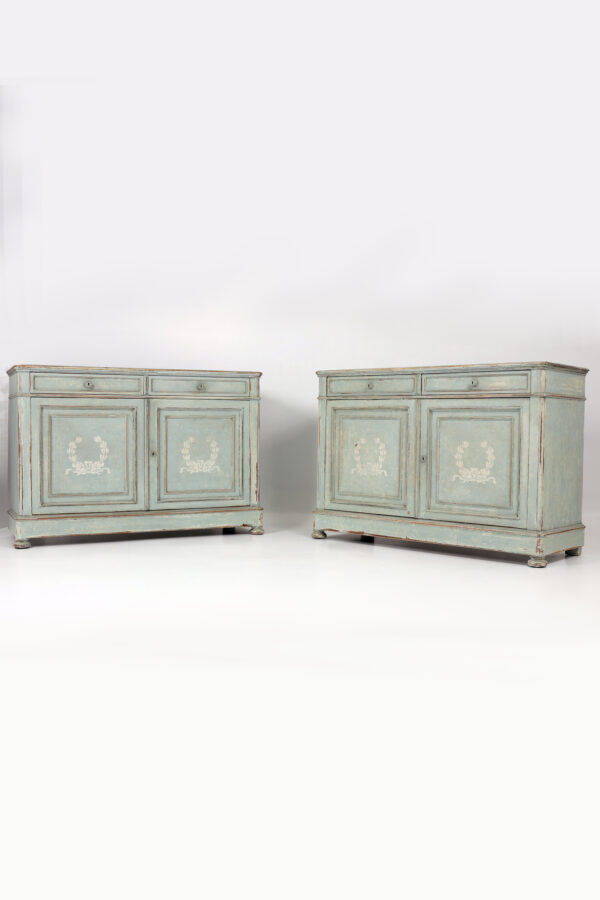
Painted antique furniture carries something that plain wood pieces rarely do: the direct record of how a maker or owner wanted a piece to look, in colour, in decoration, in the choices made about what to emphasise and what to leave plain. This is our collection of antique and vintage painted furniture, from 18th century Scandinavian chests to 19th century European cabinets.
Painted furniture has been produced across Europe for centuries, and the tradition looks different depending on where and when a piece was made. In Scandinavia, particularly in Sweden, pine was the dominant material and paint was both practical and decorative. A pine chest from the late 18th century finished in grey-blue or muted red with folk art floral motifs is a piece of European painted furniture that reflects a specific regional craft tradition, one where the artisan painting the surface was working within a visual language shared across an entire community.
In Central Europe, painted cupboards and chests from the 18th and 19th centuries followed similar principles but with a different decorative vocabulary. German and Dutch examples often feature grain-painted surfaces that imitate more expensive woods, with ornamental borders, carved details, and brass hardware that elevate what was often a utilitarian pine chest into something genuinely decorative. The colour palette in these pieces ranges from deep blues and reds to softer ochres and greens, and the hand-painted decoration varies from simple geometric motifs to intricate floral ornamentation.
French painted furniture from the same period tends toward greater refinement. A Rococo painted cabinet in pale grey or cream with gilded mouldings and carved flourishes is a piece designed for elegance rather than folk expression, and the craftsmanship in the best French examples is considerable. Later 19th century painted antique furniture from France includes pieces in the Louis XVI revival manner, with turned legs, decorative panels, and paint colours chosen to complement specific interior schemes.
What makes antique painted wood genuinely different from vintage painted furniture of more recent production is the quality of the underlying piece. A well-made 18th century chest of drawers or cupboard finished in its original paint, or repainted at some point in its history with a colour and finish appropriate to the period, carries that quality with it regardless of what is on the surface. The paint is part of the story, not a disguise.
The distinction between painted and hand-painted furniture matters more than it might seem. Factory-applied finishes, even antique ones from the early 20th century, have a consistency that hand work does not. A hand-painted piece of antique furniture, whether it is a 19th century dresser with painted panel decoration or an 18th century chest with folk art motifs, shows the mark of the person who made it. Brush strokes vary, borders are slightly irregular, and the decoration has a warmth and immediacy that mechanical processes cannot replicate.
Scandinavian hand-painted furniture is particularly valued in this category. Swedish Gustavian pieces, Danish provincial chests, and Norwegian cupboards from the late 18th and early 19th century combine restraint in form with considerable skill in painted decoration. The muted colour palette typical of Gustavian furniture, soft greys, pale blues, and off-whites, was not simply a style choice but a response to the quality of natural light in northern interiors, and it remains one of the more sympathetic decorative traditions for contemporary rooms.
Art Deco painted furniture from the early 20th century represents a different kind of hand-painted work. Black lacquer with gilt ornamentation, painted panels with geometric or figurative decoration, and surfaces finished with a depth and brightness that reflects the period’s interest in surface quality as an end in itself. A painted cabinet from this period with its original finish intact is both a collector’s piece and a genuinely useful piece of furniture.
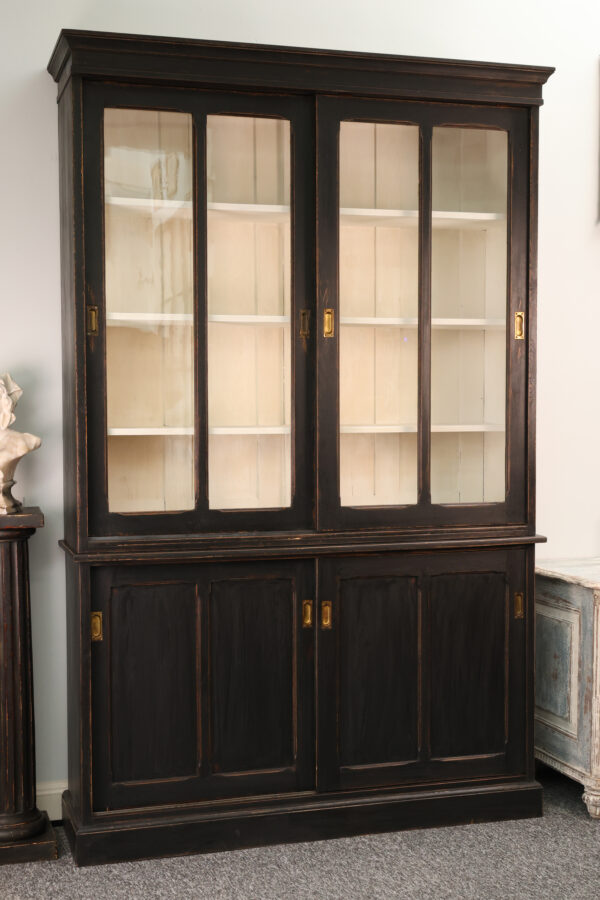
A striking pair of 19th century eclectic display cabinets, architecturally composed and enriched with refined neoclassical detailing. Crafted in solid pine, the cabinets are finished in a deep hand-painted ebonised surface. The layered application subtly reveals warm undertones along edges and mouldings, enhancing the sculptural articulation of the façades and giving the pair remarkable visual depth.
Each cabinet is framed by fluted pilasters with carved block capitals and bases, enclosing elegant arched glazed doors. The light-painted interiors are fitted with adjustable shelves, creating a refined contrast with the dark exterior. A full-width drawer beneath each cabinet offers additional concealed storage and retains circular brass pulls, while tapered legs give the pieces elegant vertical proportions and architectural clarity.
Professionally conserved, with surfaces displaying age-appropriate patina consistent with 19th century painted antique furniture. Equally suited to classical interiors, contemporary spaces, or gallery environments.
A refined Gustavian chest of drawers from Sweden, dating to circa 1790. Crafted in walnut and finished in a deep black paint with traces of its original patina, the piece reflects the Gustavian balance of classical influence and Swedish restraint.
The chest features four drawers, the central one retaining its original lock and key. Interiors are lined with shellac and the surface is finished with a protective wax polish. Original gilt-bronze fittings provide a striking accent against the dark finish. With gently serpentine drawer fronts, rounded sides, and bun feet, this is a distinguished and rare piece, carefully restored and both functional and decorative.
Vintage painted furniture from the 20th century covers a broad range, from rustic farmhouse pieces in distressed paint to more refined mid-century examples with carefully chosen colour and finish. A vintage chest of drawers in painted pine with its original paint colour intact, showing the wear and patina of decades of use, is a remnant of domestic life that no new piece can replicate.
Painted sideboards, benches, and small cabinets from the early to mid-20th century are among the more practical pieces in this category. The construction is typically solid, the forms are simple, and the painted surface, whether original or period-appropriate, gives each piece a focal point that plain wood does not offer. A painted bench with a shaped seat and turned legs in a muted shade of blue or green is the kind of piece that works in a hallway, a kitchen, or a dining room without asking much of the surrounding furniture.
For collectors and dealers looking to buy painted antique furniture online, condition of the original paint surface is the primary consideration. A piece with its original painted decoration intact, even if worn, is significantly more interesting than one that has been stripped and repainted. The charm of genuinely old painted furniture lies precisely in what time has done to it.


