Worldwide Insured Shipping
Hand-Restored in our Atelier
Professional Custom Crating

Worldwide Insured Shipping
Hand-Restored in our Atelier
Professional Custom Crating
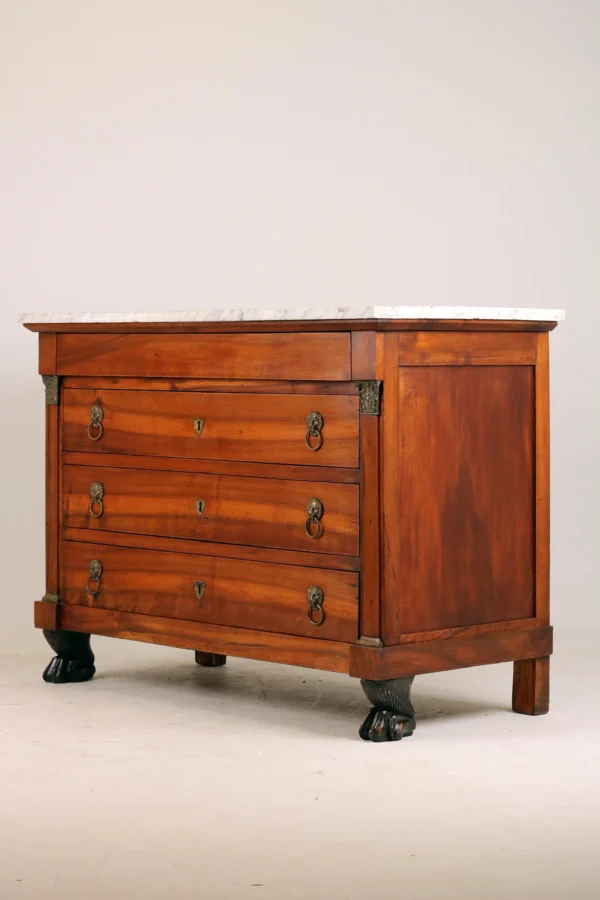

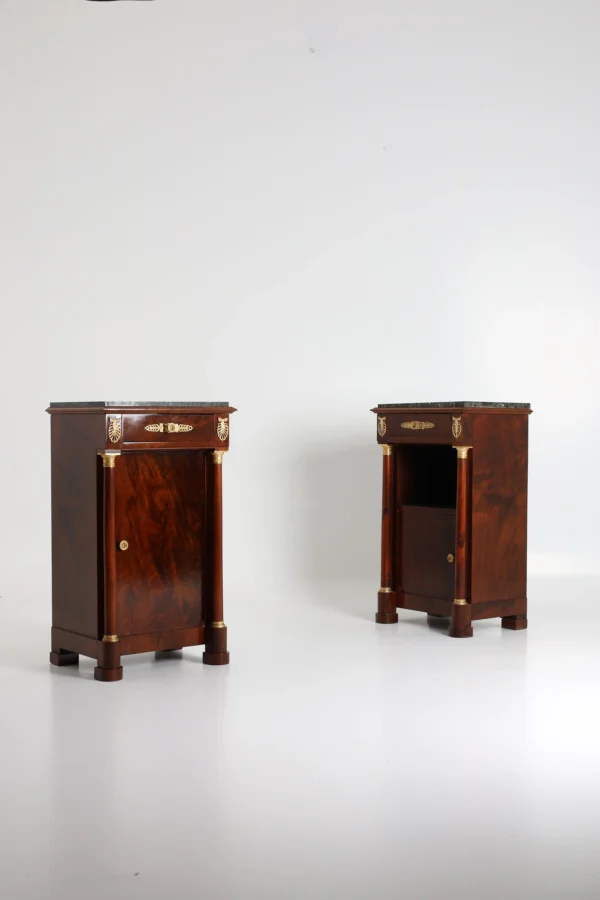
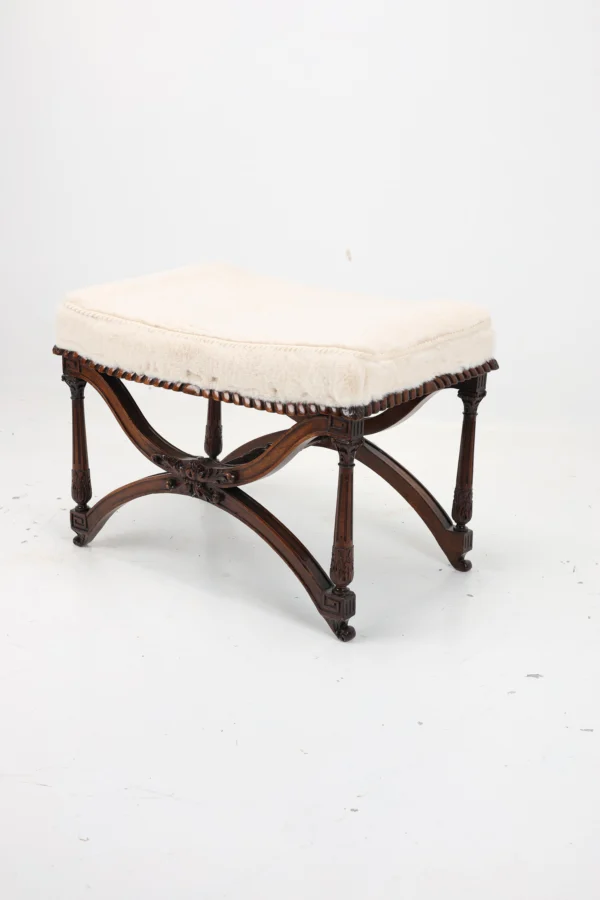
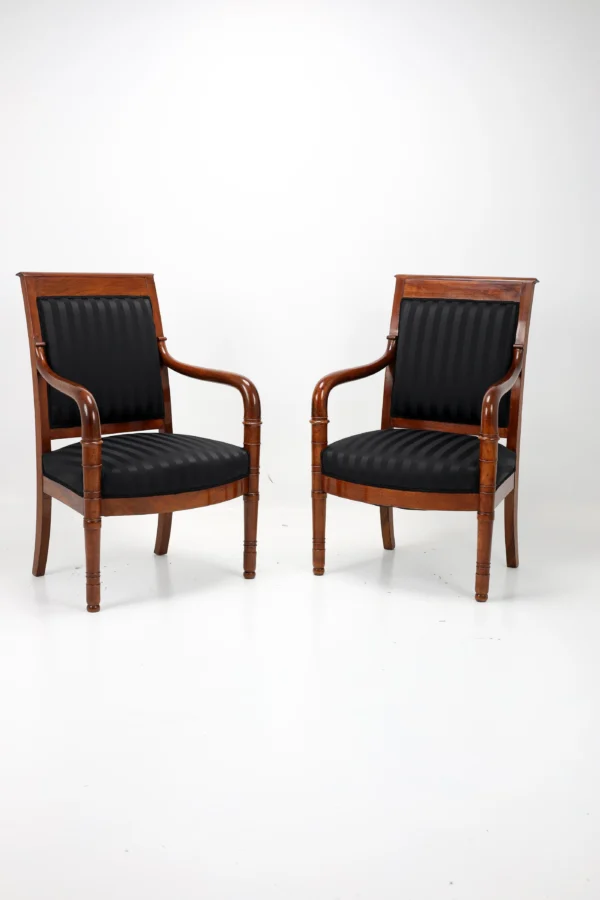
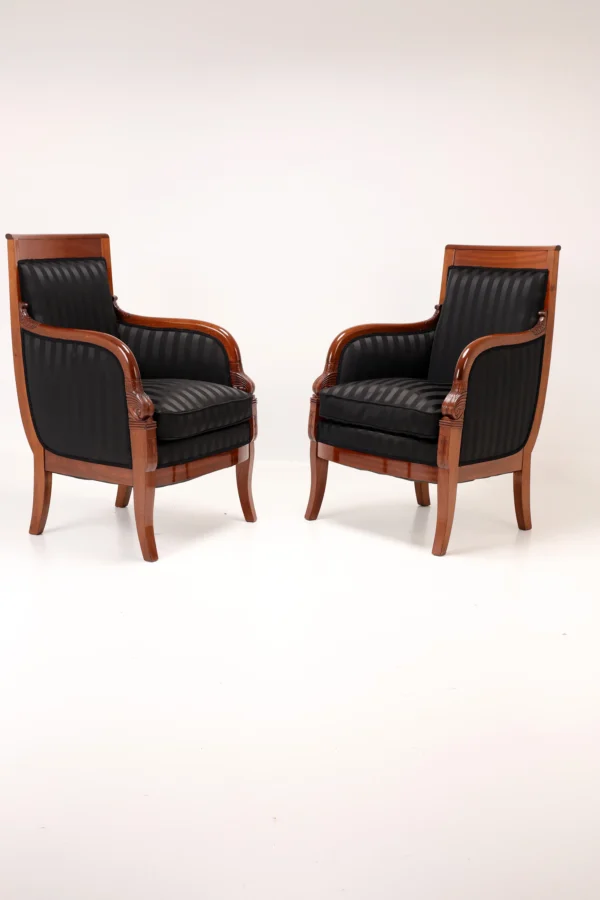
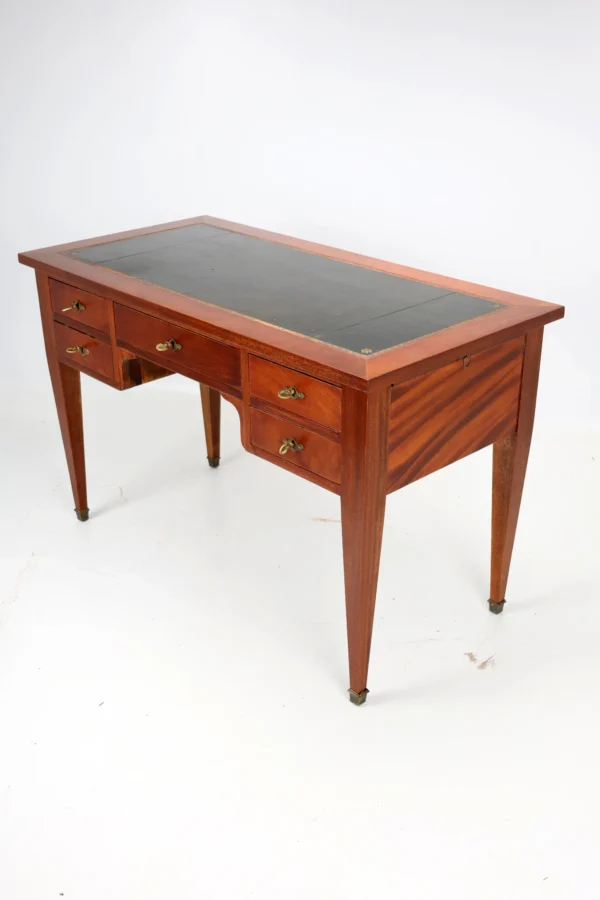
Antique Empire furniture sits at a fascinating moment in decorative history. It emerged from the wreckage of the French Revolution and was shaped almost entirely by one man’s ambition: Napoleon Bonaparte. Between roughly 1800 and 1815, a new visual language was imposed across Europe, one that borrowed from ancient Egypt, Greece, and Rome and turned those references into something unmistakably modern for its time. The antique Empire furniture that survives from this period is bold, serious, and made to an exceptional standard.
This is not furniture that whispers. It speaks with authority.
The Empire style was, in the most literal sense, a political project. Napoleon needed an aesthetic that communicated power and legitimacy, and his architects and designers, most notably Charles Percier and Pierre-François Léonard Fontaine, built one from scratch. They looked to antiquity not as scholars but as propagandists, taking the symbols of Roman imperial power and Greek classical order and weaving them into furniture, textiles, architecture, and every other surface they could reach.
The result was a style of considerable grandeur. Symmetry was non-negotiable. Ornament was classical, precise, and always meaningful: winged victories, laurel wreaths, sphinx figures, swan necks, acanthus leaves, and the ubiquitous bee that Napoleon had adopted as his personal emblem. Bronze mounts, gilded and finely cast, were applied to mahogany and other dark, fine-grained woods with a precision that reflected the very best of French craftsmanship at its peak.
What distinguishes genuine antique Empire furniture from later revivals is exactly this quality of execution. The bronze is heavier, more detailed, cast rather than stamped. The mahogany is carefully selected, with a depth of colour that later pieces rarely match. The joinery is tight and considered. These are objects built with the confidence of a workshop culture that had been producing fine furniture for generations.
Napoleon’s military campaigns spread the Empire style across the continent faster than almost any aesthetic movement before or since. By 1810, Empire furniture was being made not just in Paris but in Vienna, Berlin, Stockholm, Milan, and St. Petersburg, each centre adapting the French model to local materials, local tastes, and local workshop traditions.
In Austria and Germany, the Empire style fed directly into what would become Biedermeier: as the Napoleonic era ended and the political mood shifted toward something quieter and more domestic, the grandeur of Empire was gradually simplified into cleaner, warmer forms. In Scandinavia, the Empire influence produced furniture of real elegance, often in lighter woods and with a restraint that gives Swedish and Danish Empire pieces their own distinct character.
In Italy, Empire furniture absorbed some of the colour and decorative richness of the local tradition. Italian antique Empire pieces can feature painted surfaces, elaborate marquetry, and ornamental detail that goes well beyond the Parisian model. They are often exceptional objects and they remain underappreciated relative to their French counterparts.
British makers engaged with the Empire style through the Regency period, translating French forms into a distinctly English idiom. Regency furniture shares much with Empire in its use of mahogany, its classical references, and its liking for brass inlay and animal-form supports. The two traditions are closely related, and pieces from this period in either the French or British manner are among the most desirable antique furniture of the early 19th century.
If you are new to Empire furniture, there are a few things to look for that will help you identify a genuine period piece. The first is the wood. Mahogany dominates, often in large, uninterrupted veneered surfaces that show off the grain. Ebony and ebonized details appear frequently as contrast elements. Some pieces, particularly from outside France, use walnut, cherry, or maple.
The second is the bronze. Empire furniture relies heavily on applied bronze mounts, and in the best antique Empire pieces these are of extraordinary quality. Look at the detail in the casting: the sharpness of a leaf, the modelling of a face, the finish on a lion’s paw foot. Stamped or pressed mounts, which appear on later revival pieces, lack this definition entirely.
The third is the form. Empire furniture tends toward the architectural. Desks and secretaries have the weight and proportion of small buildings. Beds have headboards that rise like temple pediments. Console tables stand on columns rather than legs. Sofas have scroll ends and broad, upholstered seats. The overall effect is one of considered, deliberate grandeur, balanced by the quality of the making.
Common antique Empire furniture forms include commodes and chests of drawers, secretaire abattants, console tables, guéridons, dining tables, armchairs and sofas, mirrors, and case pieces of all kinds. A good Empire commode in mahogany with original bronze mounts is one of the most satisfying antique furniture purchases you can make. It works in a period interior and it works just as well in a contemporary one.
Antique Empire furniture is widely collected and, at the top end, commands serious prices. But the market is broad enough that genuinely good pieces, in honest condition and with their original mounts and surfaces intact, are still findable at prices that reflect the quality rather than just the name.
Condition matters, but it needs to be read intelligently. Some wear is appropriate and expected on a piece that is two hundred years old. What you want to avoid is heavy restoration that has altered the character of the piece: replaced mounts, refinished surfaces, structural repairs that have changed the proportions. A piece of antique Empire furniture with its original patina and original bronze, even if it shows its age, is almost always preferable to one that has been heavily worked over.
Every piece of Empire furniture for sale in this category has been examined and where restoration was needed, it has been carried out in our own workshop. We work to preserve what is original and repair only what needs repairing. If you have questions about a specific piece, its provenance, or its condition, the details are in each listing. And if you are looking for a specific Empire form or want advice on what to look for, get in touch directly.


