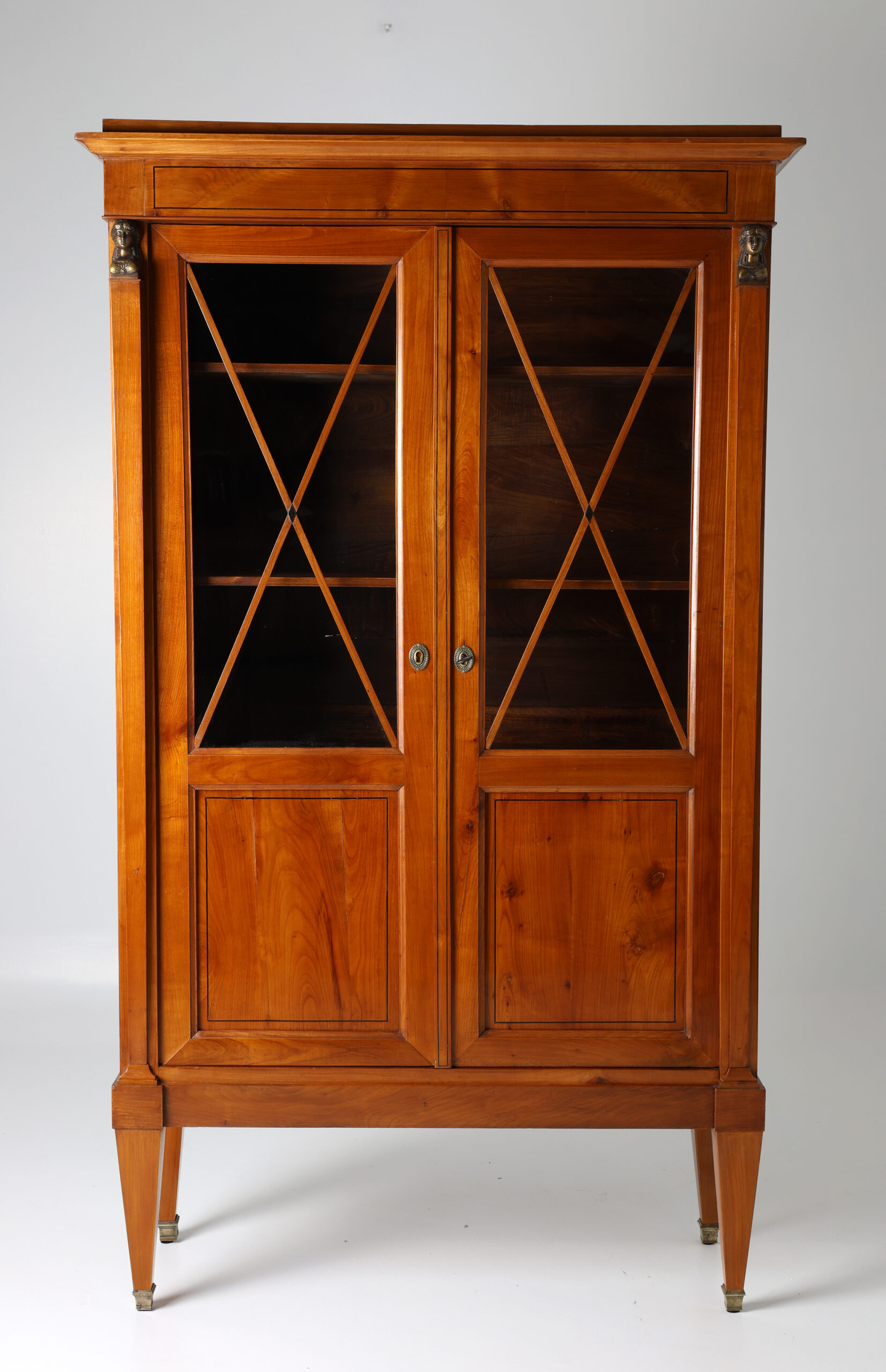
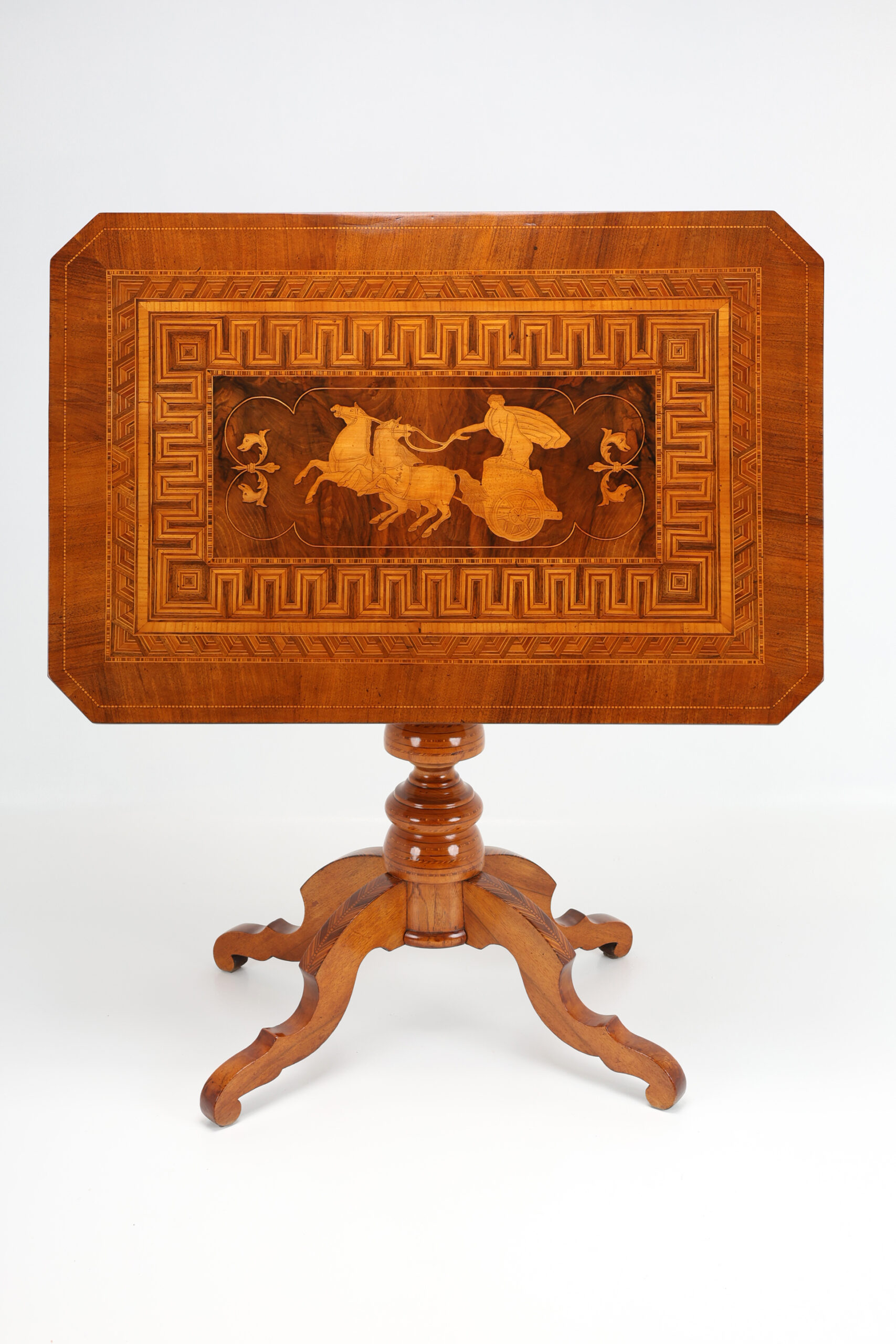
Before 1820, nobody lounged. Sofas existed, but they were designed for sitting upright in formal rooms, not for settling in with a book on a Sunday afternoon. The Biedermeier couch changed that, and the way it changed it tells you almost everything you need to know about why these pieces are still worth owning two centuries later.
The World That Invented Comfort
The Biedermeier period began in 1815 when the Congress of Vienna ended the Napoleonic Wars and Klemens von Metternich set about restoring the old conservative order across Central Europe. His system of censorship and political surveillance effectively closed the public sphere, which had an unexpected consequence for furniture design. The urban middle class, with nowhere to direct its energy politically, turned inward. The home became everything: the site of social life, intellectual life, musical evenings, family gatherings, and the kind of slow domestic pleasure that the previous generation had neither the time nor the furniture to support.
The couch moved to the center of the room. Not against the wall in the formal manner of the Empire period, but into the middle of the space, grouped around a table, positioned for conversation and proximity rather than display. This is the concept the Germans called Gemütlichkeit, a word that does not translate neatly into English but covers coziness, warmth, and the specific pleasure of being comfortably at home with people you like.
Furniture had to adapt to this new way of living, and the Biedermeier couch was the result.
What the Biedermeier Couch Actually Is
The immediate predecessor to the Biedermeier couch was the Empire sofa, and the contrast between the two tells the story of the period in a single comparison. Empire sofas were built from dark imported mahogany, covered in gilt bronze mounts featuring eagles, sphinxes, and laurel wreaths, and designed to sit against the walls of palatial rooms looking important. They were furniture as political statement, and sitting on one for any extended period was genuinely uncomfortable.
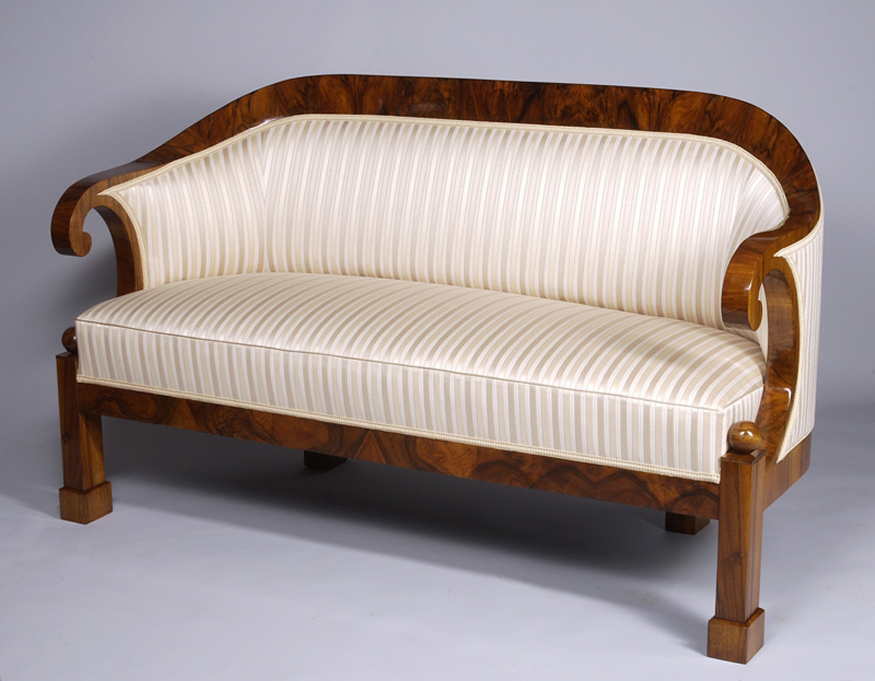
The Biedermeier couch rejected every one of those choices. Light native fruitwoods, cherry, birch, pear, and ash, replaced the dark mahogany. Bookmatched veneers, where consecutive slices of figured wood are opened like pages of a book to create mirror-image grain patterns, replaced applied gilt bronze ornament. The wood grain became the decoration, and the precision of the joinery became the craft statement.
The forms evolved as the period progressed. Early Biedermeier couches from around 1815 to 1825 tend toward the rectilinear, with straight backs and squared armrests that still carry some of the architectural discipline of the Empire style. By the 1830s and 1840s the forms had softened considerably. The gondola sofa, where the backrest curves continuously down to form the armrests in a single flowing line, became one of the defining Biedermeier forms. The lyre motif, a shaped splat in the backrest referencing the musical instrument at the center of domestic Biedermeier culture, appeared on chairs and couches that were built for the same rooms where Schubert’s friends gathered to play and listen. Scrolled arms, saber legs that curve gently outward to give the piece a sense of lift, and the elegant proportions of a piece designed for a modest urban apartment rather than a palace reception room complete the picture.
The Spring That Changed Everything
The Biedermeier couch did not just look different from what came before it. It felt different, and the reason is a technological development that happened largely within this period and that Josef Ulrich Danhauser’s Vienna workshop was central to advancing.
Coil spring upholstery, introduced into furniture construction in the 1820s, transformed the experience of sitting. Before springs, sofas were padded wooden benches. The stuffing, horsehair or straw packed tightly under heavy canvas, provided some cushioning but no give. You sat on top of the furniture rather than into it, and the posture required was formal and upright.
Coil springs changed the relationship between the sitter and the seat entirely. The springs absorbed and distributed body weight, allowing a person to sink into the cushion in a way that had simply not been possible before. For the first time, a sofa was genuinely engineered for extended relaxation rather than formal display.
Danhauser’s workshop in Vienna, which employed hundreds of craftsmen and produced designs of remarkable quality and variety, was at the center of this development. The MAK in Vienna still holds thousands of original design sketches from this workshop, and they reflect the breadth of experimentation that the period supported. The Biedermeier couch that emerged from this tradition was not a simplified version of something grander. It was something new.
Cherry, Birch, and the Art of the Veneer
The materials of Biedermeier furniture are inseparable from the aesthetic. The choice of native fruitwoods over imported mahogany was partly economic, imported timber had become expensive and difficult to source after the Napoleonic Wars, and partly a deliberate aesthetic direction toward lighter, warmer interiors that suited the domestic scale of bourgeois apartments.
Cherry is perhaps the most characteristic Biedermeier wood, with its warm reddish-gold tone that deepens over time into something genuinely beautiful. Birch, particularly the figured Karelian birch with its characteristic flame pattern, produces veneer surfaces of considerable visual complexity. Ash, pear, and maple each have their own qualities, and the best Biedermeier cabinetmakers selected wood with the same care that a painter selects pigment, understanding that the figure of the grain was doing the work that gold leaf and bronze mounts had done in the previous generation.
The shellac or French polish finish applied to these surfaces builds up over centuries into a warm, amber depth that no modern varnish replicates. Running a hand across the surface of an original Biedermeier couch with its intact French polish is one of those small sensory experiences that makes the difference between old furniture and genuinely antique furniture immediately apparent.
The Biedermeier furniture collection at Antiqueria Breitling includes couches and seating pieces from Viennese, German, and Scandinavian workshops, each assessed for the integrity of the veneer surface, the condition of the original finish, and the quality of the frame construction.
Regional Variations Worth Knowing
The Biedermeier style spread across Central Europe and into Scandinavia, and each regional tradition produced couches with a distinct character that reflects local materials and cultural sensibility.
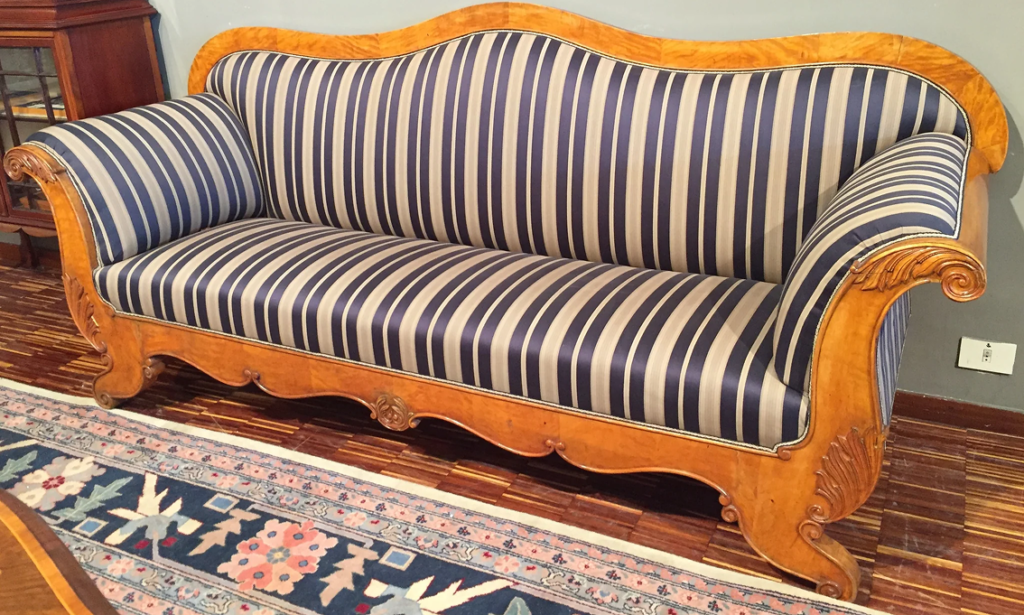
Viennese Biedermeier is the most graceful expression of the form. The Danhauser workshop tradition produced couches of poetic softness, with sweeping gondola curves, lyre motifs, and the finest bookmatched cherry and walnut veneers. These are the pieces that most fully embody the Gemütlichkeit ideal, and they remain the most sought-after examples in the category.
Northern German Biedermeier from Berlin and Hamburg has a different character. More architectural and austere, with stronger proportions and occasionally darker veneers, these pieces reflect a Protestant sensibility that valued discipline alongside comfort. Some northern examples use black horsehair upholstery against light birch or cherry frames, a graphic contrast that is striking and entirely original.
Swedish Karl Johan style Biedermeier, named after the king who ruled Sweden during this period, takes the lightness of the Austrian tradition and makes it even more spare. Pale golden birch, softly scrolled arms, and a scale that feels almost contemporary make Swedish Biedermeier couches among the most versatile antique seating available for modern interiors.
Why a Biedermeier Couch Works in a Contemporary Interior
The compatibility of Biedermeier seating with modern interiors is not a recent discovery, but it has become more widely understood as the design world has moved away from the idea that antique furniture requires a period setting to work.
The clean geometric lines, the light wood tones, and the complete absence of applied ornament give Biedermeier couches a visual quality that sits naturally alongside contemporary furniture without creating a period room effect. A gondola sofa in cherry with its original upholstery replaced in a period-appropriate fabric is a piece that works in a Scandinavian-influenced living room, a minimalist apartment, or a more traditionally furnished space with equal ease.
The scale is a practical advantage. Biedermeier couches were designed for the kind of rooms that most people actually live in, not for palatial reception halls, and that proportional intelligence translates directly to contemporary use.
At Antiqueria Breitling, the restoration team has worked on Biedermeier seating for many years, and the approach is consistent: preserve the frame and the veneer, address what genuinely needs attention, and leave the patina that two centuries of careful use has created. A Biedermeier couch that has been sympathetically conserved rather than aggressively restored is a considerably more interesting and valuable object than one that has been stripped back and refinished.
For related pieces from the same period, the 19th century antique furniture section covers commodes, secretaries, side tables, and cabinet pieces that complement Biedermeier seating in a considered interior.