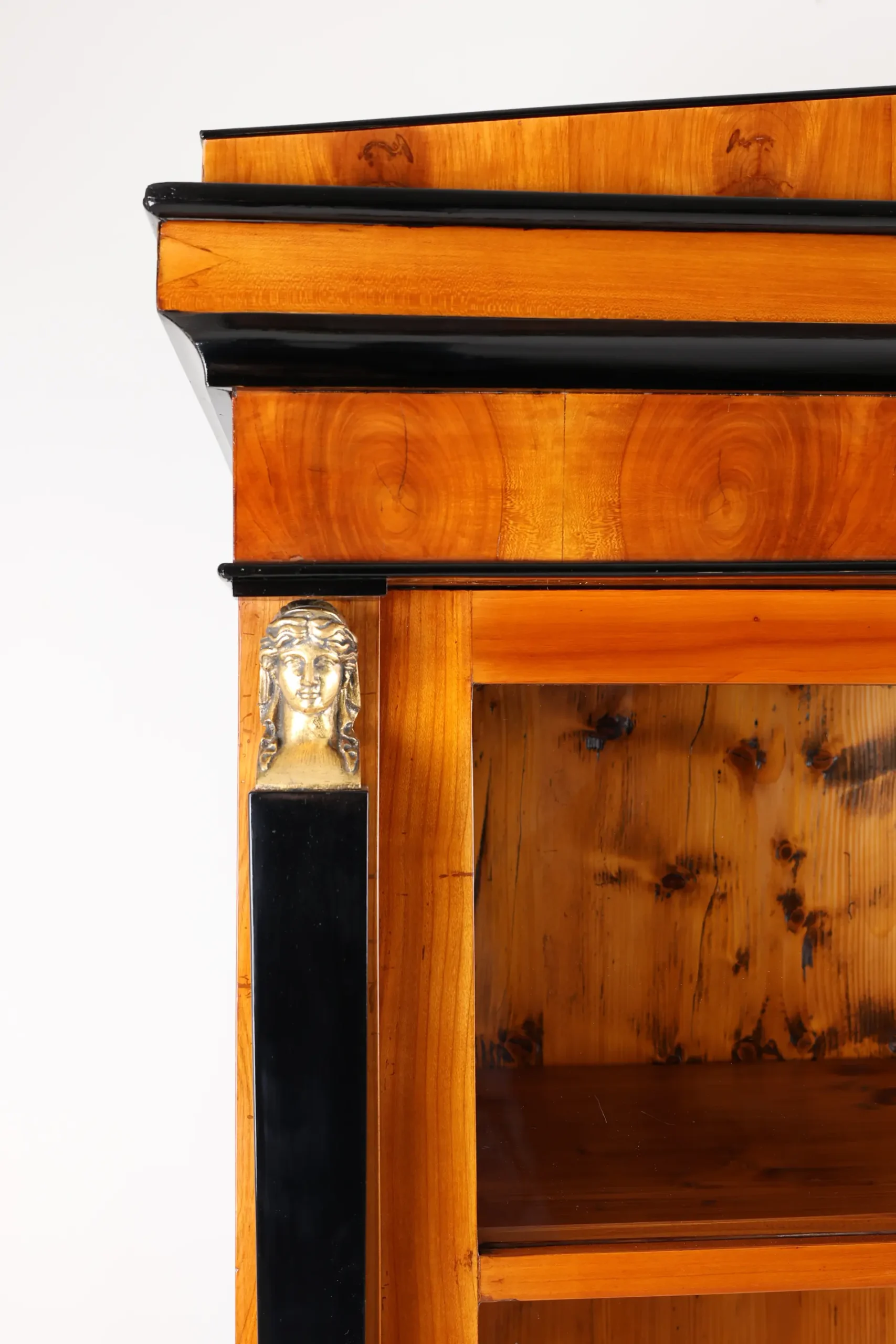
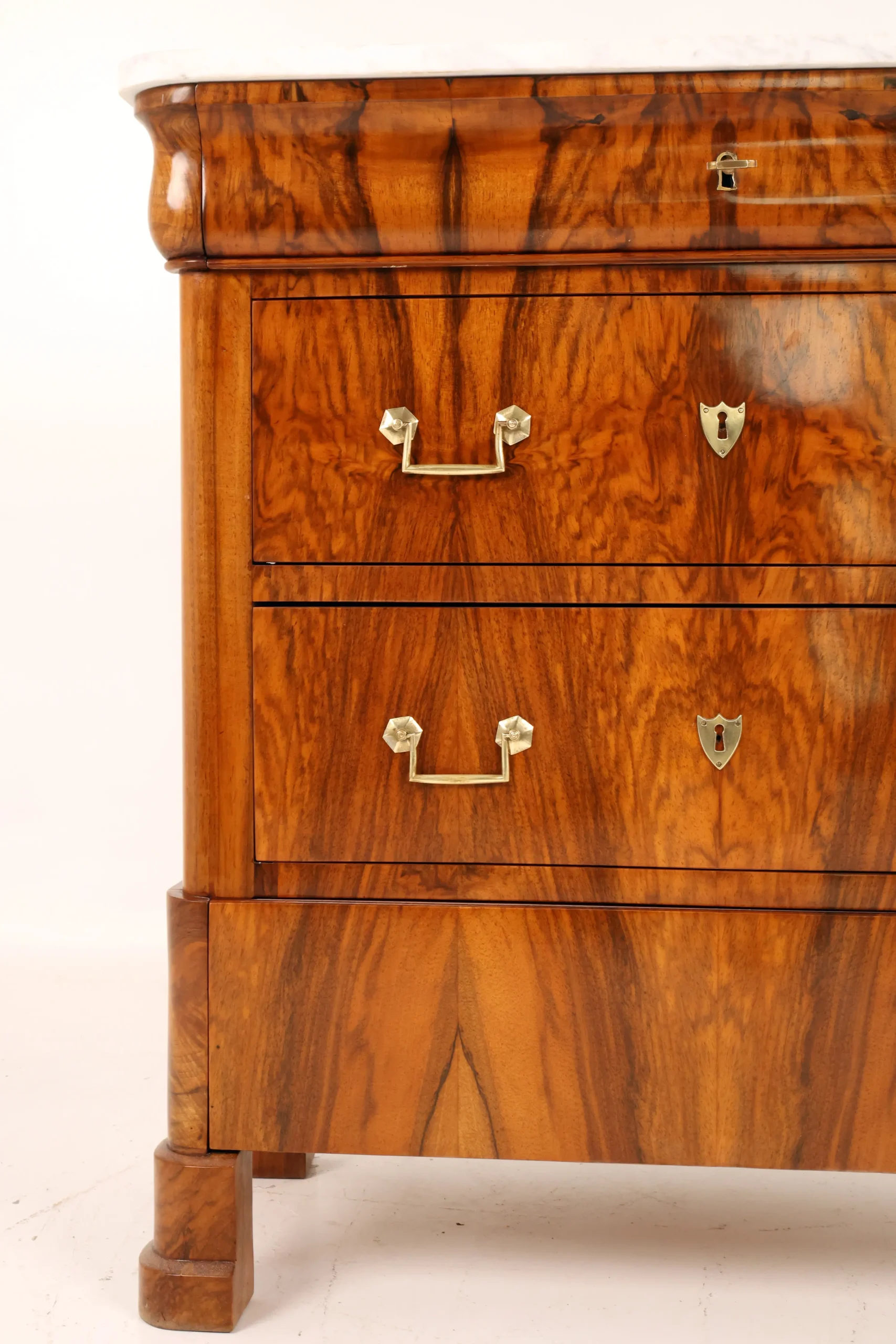
There is a particular kind of furniture that earns its place in a room twice over. Closed, it reads as an elegant side table, refined and undemanding. Open, it reveals an entirely different object, a playing surface designed for concentration, conversation, and the particular pleasure of a game played well. This early 19th century antique chess game table does exactly that, and it does it with a quality of material and construction that modern alternatives simply do not approach.
What This Antique Chess Game Table Actually Is
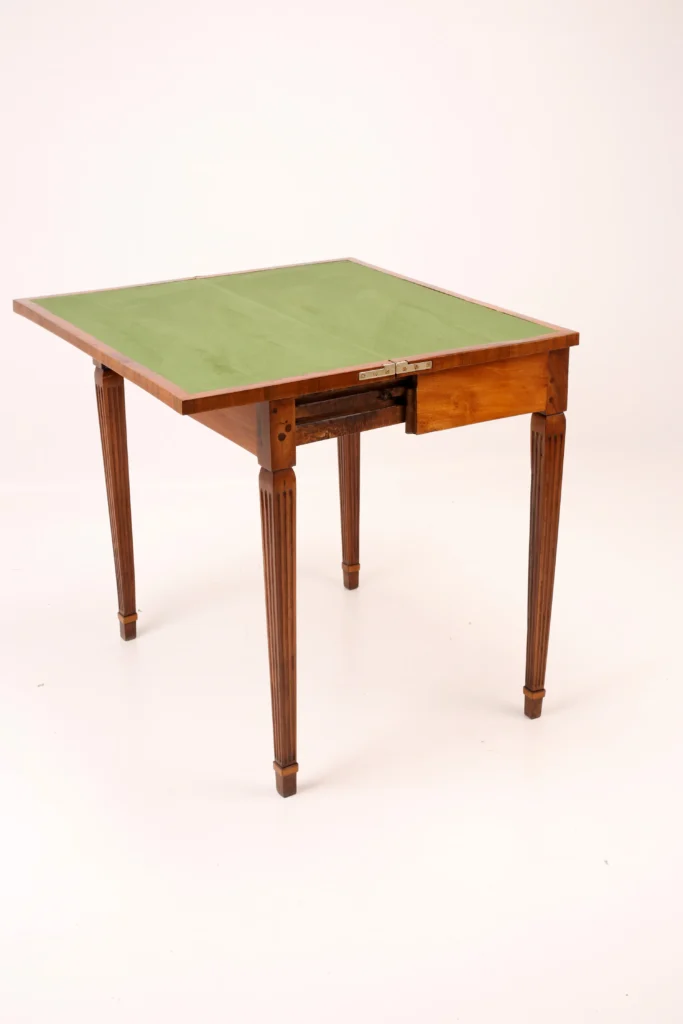
The piece is a flip-top game table from the early 19th century, designed for both chess and card games. The rectangular top is hinged and folds open to reveal a spacious green felt playing surface, perfectly suited for bridge, whist, or any card game that requires a proper cloth-covered surface. The original hinge mechanism operates smoothly and securely, which after two centuries of use is itself a testament to the quality of the original construction.
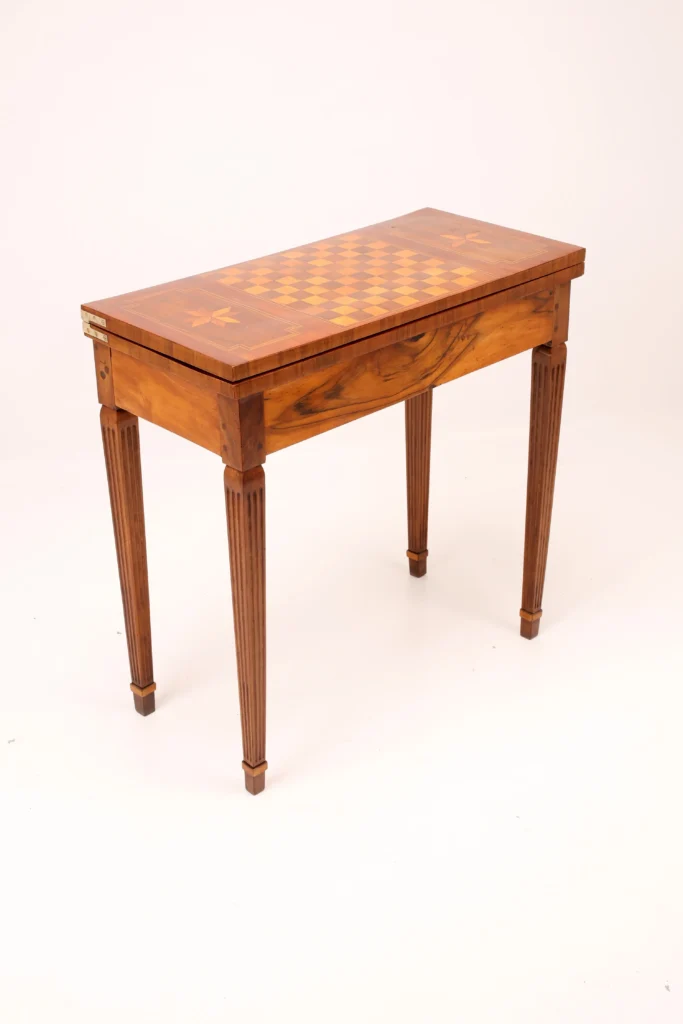
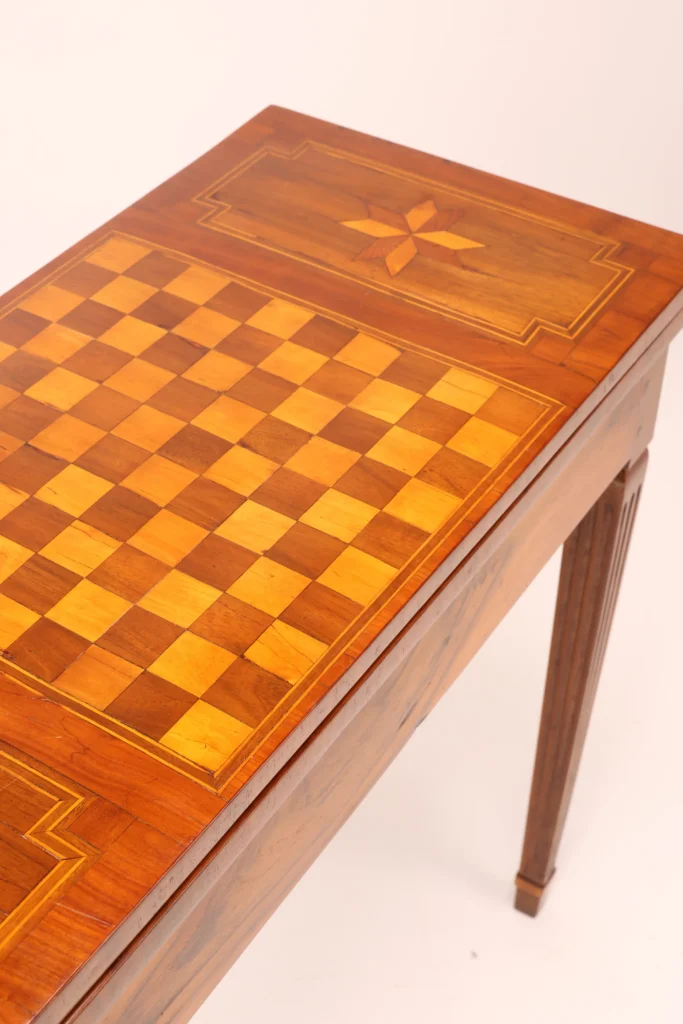
Closed, the table presents one of the more beautiful inlaid tops in this category. The central chessboard is executed in maple and walnut, the contrast between the two woods creating a clear and balanced two-tone pattern across the 64 squares. The peripheral border surrounding the board is veneered in cherrywood, introducing a warm tonal shift that separates the board from the edge of the table without hard geometric division. Delicate maple stringing runs around the full composition, framing the surface and giving the whole arrangement a precision that reflects the neoclassical design sensibility of the period.
The four legs are slender, tapered, and vertically fluted, with crisp block transitions at the top and small square feet at the base. This is the effilé leg in its most characteristic early 19th century expression, referencing the classical column directly and providing elegance through proportion rather than ornament. The structural elements are partly in solid walnut, which has developed the rich color and natural patina that only comes from genuine age and proper maintenance.
The Design Tradition Behind This Piece
A game table of this quality and character belongs to the Central European neoclassical tradition of the early 19th century, where the design vocabulary of the Louis XVI style, particularly its straight tapered fluted legs, geometric inlay, and restrained surface decoration, was absorbed into domestic furniture production across the German-speaking states and Austria.
The chess board inlay in maple and walnut is characteristic of this tradition. Where French court game tables of the later 18th century might use ivory and ebony for the board squares, or tortoiseshell and brass for the border marquetry, the Central European neoclassical approach relied on the natural contrast between light and dark fruitwoods. The result is warmer and more domestic in character than the more theatrical French examples, which suits a piece designed for a salon or library rather than a palatial card room.
The cherrywood border is a particularly thoughtful detail. Cherry was the preferred veneer wood of the Biedermeier and late neoclassical traditions across Austria and South Germany, valued for its warm reddish tone and the way it develops depth with age. Against the cooler two-tone maple and walnut of the chess board, the cherry border provides a transition that is both visually satisfying and technically accomplished.
How an Antique Chess Game Table Is Constructed
The construction of a genuine early 19th century game table like this one tells you a great deal about the standards of the workshop that produced it.
The flip-top mechanism is the most mechanically demanding element. The hinge must carry the full weight of the folded top without sagging, operate smoothly after centuries of seasonal wood movement, and align precisely every time the top is opened or closed. The original brass hinges on this piece meet all three requirements, which is not a given in pieces of this age. Many antique game tables have had their hinge mechanisms repaired or replaced at some point in their history. The original hardware here is intact and functioning.
The inlay work on the top is executed in the technique characteristic of quality early 19th century production: the chess board squares are individually cut pieces of maple and walnut veneer, laid into a prepared ground with hand-applied adhesive and fitted with the slight irregularities that hand cutting always produces. Under close examination those slight variations in square size and the fine lines of the maple stringing confirm the hand process. Machine-cut inlay from later production has a regularity that this does not.
The fluted legs are turned and carved from solid wood, with the vertical fluting cut by hand. The crispness of the fluting detail, the precision of the block transition at the top of each leg, and the consistent taper from top to foot all reflect a workshop working at a high level of craft. The legs are not veneer over a softwood core but solid walnut, which is why they have survived in this condition.
Why This Piece Works in a Contemporary Interior
The dimensions of this table, 74.5 centimeters wide, 35.5 centimeters deep, and 74 centimeters high, make it one of the more practically versatile pieces in the game table category. Closed, it functions as a console table, a side table, or an accent table in a hallway, living room, or study, with a footprint compact enough for almost any room. Open, the full playing surface is generous enough for a proper game of chess or a four-hand card game.
The warm tonal palette of the inlaid top, maple, walnut, and cherrywood, suits a contemporary interior without requiring a period room around it. These are natural materials in natural colors, and they read as both antique and current in the way that the finest early 19th century furniture consistently does. The straight fluted legs in the neoclassical manner have the clean geometry that contemporary design values, and the absence of heavy ornament or applied metal mounts gives the piece a visual lightness that allows it to work beside modern furniture without creating a period-room effect.
A salon, library, or study is the natural setting for a game table of this quality, but the scale and visual character of this piece suit a great many contemporary rooms. It invites use rather than demanding admiration, which is the most useful quality a piece of furniture can have.
What to Look for in an Antique Chess Game Table
This piece illustrates several of the qualities that matter most when assessing any antique chess game table seriously.
The playing surfaces are the first consideration. The chess board inlay should be original to the piece, with the slight irregularities of hand cutting and the age-consistent patina of the surrounding veneer. The felt playing surface, revealed when the top is opened, should show the tightly woven texture and gentle fading of period material rather than the brightness of a recent replacement. On this table both surfaces are in the condition you would hope for.
The hinge mechanism is the second consideration. Original hardware operating smoothly after two centuries is not common. Many game tables have been repaired, re-hinged, or had their mechanisms altered at some point in their history. When the original mechanism is intact and functioning it adds considerably to both the practical value and the historical completeness of the piece.
The legs are the third. The fluted legs on this table are solid walnut rather than veneered softwood, and the quality of the fluting detail is immediately apparent in person. Reproduction game tables in this style typically use veneered legs with shallower, less precise fluting that reads differently under close examination.
At Antiqueria Breitling, game tables are assessed against all three of these criteria before listing. This piece passed each one without qualification.