Worldwide Insured Shipping
Hand-Restored in our Atelier
Professional Custom Crating

Worldwide Insured Shipping
Hand-Restored in our Atelier
Professional Custom Crating
in this collection cover three centuries of European production, from solid oak refectory tables and farmhouse tables of the 17th and 18th centuries to mahogany pedestal dining tables of the Regency period, French oak dining tables, and Biedermeier circular pedestal forms from the early 19th century. Each table has been assessed individually for the integrity of the top, the soundness of the base and legs, and the quality of any extension mechanism where present.
The dining table is the piece of furniture that defines how a room is used. Every other decision in a dining room, the chairs chosen, the lighting positioned, the space left for movement, arranges itself around the table. Getting that central piece right matters more than any other single decision, and an antique dining table offers qualities that no modern alternative approaches.
The wood in a genuine antique dining table is old-growth timber, harvested from forests that matured over a century or more before the saw reached them. The growth rings in this wood are microscopically tight, with a density and structural integrity that plantation-grown timber cannot replicate regardless of how it is finished or marketed. The table legs on a well-made Georgian mahogany dining table appear almost impossibly slender by contemporary standards, yet they have been supporting the weight of full formal dinners for two and a half centuries without complaint. That is not design confidence. It is the direct consequence of the material beneath the finish.
The joinery tells the same story. Mortise and tenon joints cut and fitted by hand, with hide glue that allows the wood to move seasonally without cracking, have outlasted every synthetic adhesive and metal fixing used in modern furniture production. An antique dining table that has been properly maintained is structurally stronger today than it was when it left the workshop, because the wood has continued to cure and the joints have set over generations of use.
The oak dining table is the oldest and most enduring form in the category. Oak refectory tables from the 17th and early 18th centuries, built from thick-sawn solid planks with pegged mortise and tenon joints and trestle or plank bases, were made without any expectation that they would ever be replaced. Many have plank tops with the surface character that only genuine age produces: knots, grain variation, and the particular color depth that comes from centuries of wax, use, and light.
A hand-crafted from solid oak trestle dining table with a thick top and stretcher base is a piece of antique furniture that works in a contemporary kitchen or dining room as naturally as it did in its original setting. The farmhouse table and farm table forms, with their straight legs, generous proportions, and honest construction, have never really gone out of use because they were never designed around fashion. They were designed around the practical requirements of feeding people, and those requirements have not changed.
The French oak dining table, particularly provincial examples from Normandy and Burgundy, adds a regional character to this tradition. A 19th century French oak dining table with turned legs, a substantial top, and the warm honey color that French oak develops with age suits a casual dining room or kitchen dining space with particular ease. These are not formal pieces. They were made for rooms where people actually ate every day, and they carry that lived-in quality directly.
The Georgian period in English furniture produced the most architecturally ambitious dining tables in the European tradition, and mahogany was the material that made them possible. Dense, tight-grained, and structurally reliable, Caribbean mahogany allowed cabinetmakers like Chippendale, Hepplewhite, and Sheraton to design table legs of extraordinary slenderness that would have failed in oak or walnut. The result was dining tables of refined elegance that suited the dedicated dining rooms that English domestic architecture was developing during the 18th century.
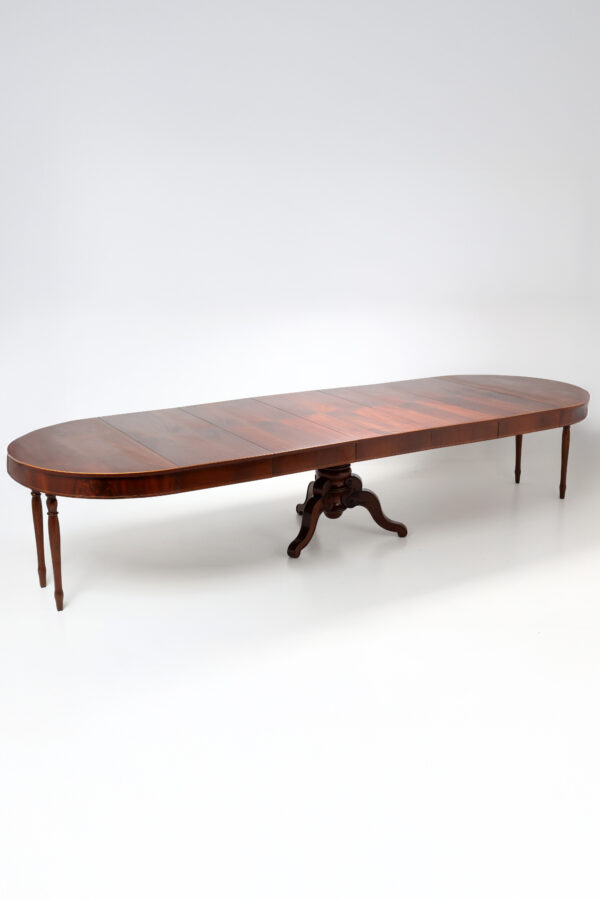
The Regency mahogany dining table on a pedestal base is among the most practical antique dining table forms available. The pedestal dining table places the structural support at the center of the table rather than at the corners, which means no corner legs interrupt the seating arrangement and chairs can be positioned freely around the full perimeter. A mahogany double pedestal dining table with two leaves accommodates a large number of guests when extended and retains elegant proportions when the leaves are removed. The figured mahogany surfaces on these tables develop further richness with age and proper maintenance.
The drop leaf dining table and the gateleg dining table solve the space problem of a smaller dining room with considerable ingenuity. A drop leaf table folds down to a fraction of its extended width, which made it a practical choice in Georgian townhouses and makes it equally useful today in a dining room that also serves other purposes. Original examples with their original hardware and the natural patina of genuine age are considerably more interesting than contemporary reproductions of the same forms.
The round dining table and oval dining table create a fundamentally different dining experience from rectangular forms. Without a clearly defined head and foot, these tables place every person on equal footing, which changes the acoustic dynamic of the meal and the social character of the gathering. Conversation flows differently around a round top than it does along a rectangular table, and the Biedermeier tradition understood this instinctively when it placed circular pedestal tables at the center of the bourgeois domestic interior.
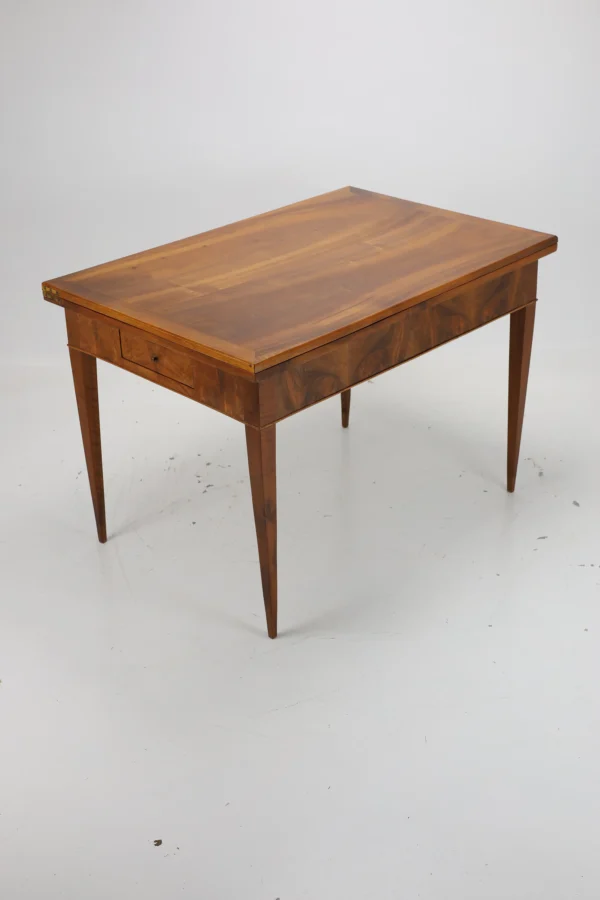
A round dining table on a pedestal base from the early 19th century, whether in mahogany in the English Regency tradition or in walnut or cherrywood in the Biedermeier manner, is a versatile piece that suits a smaller dining room or kitchen dining space with particular grace. The tilt top table, where the circular top pivots to vertical on a central mechanism, was a Georgian solution to the storage problem of a large round table in a modest room, and original examples with their tilt mechanism intact and functioning are practical and characterful pieces.
The oval center table and oval dining table forms sit between the rectangular and circular traditions, combining the hierarchical flexibility of a round table with the extended seating capacity of a rectangular one. A 19th century French oval dining table in walnut with tapered legs is a piece that suits a formal dining room without the rigidity of a rectangular form.
French antique dining tables cover a wide range of forms and periods. A French Empire style dining table in mahogany with a pedestal base and heavy bronze mounts represents the imperial tradition at its most formal. A vintage French farmhouse table in solid oak with a thick top and stretcher base represents the provincial tradition at its most direct and practical. Between these two points lies a considerable range of 19th century French dining tables in walnut and oak that reflect the various regional workshop traditions of the country.
Italian dining tables bring their own character to the category. An Italian dining table in travertine or with a travertine dining table top combines the warmth of stone with the structural confidence of antique craftsmanship. Carved details on the base and legs, characteristic of the Italian cabinetmaker tradition, give these pieces a sculptural presence that suits a formal dining room or a larger contemporary space.
The antique tables section covers the full range of table forms including side tables, console tables, occasional tables, and writing tables from the same periods and traditions. For related Biedermeier dining and occasional tables, the Biedermeier furniture section covers pedestal forms, drop leaf tables, and sewing tables from Viennese, German, and Scandinavian workshops.
If you are looking for a specific antique dining table, a particular wood, period, or seating capacity not currently listed, write to us at contact@antiqueria-breitling.com. The warehouse holds pieces not yet photographed or catalogued, and requests for a specific form or style are often easier to fulfill than buyers expect. Worldwide shipping available on all pieces.



&url=https://antiqueria-breitling.com/product/exquisite-biedermeier-walnut-dining-table-circa-1820/&media=https://antiqueria-breitling.com/wp-content/uploads/2026/04/18-2-683x1024.webp)
